


More news on this day
Air France has extended the suspension of its Beirut service and maintained a halt on flights to Riyadh and Dubai, highlighting how security concerns and airspace restrictions continue to reshape travel options across the Middle East at the height of the summer season.
Get the latest news straight to your inbox!
Expanded suspensions across key Middle East routes
Recent schedule updates and published coverage indicate that Air France has prolonged its suspension of flights linking Paris with Beirut, as well as keeping services to the Saudi capital Riyadh and to Dubai off its network. The measures build on a series of extensions that began earlier this year, when conflict and missile activity around Iran prompted widespread closures and capacity reductions in regional airspace.
Earlier bulletins from regional and European outlets described Air France’s network changes as part of a broader freeze on parts of its Middle East operation, with flights to Beirut, Dubai and Riyadh repeatedly removed from timetables beyond initially announced dates. Aviation-focused reports trace a pattern of short rolling extensions that have now evolved into a longer pause, coinciding with updated safety advisories for carriers flying over the Gulf and Levant corridors.
While some Middle Eastern airlines have gradually restored services through reroutings and adjusted flight paths, Air France has taken a comparatively cautious stance on these specific routes. The company’s public updates have emphasized the priority given to customer and crew safety, with any resumption of service tied to evolving assessments of the geopolitical environment and airspace accessibility.
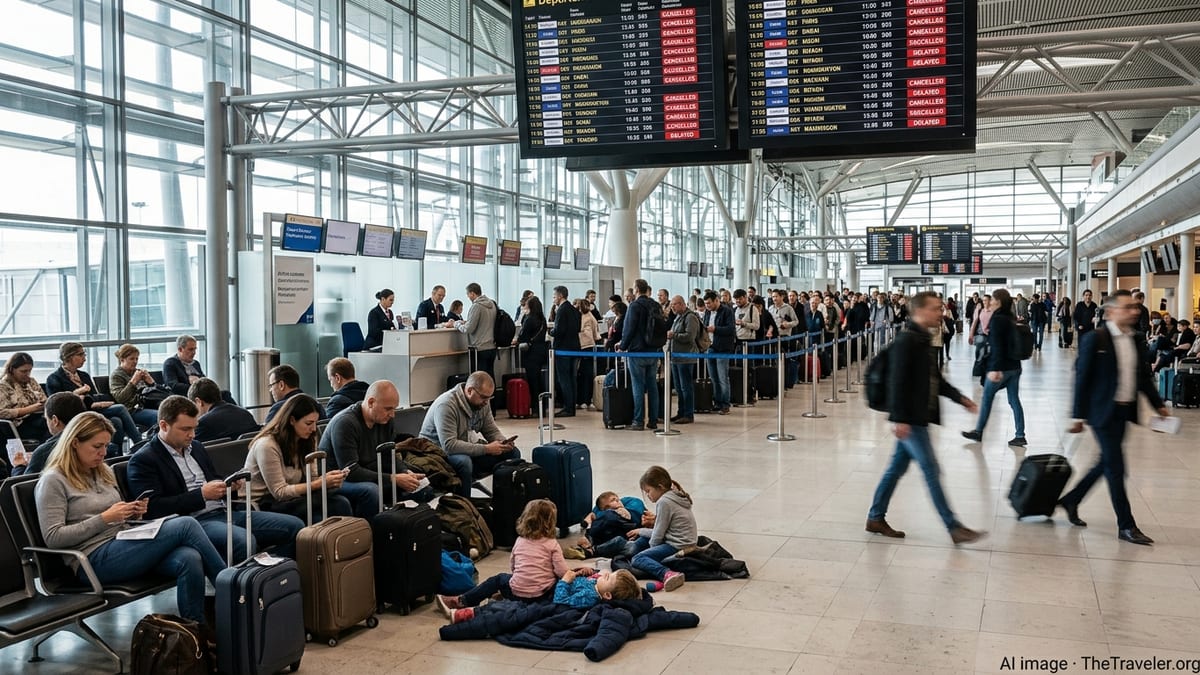
The latest extension means travelers who once relied on direct Air France links from Paris to Beirut, Riyadh or Dubai will continue to face cancellations and rebookings during what is typically one of the busiest travel windows of the year for family visits, religious trips and leisure travel.
Security environment and airspace warnings shape decisions
The airline’s move tracks closely with ongoing security advisories that urge operators to exercise caution across multiple Middle Eastern airspace zones. Industry and regulatory summaries note that authorities in Europe have advised carriers to avoid or carefully manage flights crossing Bahrain, Kuwait, Qatar and the United Arab Emirates, as well as corridors over Iran, Iraq and Lebanon, following repeated flare-ups and missile incidents in early 2026.
These advisories do not constitute outright bans on civil aviation, but they require airlines to conduct more detailed risk assessments and contingency planning. For large network carriers such as Air France, that process can result in the suspension of specific city pairs when direct routings would intersect the most sensitive airspace or when operational flexibility is limited.
Reports on regional aviation indicate that the situation around Lebanon has been particularly fluid. Beirut’s Rafic Hariri International Airport has remained technically open, with live departure boards still showing services from Middle Eastern and Turkish carriers, yet European airlines have been far more hesitant to return at scale. Air France’s extended suspension fits into that broader pattern of European operators that have held back from reinstating pre-crisis frequencies to Lebanon.
Similarly, the link between Paris and Riyadh, and the busy long-haul connection to Dubai, have been affected by route planning challenges. Even when destination airports operate normally, detours to avoid restricted airspace can add flight time, fuel burn and complexity, prompting some airlines to pause rather than operate heavily modified routings.
Knock-on effects for travelers and connecting traffic
The continued absence of Air France flights on these routes is being felt not only by point-to-point travelers but also by passengers who use Paris Charles de Gaulle as a connecting hub. Without nonstop Air France services, many are being shifted to partner airlines or alternative routings, often via other Gulf or European hubs, adding extra segments and potentially longer journey times.
Travel forums and consumer reports highlight cases where passengers holding Air France tickets to or from Dubai and Riyadh have been rebooked via joint-venture or alliance partners, or offered refunds when equivalent inventory was not available. For Beirut-bound travelers, itineraries are frequently being rebuilt around regional carriers that still serve Lebanon, such as Middle East Airlines and various Turkish and Gulf-based airlines.
Industry coverage suggests that pricing has also been affected. With fewer European network carriers operating directly into Beirut and certain Gulf cities on specific days, remaining services on alternative airlines can become more expensive, particularly in peak summer weeks. This has prompted some travelers to adjust travel dates, switch to secondary airports or postpone non-essential trips.
Travel agents and online booking platforms appear to be playing a larger role in helping passengers navigate these disruptions, as schedules on previously stable routes continue to change at relatively short notice. Flexible tickets, generous change policies and real-time monitoring of airline apps have become key tools for those planning itineraries touching the affected cities.
Middle East aviation faces prolonged period of adjustment
Air France’s decision unfolds against a backdrop of wider instability in Middle East aviation, where multiple international airlines have announced suspensions, extensions and reroutings involving Dubai, Riyadh, Beirut and other regional gateways. Coverage from travel and business media describes a mosaic of airline responses, with some carriers restoring capacity quickly and others opting for protracted pauses that stretch well into the autumn schedule.
According to recent overviews of the region’s air travel landscape, certain Gulf-based airlines have been able to maintain or gradually rebuild operations, using their proximity and experience in managing regional volatility to adjust flight paths and timings. In contrast, several European groups have taken a more conservative approach, in some cases suspending multiple Middle Eastern destinations until late 2026 while concentrating capacity on transatlantic and intra-European demand.
For airports such as Dubai International and Riyadh’s King Khalid International, the loss or reduction of European flag-carrier services is partly offset by robust activity from local airlines and other international operators. However, the absence of specific carriers remains significant for corporate travelers loyal to particular frequent-flyer programs and for passengers who prefer through-ticketing with a single alliance.
Beirut, whose tourism sector and expatriate community rely heavily on seasonal inflows from Europe and the Gulf, faces a more acute impact from European airline withdrawals. While regional carriers have stepped in to preserve connectivity, the extended suspension of a high-profile operator like Air France underscores the fragility of Lebanon’s air links during periods of geopolitical tension.
What travelers should watch in the weeks ahead
With Air France’s Beirut, Riyadh and Dubai suspensions now extended, travelers with upcoming bookings are being advised through public information channels and airline customer updates to monitor reservations closely. Because previous pauses have been rolled forward in relatively short increments, observers note that further adjustments to restart dates remain possible if the security environment improves or deteriorates.
Travel industry commentary suggests that passengers planning new trips involving these cities may benefit from choosing fares that allow changes without significant penalties and from avoiding tight connections where a cancellation could trigger missed onward flights. Passengers are also encouraged to verify which carrier is actually operating each flight segment, especially when tickets are sold under codeshare arrangements.
In the broader context, Air France’s stance illustrates how swiftly evolving conditions in one region can ripple through global networks. As the airline continues to focus growth on other long-haul markets during the 2026 summer season, the suspended routes in Beirut, Riyadh and Dubai serve as a reminder that parts of the Middle East remain subject to sudden shifts in access and risk.
For now, the carrier’s extended halt on these city pairs adds another layer of complexity for travelers and underscores the need for flexibility, careful itinerary planning and attention to official timetable updates when flying to or from the wider Middle East.