


More news on this day
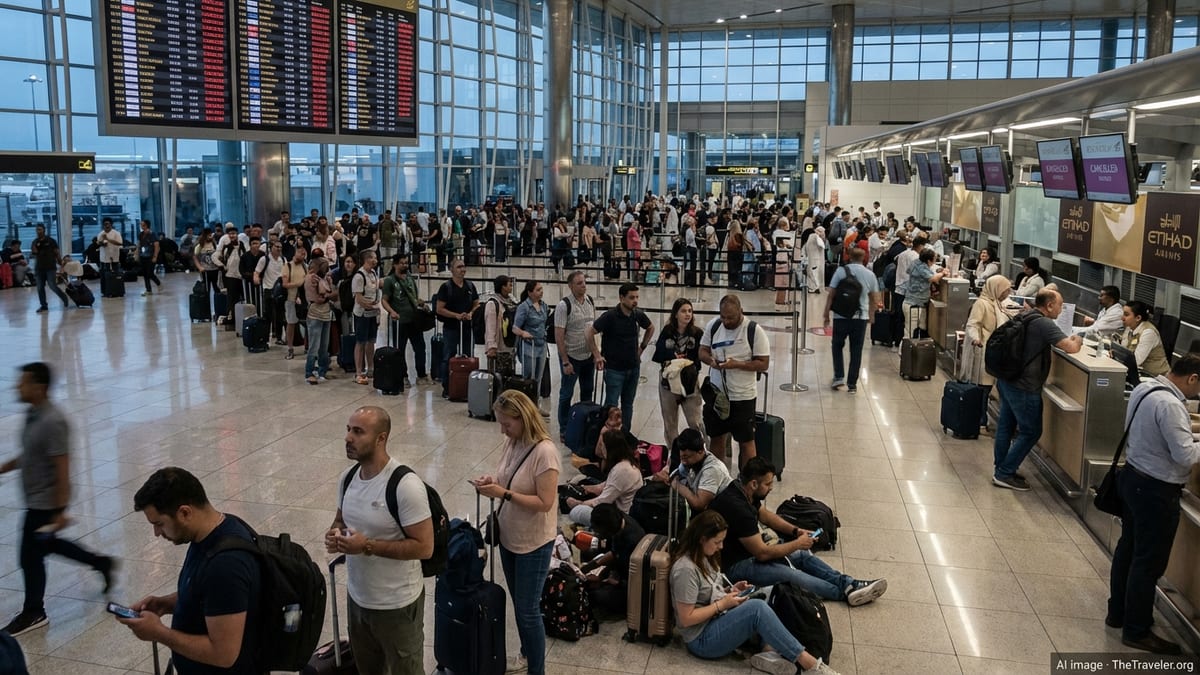
Sudden airspace closures, missile threats and fast‑shifting security advisories across the Middle East in 2026 are driving waves of flight cancellations and delays that are redrawing air travel patterns in Saudi Arabia, the United Arab Emirates and Qatar.
Get the latest news straight to your inbox!
Regional security shocks trigger mass flight disruptions
In early 2026, a series of regional security escalations led to unprecedented airspace closures across several Gulf states, triggering thousands of flight cancellations and diversions. Publicly available aviation data and industry analysis indicate that temporary shutdowns or severe restrictions of airspace in Qatar, the United Arab Emirates, Bahrain and Kuwait in late February and early March halted a significant share of scheduled services, with some assessments putting initial cancellation rates for Gulf departures and arrivals at well over half of normal traffic on the worst affected days.
According to published coverage by regional outlets and aviation specialists, Dubai and Abu Dhabi airports suspended passenger operations for periods in late February as Iran-related tensions spiked, while Doha’s Hamad International Airport faced direct missile threats and an ensuing airspace closure. Notices issued by the Qatar Civil Aviation Authority in early March described a temporary suspension of traffic, followed by a phased reopening limited to specific flights. These measures triggered systemwide knock‑on effects with aircraft and crews stranded out of position across Europe, Asia and Africa.
The impact spread far beyond point‑to‑point routes in the Gulf. The Middle East has become a central bridge for global traffic flows between Europe, Asia and Africa, and International Air Transport Association economic commentary released in mid‑2026 highlights that the March disruptions were among the most severe shocks to regional air connectivity since the pandemic. Longer routings around closed airspace, reduced frequencies and schedule thinning became common as carriers sought to maintain at least partial connectivity while prioritising safety.
Saudi Arabia: congestion, diversions and selective suspensions
Saudi Arabia’s airspace has largely remained open through the 2026 crisis, but the kingdom’s role as a preferred east‑west bypass has brought its own challenges. Freight and logistics advisories circulated in March characterised Saudi airspace as operational but congested, noting longer routings, slot delays and payload restrictions as airlines and cargo operators concentrated traffic through Saudi corridors when neighbouring states imposed tighter controls.
Reports from regional business media in March and April described brief pauses in flights to and from Riyadh following drone and missile incidents, with domestic routes to cities near border areas seeing repeated disruption. Separate aviation intelligence summaries cited temporary suspensions or extensions of cancellations by Saudi low‑cost carriers to destinations such as the UAE, Qatar, Bahrain and Kuwait as airspace closures and security alerts continued.
By mid‑year, travel coverage from Gulf outlets suggested that Saudi airports were functioning as a relative stabiliser in a volatile regional network, but with reduced resilience. Travellers transiting via Riyadh or Jeddah have faced longer journey times and sporadic last‑minute schedule changes as airlines adjust to evolving overflight permissions and congestion. Industry notes also point to increased operational costs for Saudi and foreign carriers using the kingdom as an alternative corridor, including additional fuel burn, crew duty‑time pressures and higher ground‑handling complexity.
UAE hubs grapple with rolling cancellations and rerouting
The United Arab Emirates, home to major global hubs in Dubai and Abu Dhabi, has been among the most visibly affected markets. In late February, regional business newspapers reported that airspace closures connected to Iran‑related tensions led to the suspension of most services at Dubai International and Abu Dhabi International for several days, with long‑haul carriers forced to ground or divert flights across multiple continents.
Subsequent industry tracking by aviation research firms showed that, at the peak of the crisis, hundreds of services touching Gulf hubs were cancelled within a single weekend as airlines including Emirates, Etihad, Air Arabia and flydubai pared back operations. Passenger advisories published by UAE‑based outlets in March and again in July highlighted continued schedule volatility, including repeated cancellations on routes to Kuwait and southern Saudi Arabia, alongside operational delays on selected European and Asian services.
Publicly available logistics and travel advisories describe the UAE’s status through the spring as restricted rather than fully closed, with capacity heavily rationed and routings adjusted to avoid sensitive air corridors. While core links to major European and Asian cities have largely been restored by mid‑2026, coverage indicates that many flights are operating on modified timetables, with travellers urged to check status on the day of departure and to allow extra time for security and rebooking queues during peak disruption periods.
Qatar’s week‑long shutdown reverberates through global networks
Qatar experienced one of the most acute shocks in the region when its airspace was temporarily closed following missile strikes and heightened security alerts in early March. Statements and notices from the Qatar Civil Aviation Authority and airline schedule updates show that most commercial passenger flights to and from Doha were suspended for several days, with only limited evacuation and essential services allowed to operate during the initial phase of the closure.
Industry situation reports circulated in March estimated that more than 2,000 flights connected to Qatar were cancelled during the period, including a significant number of long‑haul services connecting Europe, Africa, Asia and Oceania via Doha. Passenger forums and airline advisories reviewed by travel media describe widespread reroutings through non‑Gulf hubs, extended layovers and, in some cases, multi‑day delays as travellers scrambled to replace itineraries built around Qatar’s central hub model.
As security conditions stabilised, Qatar’s main carrier began publishing revised schedules indicating a gradual rebuild of its network. By late spring, the airline reported it was serving more than 120 destinations again, with further expansion planned from mid‑June. However, the carrier has continued to warn that schedules remain subject to sudden change due to operational and regulatory factors, and travel coverage in May and June noted that some regional routes were still operating below pre‑crisis frequency or on altered timings.
Shifting passenger behaviour and longer‑term outlook
The waves of cancellations and delays in early and mid‑2026 are beginning to reshape how travellers plan journeys through Saudi Arabia, the UAE and Qatar. Regional travel reporting in July points to a noticeable increase in demand for flexible tickets, as well as a tendency for passengers to delay final bookings until closer to departure in case of further security‑related changes. Advisories from airlines and travel agencies consistently urge customers to monitor flight status in real time, particularly for itineraries involving multiple Gulf stops or connections to conflict‑adjacent countries.
Economic analysis from global ratings firms and industry bodies suggests that, while the largest Gulf carriers entered 2026 with relatively strong balance sheets and diversified networks, prolonged airspace uncertainty is adding to operating costs. Longer flight paths around restricted zones, technical stops for refuelling, higher insurance charges and the cost of accommodating stranded passengers are all weighing on margins. At the same time, some reports note that passenger load factors on the services that do operate have risen, partly offsetting revenue pressures.
For now, publicly available information indicates that Saudi Arabia, the UAE and Qatar are maintaining their roles as central nodes in global aviation, albeit under greater operational strain. The scale and speed of the disruptions this year have underlined the vulnerability of hub‑and‑spoke networks to geopolitical shocks, and airlines in the region are expected to keep adjusting schedules, diversifying routings and updating contingency plans as the security picture evolves through the rest of 2026.