


More news on this day
Air India is preparing a major product upgrade on its Germany services from September 2026, with the carrier planning to roster its latest three-class Boeing 787-9 Dreamliner on the route in place of older widebody aircraft.
Get the latest news straight to your inbox!
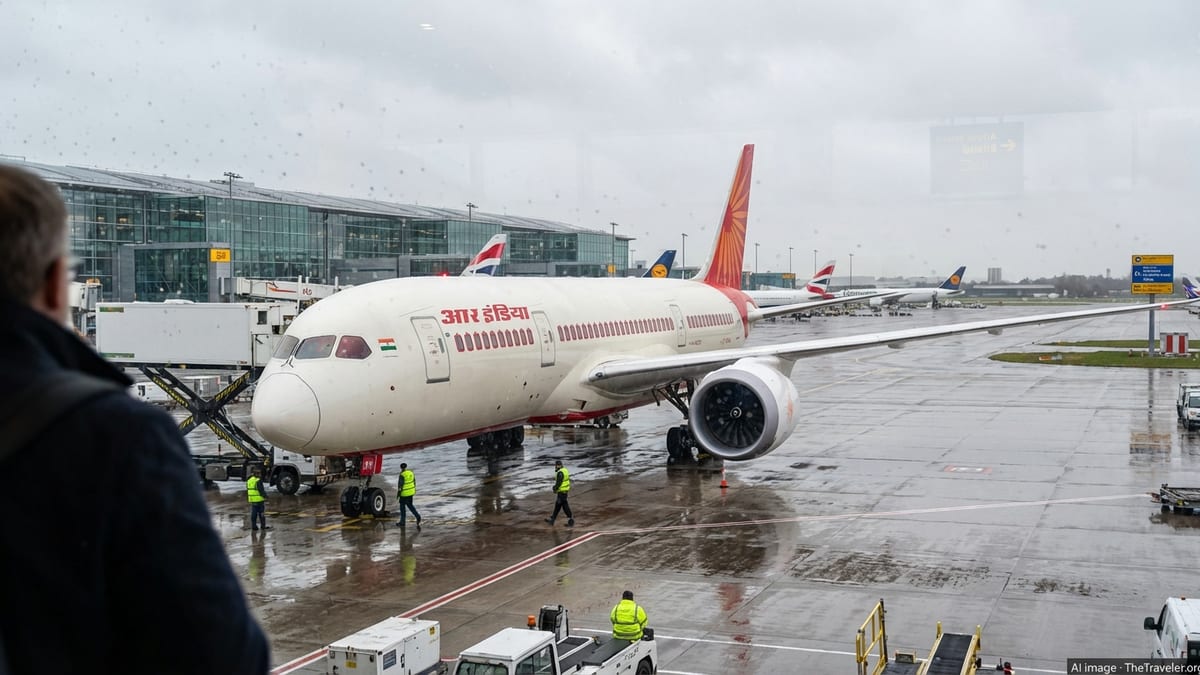
Dreamliner Deployment Marks Next Phase of Air India’s Refleet
Publicly available fleet information shows that Air India began taking delivery of its first factory-fresh, line-fit Boeing 787-9s in January 2026, featuring a bespoke three-class layout and new cabin interiors that form the backbone of its long-haul renewal strategy.
According to the airline’s own fleet pages and recent industry coverage, the 787-9s are configured with 30 Business Class suites, 28 Premium Economy seats and 238 Economy seats for a total of 296 passengers, aligning with Air India’s goal of standardising a modern, globally competitive product across key intercontinental routes.
Press releases and aviation reports indicate that the type initially entered service on routes such as Mumbai Frankfurt and selected London and Tokyo flights, with Air India steadily rotating the aircraft onto additional long-haul services as more Dreamliners join the fleet during 2026.
Positioning one of these new 787-9s on the Germany route from September 2026 therefore represents a logical next step in Air India’s deployment pattern, shifting the market from older 787-8s or refurbished widebodies to its newest flagship twinjet.
What Changes On Board For Germany-bound Travelers
The 787-9 brings a significantly different onboard experience for travelers between India and Germany, especially for those in premium cabins. Reports on the new product detail fully flat Business Class suites with direct aisle access, larger high-definition entertainment screens and updated soft furnishings in Air India’s refreshed brand style.
In the new Premium Economy cabin, which becomes available on the Germany route with the switch to the 787-9, specialist seating publications highlight the use of Recaro PL3530 recliner seats offering a 38-inch pitch, enhanced recline, calf rests and leg rests, all paired with upgraded catering and amenity kits compared with standard Economy.
Economy Class also receives a step up from many of the aircraft previously used on the route. Coverage of the refitted cabins notes slimmer, more ergonomic seats, larger seatback screens, USB-A and USB-C power options and a refreshed interior design that incorporates Indian-inspired motifs and a revised lighting scheme designed to reduce jet lag.
Across all cabins, the Dreamliner platform contributes lower cabin altitude, higher humidity and quieter engines than many of the older widebody types it replaces, factors that are expected to improve passenger comfort on overnight and ultra-long sectors between India and Europe.
Schedule Impact and Competitive Context on the India Germany Market
While specific autumn timetables continue to evolve, Air India’s published network updates for the Northern Summer 2026 season already show a clear emphasis on deploying either refurbished or brand-new widebodies on key international routes, including Germany, as additional 787-9s arrive and 787-8 retrofits accelerate.
Industry analysts tracking the rollout note that the switch to the 787-9 on Germany services is likely to be structured around existing Mumbai Frankfurt and Delhi Frankfurt or Munich patterns, depending on aircraft availability and broader network priorities. The changeover from September 2026 is expected to be phased rather than overnight, as deliveries and maintenance slots are finalised.
The move also comes as other full-service airlines strengthen their offerings on India Europe corridors. Lufthansa, for example, has been rolling out its own latest-generation cabins on Boeing 787-9s and Airbus A350s, reinforcing the competitive pressure on Air India to match or surpass rival products in Business and Premium Economy.
By assigning its newest Dreamliners to Germany, Air India signals that it sees sustained demand in this market segment, particularly from corporate travellers, students and visiting friends and relatives traffic that value nonstop or one-stop connections between Indian hubs and major German cities.
Premium Economy Becomes a Key Differentiator
For many passengers, the most tangible change with the arrival of the 787-9 will be the introduction or expansion of a dedicated Premium Economy cabin on Germany flights. Air India has positioned this product as a middle ground between Economy and Business, with extra legroom, upgraded meals and enhanced service elements.
Seat-manufacturer data and product descriptions show that the 2 3 2 Premium Economy layout on the 787-9 provides a noticeably wider seat and greater personal space than the 3 3 3 Economy configuration, along with a larger personal screen and improved storage options around the seat area.
Aviation media have pointed to Premium Economy as an increasingly important revenue driver on long haul routes where corporate travel budgets may not always stretch to Business Class, but travellers still seek additional comfort and flexibility. Deploying a full-scale Premium Economy cabin to Germany therefore aligns Air India with a broader global trend in cabin segmentation.
The Germany route upgrade also offers a clearer, more consistent product story for passengers connecting onwards from India to other destinations that are already served by the 787-9 or retrofitted widebodies, reducing the variability that historically characterised parts of the airline’s long haul network.
Technology, Connectivity and the Wider Transformation Plan
Beyond seats and layouts, the 787-9 upgrade introduces a suite of technology improvements for Air India’s Germany customers. Public information on the airline’s widebody program notes the rollout of modern in-flight entertainment platforms, Bluetooth audio pairing, and expanded connectivity options on the newest aircraft.
Industry coverage of Air India’s transformation plan under its current ownership has repeatedly highlighted cabin renewal as one of several pillars, along with network optimisation, ground experience upgrades and operational reliability improvements. The Dreamliner deployment to Germany from September 2026 is one visible element of that wider effort.
With several factory-fresh 787-9s already flying and more deliveries due through 2026, the Germany move supports the carrier’s stated ambition to refresh or replace a substantial portion of its long haul fleet over the medium term, gradually concentrating premium-heavy aircraft on routes where demand and yields justify the investment.
Travelers booking India Germany itineraries for late 2026 are therefore likely to see the new 787-9 prominently featured in schedules and booking tools, signalling a markedly different onboard experience from the equipment used on the same routes only a few years earlier.
Air India newsroom: brand-new B787-9 on Mumbai Frankfurt
Air India newsroom: first new Boeing 787-9 Dreamliner delivery