


Diamond Resorts was once one of the largest independent vacation ownership brands in the world. Today it sits inside the Hilton Grand Vacations ecosystem, reshaped and largely rebranded but still central to Hilton’s growing timeshare empire. For travelers and owners, understanding what Diamond Resorts has become under Hilton Grand Vacations is the key to making smart decisions about where to stay, how to own, and how to book in this new landscape.
Get the latest updates straight to your inbox!
From Standalone Giant to Hilton Subsidiary
For years, Diamond Resorts International operated as a major independent timeshare company with hundreds of affiliated resorts across North America, Europe and Asia. Headquartered in Las Vegas, it built a reputation for a very broad, mostly midscale portfolio. A Diamond member might spend one year at a golf villa in Scottsdale, another at a ski resort in Whistler, and the next at a beachfront condo in Cabo San Lucas. Its core product revolved around points-based vacation ownership and a program known simply as “THE Club,” which allowed members to move their annual allocation of points around a large internal network instead of being tied to a single fixed week.
The turning point came in August 2021, when Hilton Grand Vacations completed its acquisition of Diamond’s parent company, bringing Diamond fully under the Hilton umbrella. Corporate filings describe the move as effectively doubling Hilton Grand Vacations’ resort network and adding more than 20 new destination markets to its footprint. In practical terms, that meant HGV did not just acquire a few trophy properties; it absorbed an entire operating platform of drive-to resorts, regional clubs, and trust structures that complemented Hilton’s existing, more urban and upscale resort mix.
Post-acquisition, Diamond is now a wholly owned subsidiary of Hilton Grand Vacations. In official descriptions of the business, Diamond sits alongside Hilton Grand Vacations Club, Hilton Vacation Club, Hilton Club, Bluegreen Vacations and Embarc Resorts as part of a multi-brand timeshare family. For travelers, that corporate structure matters less than the visible effect: many old Diamond signs are being replaced by Hilton branding, and the reservations and membership systems are being gradually aligned so that points and nights can flow more smoothly across the portfolio.
Importantly, while Diamond as a separate publicly traded company no longer exists, its DNA lives on inside Hilton Vacation Club and certain HGV Max benefits. The resorts did not disappear; they simply changed jerseys. A family that has been visiting Sedona or the Poconos with Diamond for years will often find the very same resort listed today as a Hilton Vacation Club property, with similar floor plans and amenities but updated branding and, in many cases, refreshed soft furnishings or service standards.
New Brand Architecture: How to Recognize Former Diamond Resorts
The biggest visible change for consumers is branding. Instead of the Diamond logo, most former Diamond properties now operate as “Hilton Vacation Club” or, in Canada, under the Embarc name with Hilton oversight. Hilton publicly groups its timeshare offerings into several brands: Hilton Grand Vacations Club for the legacy HGV points resorts, Hilton Club for high-end city and fractional properties, Hilton Vacation Club for many of the former Diamond and trust-based resorts, and sub-brands such as Bluegreen Vacations that were added later. Diamond as a name still appears in historic documentation and some contractual materials, but on booking pages you are far more likely to see Hilton Vacation Club printed on the sign.
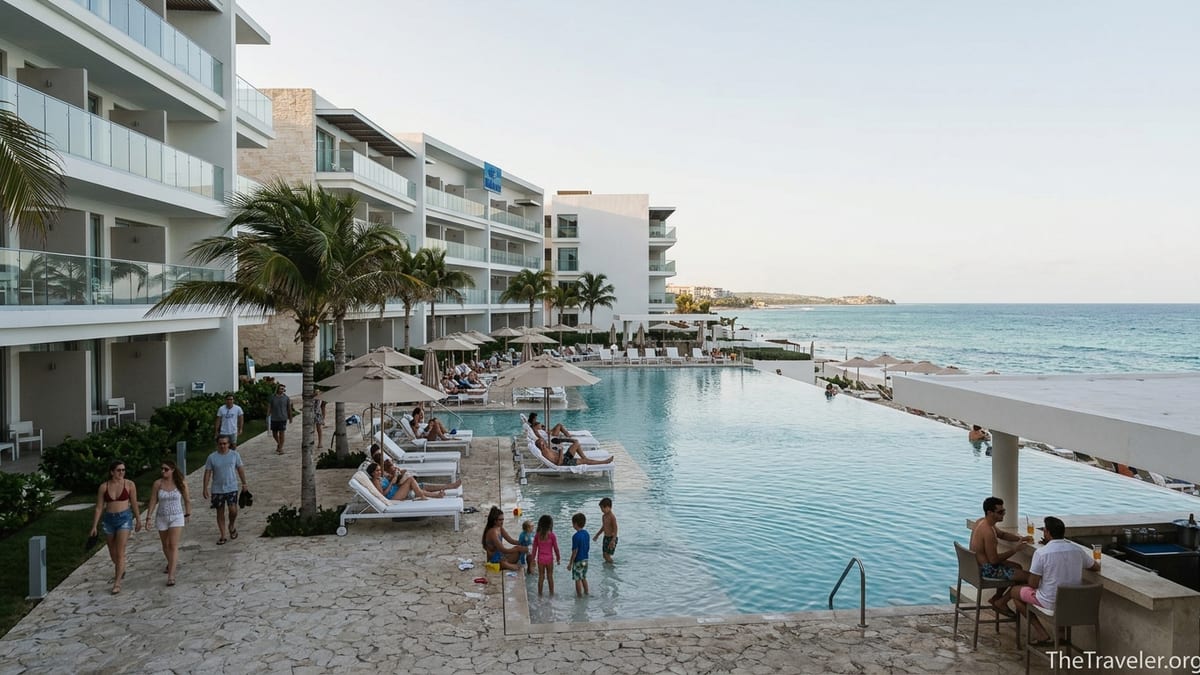
In practice, travelers can often spot a former Diamond resort by looking at the brand tag. For example, Cabo Azul in San José del Cabo, once one of the flagship Diamond properties known for its dramatic beachfront pool and white, chapel-style architecture, now appears as Cabo Azul, a Hilton Vacation Club. Similarly, Desert Club Resort near the Las Vegas Strip, long a Diamond stronghold for families wanting kitchens and extra space a short walk from the casinos, is now marketed as Desert Club Resort, a Hilton Vacation Club. In Orlando, Mystic Dunes Resort & Golf Club has transitioned into Mystic Dunes, a Hilton Vacation Club, while still offering the same villa-style accommodations that attracted Diamond members for years.
Across the network, you will see this pattern repeated in destinations from Lake Tahoe to Williamsburg. Many properties continue to serve a drive-to, family-oriented market that Diamond cultivated: condo-style units with full kitchens, separate bedrooms, on-site pools and recreation, and easy access to national parks or beaches. The Hilton Vacation Club badge signals that heritage while reassuring guests that Hilton service standards and loyalty integration are being layered on top. For owners and prospects, it is also an immediate clue that this particular resort likely traces back to the Diamond Resorts side of the family, which can matter for how points, booking windows, and fees are structured.
To make matters slightly more complex, Hilton Grand Vacations has also integrated Bluegreen Vacations and other acquired portfolios into its ecosystem, but the broad rule of thumb holds: if the resort carries the “Hilton Grand Vacations Club” brand, it usually stems from the legacy HGV system, while “Hilton Vacation Club” more often signals a resort that was formerly Diamond or part of a trust network. Recognizing that distinction helps travelers understand why two Hilton-branded vacation clubs might have slightly different booking rules or points charts, even though both live under the same corporate umbrella.
What Ownership Means Now: Legacy Diamond vs HGV Max
Ownership under the combined company falls into a few main buckets. Long-standing Diamond owners typically hold points in one of the historic Diamond clubs or trusts, such as THE Club, Embarc, or specific regional collections. Those points still exist and still grant access to a familiar set of resorts. Hilton has repeatedly emphasized in its integration communications that existing ownership rights and home-resort access remain intact. That means a couple who bought into Embarc Whistler years ago can continue to use their resort points to book ski weeks in British Columbia as before, even though the management company is now Hilton Grand Vacations.
New buyers coming in through Hilton Grand Vacations today are more likely to purchase into HGV’s current points system, often with the option to add a program called HGV Max. This overlay product is designed to tie the legacy Hilton Grand Vacations Club and the former Diamond and Bluegreen networks together. In simple terms, an HGV Max member can use their HGV points not only at the traditional Hilton Grand Vacations resorts in places like Waikiki, New York and South Beach, but also across many Hilton Vacation Club properties that originated on the Diamond side, from Sedona to the Smoky Mountains.
The specifics are highly contract-dependent, but a typical real-world scenario might look like this. A new buyer purchases a deeded interest tied to a Hilton Grand Vacations resort in Orlando with an annual allocation of roughly 7,000 points at a purchase price that can easily run into the tens of thousands of dollars, plus yearly maintenance fees that can sit in the low four figures. By opting into HGV Max, they gain the ability to turn those same 7,000 points into a one-bedroom week at a Hilton Vacation Club resort such as Mystic Dunes in shoulder season, or several shorter midweek stays at properties like Desert Club Resort in Las Vegas or Scottsdale Villa Mirage, depending on season and unit type.
Legacy Diamond owners, meanwhile, are gradually being offered pathways to participate in the integrated system, although the options vary and may involve additional cost or a conversion to new contracts. Some long-time members choose to keep their historic Diamond points as-is and simply enjoy the incremental Hilton polish and refreshed branding at their familiar resorts. Others consider upgrading into Hilton Grand Vacations’ newer products to unlock broader access, particularly if they value properties that did not previously sit in the Diamond network, such as flagship towers on the Las Vegas Strip or oceanfront clubs in Oahu.
How Booking Works Today: Owners and Non-Owners
For owners, booking rules largely depend on which bucket of the combined system they sit in. A classic Hilton Grand Vacations Club owner without HGV Max will generally have prime access to the core HGV resorts and standard club exchange options. A Diamond legacy owner will continue using their existing Diamond or Embarc points within the portfolio specified in their club documents. Overlay programs attempt to knit those pools together, but their reach and booking windows can differ. For example, HGV Max documentation indicates that members can typically start booking many integrated resorts around six or seven months before checkout, with shorter windows for certain high-demand properties and seasons.
From a traveler’s point of view, the key is understanding that inventory is tiered. Owners almost always enjoy the earliest booking access to their home resorts and sometimes to a broader set of club properties. After that, remaining availability may be offered to other club members through exchange and finally, if still unsold, to the general public as nightly stays. This is why a non-owner might see plenty of last-minute winter availability for a midweek studio at a Hilton Vacation Club in Orlando but find that summer school-holiday weeks have been snapped up by owners well before they ever hit public channels.
Non-owners now have more ways to experience former Diamond resorts under the Hilton banner. Many Hilton Vacation Club properties can be booked directly using cash through Hilton’s regular reservations channels, often pricing similarly to midscale to upper-midscale hotels in their destination. A two-bedroom villa at a Hilton Vacation Club near Disney World, for instance, might show up in the 250 to 400 dollars per night range in peak school holidays, while shoulder-season rates could dip under 200 dollars on select weeknights, excluding taxes and resort fees. Hilton Honors points can also sometimes be used for these stays, though the conversion value and availability fluctuate.
Programs such as discounted “preview” packages remain part of the marketing toolkit. Travelers might be offered a long weekend in a one-bedroom condo at a Hilton Vacation Club in Scottsdale or Sedona for a few hundred dollars plus taxes, provided they attend a timeshare sales presentation during their stay. These offers can present solid value for flexible travelers comfortable sitting through a sales pitch, but it is crucial to understand that attending does not obligate you to buy. As with Diamond before, Hilton Grand Vacations packages tend to be pitched enthusiastically; going in with a clear budget and the willingness to say no is essential.
Resort Experiences: What to Expect on the Ground
On property, former Diamond resorts retain much of their original character, but with ongoing upgrades aimed at aligning them more closely with Hilton’s standards. Many still lean residential rather than hotel-like: full kitchens or kitchenettes, separate living areas, washers and dryers in-unit or on each floor, and outdoor amenities such as pools, hot tubs, fire pits and sports courts. In places like Desert Club Resort in Las Vegas, guests can expect multiple pools, barbecue areas, a small market, and shuttle service to the Strip, appealing to families who prefer space and self-catering over a traditional casino hotel.
In resort towns such as Sedona, a Hilton Vacation Club property might feature spacious one- and two-bedroom units with fireplaces, patios and red rock views, plus a focus on outdoor activities. Staff at the activities desk can help arrange jeep tours, hiking recommendations and wine country day trips. That is very much in line with Diamond’s old experiential emphasis, which Hilton has signaled it wants to maintain. In coastal destinations like Cabo Azul or Virginia Beach, expect expansive pool complexes, beachfront access or proximity, and family-friendly programming ranging from kids’ clubs to evening entertainment.
One benefit of the Hilton takeover has been deeper integration with the Hilton Honors loyalty program. While specific earning and redemption rules vary, staying at many Hilton Vacation Club or Hilton Grand Vacations resorts can contribute to Honors status just as hotel stays do. A frequent business traveler who has already reached high-tier Hilton Honors status through hotel nights might find that they enjoy room upgrades and bonus points when they vacation at these resorts too, particularly at properties more closely aligned with the traditional hotel side of the portfolio.
At the same time, it is worth having realistic expectations. Travelers accustomed to the newest Hilton Grand Vacations high-rise towers in Waikiki or Manhattan may find that some former Diamond resorts feel more like solid three- to three-and-a-half-star condo properties than luxury escapes. Renovation programs are incremental, and while many properties have seen improvements in bedding, Wi-Fi and common areas, not every villa has been completely transformed. Reading recent guest reviews and looking at updated photos can help set the right expectations before arrival.
Costs, Value and Who This Setup Suits
Under Hilton Grand Vacations, the basic cost structure of timeshare ownership has not fundamentally changed from the Diamond era. Prospective owners typically face an upfront purchase price, often financed at relatively high interest rates if bought directly from the developer, plus ongoing annual maintenance fees that cover property upkeep, staffing, taxes and reserves. For a family-sized annual allotment of points, that maintenance bill can easily reach several thousand dollars a year. When compared to renting similar accommodation on the open market, the math works best for travelers who are certain they will take resort-style vacations most years and who value the larger living spaces and kitchen facilities that come standard.
For example, a family of four that likes to spend a week each spring in Orlando and another week every other year in the Rockies might find that a well-sized Hilton Grand Vacations or Hilton Vacation Club ownership, used smartly and consistently, can secure two-bedroom villas at a cost broadly comparable to paying cash for condos or midscale hotel suites. Add in the ability to tap into additional resorts via HGV Max or club exchanges, and the value proposition becomes more attractive for those who will actually travel. On the other hand, a couple that is unsure about future travel patterns or prefers boutique hotels in cities where HGV has limited presence may be better served by paying cash as they go.
Resale remains a parallel avenue, just as it did under Diamond. Independent brokers and online marketplaces routinely list contracts tied to both legacy Diamond and Hilton Grand Vacations resorts, often at a fraction of the developer’s original asking price. Buyers who go this route must be comfortable with more limited benefits; many of the newest cross-network perks and programs such as HGV Max are typically restricted to direct-from-Hilton purchases. The trade-off is a much lower upfront cost and the ability to step into ownership while testing whether the structure works for their lifestyle.
For non-owners, the interplay of timeshare and hotel inventory can create pockets of excellent cash value. Booking a two-bedroom villa with full kitchen at a Hilton Vacation Club resort in Orlando or Las Vegas midweek during the school term can sometimes cost little more than a standard hotel room nearby, especially when leveraging member-only rates for Hilton Honors members. That makes former Diamond resorts particularly interesting for groups and families who want extra space but prefer not to commit to ownership.
The Takeaway
The acquisition of Diamond Resorts by Hilton Grand Vacations has turned what was once a standalone timeshare giant into a cornerstone of Hilton’s broader vacation ownership platform. For travelers, the most visible changes are branding and integration: Diamond logos giving way to Hilton Vacation Club signs, booking pages that sit inside Hilton’s online ecosystem, and growing ties to the Hilton Honors loyalty program. Underneath, many of the same condo-style resorts and regional destinations remain, from desert golf retreats to mountain ski bases and beachside condos.
For owners and prospective buyers, the picture is more nuanced. Legacy Diamond contracts continue to function, but the most flexible access to the combined portfolio now tends to flow through Hilton Grand Vacations’ current points products and the HGV Max overlay. As with any timeshare, the decision to buy hinges on realistic travel habits, comfort with recurring fees, and clear-eyed expectations about what the resorts offer. Used thoughtfully, former Diamond properties under the Hilton banner can deliver spacious, home-like stays in popular vacation areas at a predictable annual cost.
Whether you are a long-time Diamond owner watching your home resort adopt its new Hilton Vacation Club identity, a Hilton loyalist curious about trying a condo-style stay in Sedona or Cabo, or a traveler weighing the pros and cons of a timeshare pitch in exchange for a discounted weekend in Orlando, understanding how Diamond now fits under Hilton Grand Vacations will help you navigate the options. The flag on the building may have changed, but the core promise remains: more room to spread out, more destinations within reach, and the chance to turn annual vacation habits into a structured, if complex, membership.
FAQ
Q1. Is Diamond Resorts still a separate company?
Diamond Resorts is now a wholly owned subsidiary of Hilton Grand Vacations. The Diamond name survives mostly in older contracts and documents, while most resorts are being rebranded under the Hilton Vacation Club and related Hilton timeshare brands.
Q2. How can I tell if a property used to be a Diamond resort?
Former Diamond resorts are commonly branded today as Hilton Vacation Club properties rather than Hilton Grand Vacations Club. Well-known examples include Cabo Azul in Los Cabos, Desert Club Resort in Las Vegas and Mystic Dunes in the Orlando area, all now carrying Hilton Vacation Club branding.
Q3. I am a legacy Diamond owner. Has my ownership changed under Hilton?
Most legacy Diamond owners keep their existing points, home-resort rights and club access as originally contracted. Management, branding and some back-end systems now sit with Hilton Grand Vacations, but core use rights at your home resort or in your Diamond club typically remain the same.
Q4. What is HGV Max and how does it relate to Diamond resorts?
HGV Max is a program that links different parts of the Hilton Grand Vacations ecosystem, including many former Diamond resorts now branded as Hilton Vacation Club. Eligible owners who opt into HGV Max can often use their points across a wider set of properties, though booking rules and windows vary by resort and season.
Q5. Can non-owners book stays at former Diamond resorts now under Hilton?
Yes. Many ex-Diamond properties can be booked like regular hotels through Hilton’s standard reservation channels, using cash and in some cases Hilton Honors points. Availability for cash guests depends on how much inventory owners have reserved for a given period.
Q6. Are former Diamond resorts up to the same standard as other Hilton Grand Vacations properties?
Quality varies by resort. Some flagship properties such as Cabo Azul are widely regarded as upscale, while others feel closer to solid midscale condo resorts. Hilton is gradually upgrading properties, but it is wise to check recent photos and reviews for a specific resort.
Q7. Do Diamond owners automatically become Hilton Honors members?
Diamond owners whose resorts are now under Hilton Grand Vacations generally have clearer pathways into Hilton Honors, and many can earn or use Honors points when staying within the Hilton ecosystem. Exact earning, status and conversion options depend on the specific ownership and club program.
Q8. Is it cheaper to buy a former Diamond ownership on the resale market now?
Resale prices for legacy Diamond and Hilton Grand Vacations ownerships are often significantly lower than developer prices, but resale buyers typically forfeit some benefits, including access to newer cross-network programs like HGV Max. The trade-off is lower upfront cost in exchange for fewer perks.
Q9. What kind of traveler gets the most value from these integrated Hilton and former Diamond resorts?
Frequent vacationers who prefer condo-style accommodations, travel most years, and are flexible about destinations tend to get the most value. Families who regularly visit places like Orlando, Las Vegas, the desert Southwest or popular beach and ski towns are typical examples.
Q10. Should I attend a timeshare presentation at a Hilton Vacation Club resort?
Attending can be worthwhile if you understand it is a sales event and set a firm budget and time limit. Many travelers accept discounted stays in destinations like Orlando, Sedona or Las Vegas in exchange for attending, then decide later, after independent research, whether ownership actually fits their long-term travel plans.