


More news on this day
Travelers using Salluit Airport in northern Quebec faced significant disruption this week after Air Inuit cancelled four regional flights, affecting connections to several isolated Nunavik communities including Ivujivik, Kangiqsujuaq and Kuujjuarapik.
Get the latest news straight to your inbox!
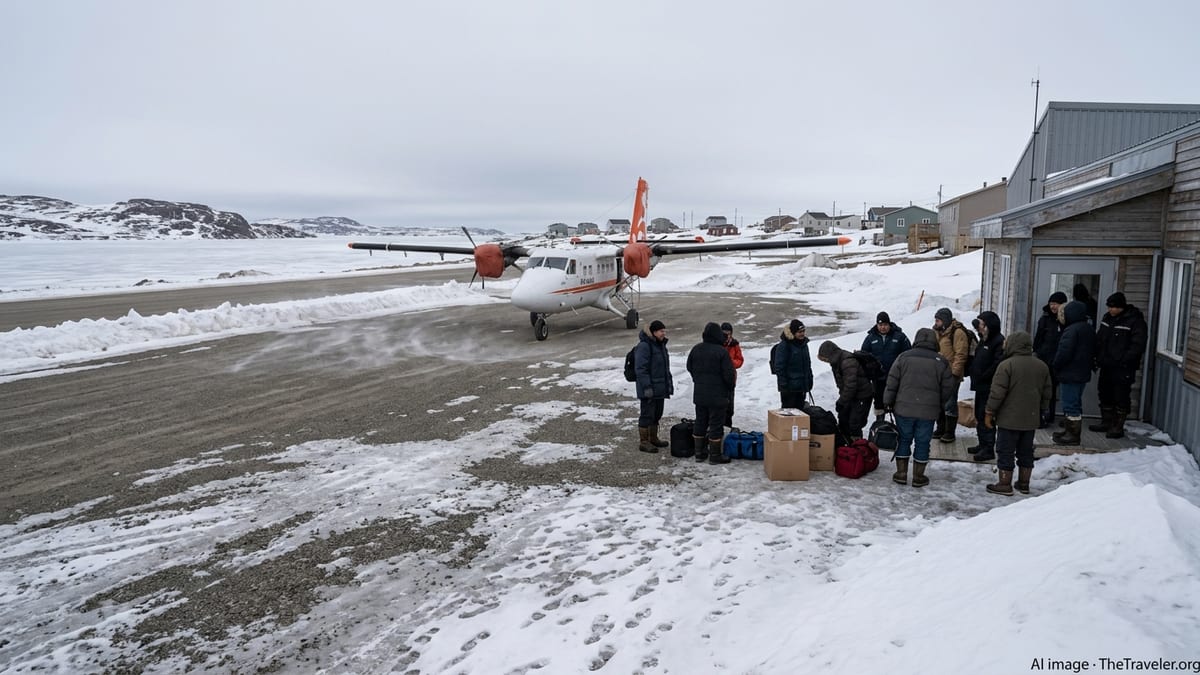
Cluster of Cancellations Hits Remote Northern Hub
The cancellations at Salluit Airport, identified in publicly available schedule and status data for late May, removed several key Air Inuit services from the day’s operations. Flight-tracking and schedule platforms show multiple Salluit movements marked as not operating as planned, including services typically linking the community with Ivujivik and other Hudson Strait villages.
Information compiled from airline timetable downloads and independent flight-status providers indicates that at least four Air Inuit flights involving Salluit did not operate as scheduled within a short window, creating a cascade of missed onward links across Nunavik. Routes that are often lightly served, with only a handful of weekly frequencies, were among those affected, magnifying the impact for passengers who rely on these services for medical travel, work rotations and essential errands in larger hubs.
One regularly scheduled service from Salluit toward Hudson Bay communities, including Ivujivik, appeared as cancelled around May 27, while data for other flights serving Salluit around the same period also shifted from normal operations. The pattern left travelers facing extended waits at small terminals where alternative transport is extremely limited and road options do not exist.
While the airline has not publicly detailed specific causes for the Salluit disruptions, the cancellations come during a period when carriers serving Canada’s North are managing tight aircraft rotations, specialized maintenance requirements and occasionally volatile Arctic weather conditions, all of which can strain on-time performance.
Ivujivik, Kangiqsujuaq and Kuujjuarapik Among Affected Destinations
The knock-on effects of the Salluit cancellations reached several other Nunavik communities that depend on Air Inuit’s network. Published route maps and schedule tables list Ivujivik, Kangiqsujuaq and Kuujjuarapik among destinations linked by connecting services that often route through Salluit or share aircraft operating patterns with its flights.
For Ivujivik, Quebec’s northernmost village on Hudson Bay, long-term schedule information shows a limited selection of flights each week, typically operated with smaller turboprop aircraft. When a Salluit flight in the chain is cancelled, travelers bound for or departing from Ivujivik may lose the only convenient same-day option, leaving some to wait for the next available rotation or rerouting via other coastal communities if seats can be found.
Kangiqsujuaq, located on the Ungava Bay coast, also appears in Air Inuit’s regularly published timetables, with movements often coordinated with other northern stops. Any disruption at Salluit can reverberate across this pattern, delaying passenger journeys between Kangiqsujuaq and regional centers such as Kuujjuaq. Schedule data for Kangiqsujuaq flights across late May already shows a tightly timed operation, offering passengers few alternatives when a leg is removed.
On the Hudson Bay side, Kuujjuarapik acts as an entry point for regional traffic and connects to additional services in Quebec. Timetables and third-party schedule aggregators highlight Kuujjuarapik as a recurring endpoint for Air Inuit flights originating in smaller coastal villages. When Salluit flights are cancelled, the resulting disruption to those feeders can affect passenger loads and timing into Kuujjuarapik, reducing reliability for travelers planning onward links further south.
Passengers Confront Limited Options and Longer Waits
Because Nunavik communities such as Salluit, Ivujivik, Kangiqsujuaq and Kuujjuarapik are not connected by road to the rest of Quebec, air service is often the only year-round option for personal travel, cargo and medical transfers. When cancellations remove multiple daily flights, travelers have few immediate alternatives aside from waiting for the next operating service or seeking seats on already busy neighboring routes.
Publicly available information on Air Inuit’s customer policies describes standard procedures for delays and cancellations, including rebooking on the next available flight and, in some cases, eligibility for compensation under Canada’s Air Passenger Protection Regulations. However, in practice, the sparse schedule in the Far North can mean that even timely rebooking results in overnight or multi-day stays in small communities, where accommodation and services are limited and often expensive.
Independent travel forums and discussion threads focused on northern Canada have for months highlighted recurring challenges on certain regional routes, including late arrivals, schedule changes and isolated clusters of cancellations. While these accounts are anecdotal, they reflect a broader experience for some passengers who view every cancelled flight as more than a minor inconvenience, particularly when journeys involve critical appointments or rare leave periods from remote work sites.
For travelers currently in the region, airport information boards, online flight-status tools and direct checks of booking records remain the primary ways to track whether services are operating as planned. Given the low frequency of many Nunavik flights, travel planners often advise building additional time into itineraries and avoiding tight same-day connections when possible.
Operational Pressures on Regional Northern Carriers
Air Inuit’s operations across Nunavik rely on a mixed fleet of turboprop aircraft capable of serving short gravel or compact paved runways in challenging conditions. The airline’s public materials outline an extensive network that threads through more than a dozen remote communities, with aircraft frequently completing complex multi-stop rotations during a single day.
Industry observers note that carriers in the Canadian North face a combination of operational pressures, including high maintenance demands in harsh climates, pilot and technician shortages and the cost of positioning aircraft and crews to remote outposts. When one leg in a rotation is disrupted by mechanical issues or weather, subsequent flights in the sequence can be delayed or cancelled as operators work to return aircraft and staff to their planned positions.
In recent months, other Canadian airlines have also experienced spikes in cancellations and delays at larger southern airports due to storms, infrastructure projects and staffing constraints. The experience at Salluit illustrates how such issues can be magnified in the North, where a single aircraft may be responsible for connecting multiple communities in a single day and where spare capacity is limited.
Publicly accessible advisories from Air Inuit in spring 2026 have focused largely on changes to check in, baggage procedures and ground-access challenges at major airports. However, the cluster of cancellations at Salluit has drawn fresh attention to the fragility of long, lightly served routes in Nunavik and the importance of contingency planning for residents and visitors alike.
Travel Planning Considerations for Nunavik Itineraries
For travelers planning trips to or within Nunavik in the coming weeks, recent disruptions at Salluit serve as a reminder to build flexibility into itineraries. Travel specialists often recommend scheduling buffer days before critical appointments, especially when journeys depend on multi-leg routes that include small airports and aircraft with limited seating.
Public guidance from Air Inuit and other carriers underscores the importance of confirming flight status shortly before departure, arriving early at airports where check in and baggage procedures may differ from southern hubs and ensuring that contact details in reservations are up to date so passengers can receive notification of schedule changes.
Travelers who experience cancellations are encouraged by consumer advocates to keep records of boarding passes, notifications and receipts for any additional expenses that may later be eligible for reimbursement, depending on the cause of the disruption and the applicable regulations. In remote regions, this can include unplanned overnight stays and meals while waiting for the next available flight.
Despite the challenges highlighted by the recent cancellations at Salluit, air links remain a vital lifeline for Nunavik communities. As summer approaches and demand for travel to the North grows, passengers and airlines alike will be watching closely to see how carriers manage schedules and maintain reliability on some of Canada’s most remote and essential routes.