


More news on this day
The United States has moved in step with major global transit hubs including the United Kingdom, United Arab Emirates, Thailand, Singapore, and Saudi Arabia to tighten cross-border health controls as Ebola outbreaks in the Democratic Republic of the Congo and Uganda raise fresh concerns for international travel.
Get the latest news straight to your inbox!
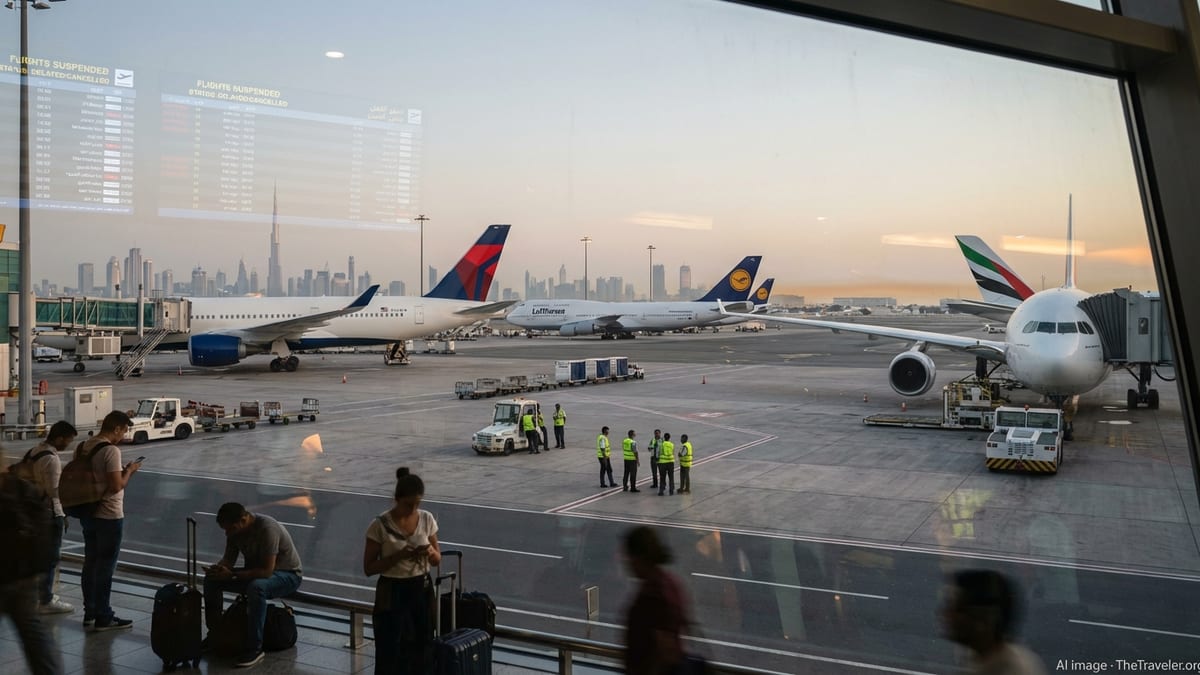
New US Screening, Routing and Entry Limits Take Hold
Publicly available guidance from US health agencies shows that the country has activated layered travel defenses aimed at keeping Ebola out while maintaining limited connectivity with affected regions. On May 18, 2026, federal health and border agencies introduced enhanced screening, targeted entry restrictions, and expanded public health monitoring for travelers with recent stays in outbreak zones in East and Central Africa.
Updated advisories indicate that people arriving from the Democratic Republic of the Congo, Uganda, and in some cases South Sudan are now subject to mandatory health assessments on arrival in the United States. Information from recent agency statements describes temperature checks, symptom questionnaires, detailed travel-history reviews, and 21-day symptom monitoring as core elements of the response.
Reports from US-focused news and financial outlets highlight an additional shift that has drawn close attention from the travel industry. The United States has temporarily extended its Ebola-linked entry ban to include some lawful permanent residents who have recently been in the affected countries, a move described in coverage as unusual compared with previous public-health restrictions. Notices indicate that more detailed rules and potential adjustments are expected over the coming weeks as officials review the impact on travelers and airlines.
Operationally, US-bound passengers who have been in outbreak-affected areas are being funneled to a small number of designated airports equipped with permanent public health stations. Washington Dulles has emerged as the primary hub for these arrivals, according to local and national coverage, with staff redeployments underway to handle expanded screening and follow-up.
United Kingdom Aligns Border Health Checks With Global Partners
In the United Kingdom, the risk to the general public from Ebola continues to be assessed as low, but government portals and health-security briefings show a tightening of travel-related vigilance. The UK has long used layered systems to manage infectious-disease risks at its borders, and recent updates point to refreshed guidance for airlines, port health authorities, and front-line medical providers handling passengers from Central and East Africa.
Travel advice pages for destinations associated with onward connections from Africa, including Saudi Arabia and wider Gulf routes, now carry reinforced reminders about monitoring for viral hemorrhagic fevers and other high-consequence infections. UK health security assessments emphasize rapid identification and isolation of any suspected cases detected among incoming travelers, with enhanced information-sharing between airports, local health services, and national agencies.
While the United Kingdom has not introduced a blanket ban on arrivals from the Ebola-affected countries, published information suggests that targeted measures, including expanded contact tracing and updated case definitions at emergency departments, are intended to complement more visible airport checks in partner countries. For travelers, this translates into additional questions at check-in and on arrival, along with the possibility of being contacted by health services if seated near a passenger later classified as a potential case.
Industry analysts note that London’s position as a major connecting hub between Africa, North America, and the Middle East means any change in UK screening posture reverberates quickly across airline scheduling and passenger flows. Carriers are already recalibrating crew layover patterns and contingency plans in case further steps, such as routing adjustments or temporary schedule cuts, become necessary.
Asian Transit Hubs Move to Contain Risk
Across Asia, authorities in key connecting states are also tightening controls in response to the widening Ebola outbreaks. In Thailand, widely shared updates referencing Ministry of Public Health measures describe an emergency regime that now requires certain travelers with recent stays in the Democratic Republic of the Congo or Uganda to undergo a 21-day quarantine or supervised health monitoring. Reports indicate that the policy focuses on travel history rather than nationality, reflecting concern about indirect routing through third countries.
Information circulating through travel advisories and airline alerts indicates that carriers operating popular Africa to Asia corridors, including those routing via the Gulf, have been instructed to verify passenger travel histories more rigorously. Physical screening at major Thai international airports has been reinforced, with passengers arriving from or transiting through flagged regions facing health questionnaires, temperature checks, and the possibility of secondary assessments by airport medical teams.
Singapore, another major aviation hub, has similarly elevated its posture around high-consequence infectious diseases, according to regional health ministry bulletins and local media coverage. While public information continues to describe the Ebola threat to Singapore residents as low, there is greater emphasis on pre-travel health declarations, strengthened surveillance of passengers from affected African states, and contingency planning for the rapid isolation and testing of any suspected importations.
Travelers connecting through these Asian hubs may therefore encounter multiple layers of checks on a single itinerary, especially if routing touches both the Middle East and Southeast Asia. Airlines are advising passengers to allow extra time for check-in and transit formalities and to expect occasional delays where flights include travelers with complex or high-risk recent itineraries.
Gulf and Saudi Arabia Heighten Health Requirements Ahead of Peak Travel
In the Gulf, the United Arab Emirates and Saudi Arabia are playing an outsized role in the global Ebola response because of their status as major long-haul transit points and religious-travel gateways. Public-facing information from Gulf-based carriers and regional media points to reinforced health-screening protocols for inbound passengers, particularly those arriving from or via Central and East Africa.
For Saudi Arabia, the timing is especially sensitive, as the 2026 Hajj season coincides with rising case numbers in parts of Africa. Health and travel guidance for pilgrims now reiterates long-standing vaccination rules and hygiene recommendations while also flagging expanded monitoring for viral hemorrhagic fevers. Travelers can expect health questionnaires tied to both Ebola and other regionally significant diseases, alongside routine checks at air and land borders.
Reports focused on Emirates and other Gulf carriers indicate that the United Arab Emirates is tightening pre-boarding health declarations on flights from high-risk areas and refining protocols for handling unwell passengers in flight or on arrival. These measures are designed to dovetail with screening operations in the United States, United Kingdom, and Asia, limiting the chance that exposed individuals can move undetected across several regions in a short period.
While most of these steps stop short of a complete halt to travel from affected countries, they form part of a broader effort to protect large gatherings and dense transit hubs. Travel analysts note that even small procedural changes in Gulf and Saudi airports can ripple quickly through global schedules, as carriers balance public health contingencies with demand for both religious and business travel.
What Travelers Should Expect in the Coming Weeks
Across all of these jurisdictions, publicly available guidance stresses that the overall risk of Ebola infection for ordinary international travelers remains low, but that risk assessments are being updated frequently. For passengers, the most immediate impact is practical rather than medical: longer lines at health checkpoints, additional forms to complete, rerouted itineraries, and occasional last-minute schedule changes.
Health agencies advise that anyone with recent travel to the Democratic Republic of the Congo, Uganda, or neighboring outbreak-affected areas should be prepared for enhanced screening at departure and arrival. Travelers may be asked to provide detailed contact information for the 21-day incubation window, respond promptly to follow-up calls or messages from health authorities, and self-monitor for early symptoms such as sudden fever or unexplained fatigue.
Airlines and airports, meanwhile, are adjusting staffing and infrastructure in anticipation of a sustained period of heightened vigilance. Public reports describe new or reactivated health-screening stations at key US and European gateways, emergency staffing calls at major US hubs, and expanded training for airline crews on responding to potential onboard illness consistent with Ebola.
For now, international routes remain open, but with far tighter health controls than just a few weeks ago. Travelers planning itineraries that pass through the United States, United Kingdom, United Arab Emirates, Thailand, Singapore, or Saudi Arabia are being encouraged by official advisories and industry notices to check the latest entry conditions shortly before departure, build in extra connection time, and maintain flexibility as the global response to the evolving Ebola situation continues to develop.