


More news on this day
As a fresh Ebola outbreak centered in the Democratic Republic of the Congo and Uganda triggers emergency health measures, a widening circle of countries including the United States, Canada, India and Australia is tightening entry rules, redrawing global travel routes and stoking unease among passengers and the tourism industry.
Get the latest news straight to your inbox!
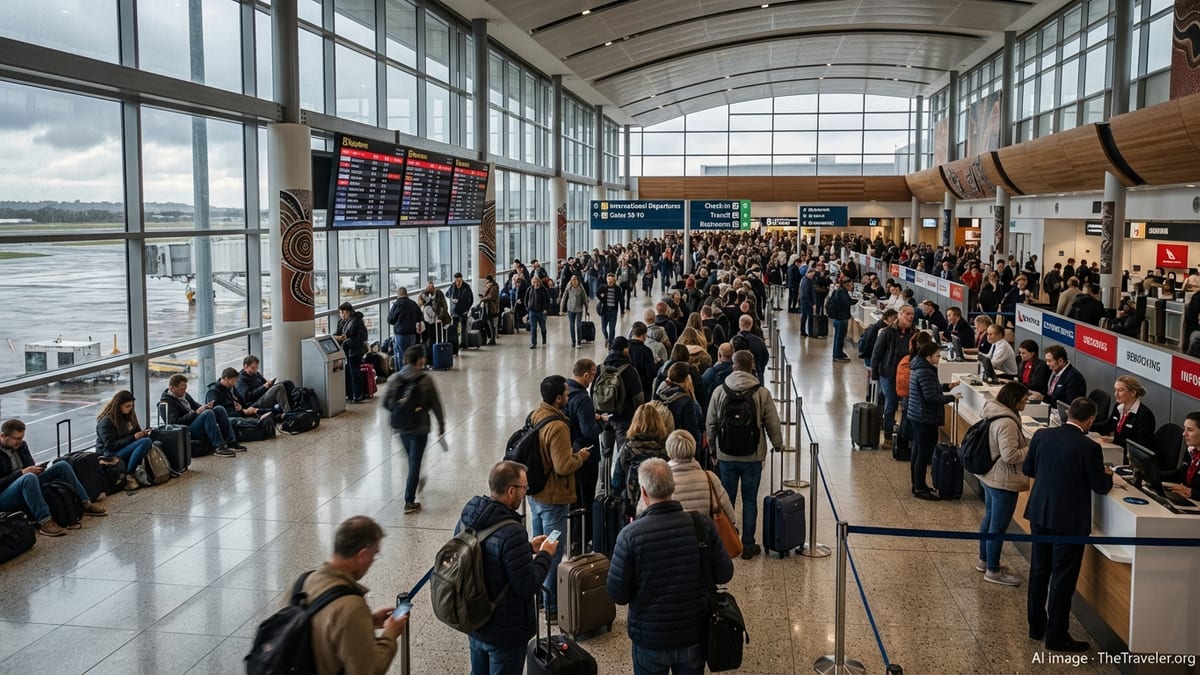
Outbreak in Central Africa Sends Shockwaves Through Aviation
The latest Ebola emergency, linked to Bundibugyo virus in eastern Democratic Republic of the Congo and neighboring Uganda, was designated a public health emergency of international concern in mid May. Publicly available information from the World Health Organization indicates that confirmed and suspected cases, including fatalities among health workers, are concentrated in Ituri and adjacent provinces, with early evidence the virus may have circulated undetected for several months before being recognized.
Risk assessments from global health agencies currently describe the threat of widespread international transmission as low, yet the regional risk for East and Central Africa is considered high. That balance of low global but high regional danger has prompted a rapid policy response from governments that are major long haul destinations, particularly those that experienced significant disruption during the Covid era and are wary of being perceived as unprepared.
In the absence of a widely deployed licensed vaccine specific to this Bundibugyo strain, response strategies are centering on classical outbreak control: rapid case detection, isolation, infection prevention and control in health facilities, safe burials and intensive contact tracing. To support those measures and reduce the risk of exportation by air, health authorities and aviation regulators are increasingly using travel restrictions and airport screening as front line tools.
United States Funnels Flights and Restricts Noncitizen Entry
Publicly available guidance from the Centers for Disease Control and Prevention shows that, as of late May, the United States has introduced enhanced entry measures for anyone whose recent travel history includes the Democratic Republic of the Congo, Uganda or South Sudan. Airlines have been instructed to route affected passengers through a limited number of gateway airports, currently including Washington Dulles and Atlanta, where health screening and exposure assessment can be centralized.
Under a federal order grounded in public health legislation, foreign nationals who have been in the affected countries within the past 21 days are temporarily barred from entering the United States except in very limited humanitarian or medical evacuation circumstances. U.S. citizens and permanent residents are permitted to return but face additional screening, mandatory health monitoring and, for some exposure categories, restrictions on onward domestic travel for the duration of the incubation period.
These layered controls are reshaping transatlantic and trans-African itineraries. Travelers who once connected through European hubs are now finding their journeys rebooked or canceled altogether if they involve recent time in outbreak zones. Industry observers note that, while overall transatlantic capacity remains high, the sudden redirection of a small but significant segment of passengers is already creating pinch points in rebooking systems and uncertainty around future schedules.
Canada, India and Australia Tighten Borders in Parallel
Canada has adopted one of the firmest positions so far. Information published by the federal immigration department indicates that, effective May 27, foreign nationals who have recently lived in or traveled through the Democratic Republic of the Congo, South Sudan or Uganda are temporarily ineligible to board flights to Canada. The policy makes narrow exceptions for essential personnel and explicitly frames the measures as time limited and subject to ongoing review as the outbreak evolves.
In India, health and aviation advisories describe a different approach that combines restrictions with targeted surveillance. Travelers arriving from or transiting key African hubs with strong links to the outbreak region are being subject to health checks, detailed contact forms and, in some cases, quarantine or home isolation instructions. Commercial carriers serving major Indian gateways report a rise in itinerary changes as passengers seek to avoid routings that might trigger monitoring, even when their travel is unrelated to the affected provinces.
Australia, which has maintained a strong post Covid emphasis on external border control, is increasingly aligning with these measures. Publicly available statements from health and home affairs agencies in Canberra outline stepped up screening for passengers with recent stays in Central and East Africa, including mandatory health declarations and potential movement controls for those identified as higher risk contacts. While a full entry ban of the kind seen in Canada has not been universally applied, Australian carriers and travel agents are advising clients that sudden policy shifts are possible if the epidemiological picture worsens.
Collectively, these actions amount to a tightening ring of controls around travelers with even indirect links to the outbreak area, amplifying perceptions that a shockwave is moving through the aviation system even as case numbers outside Africa remain limited.
Travel Industry Faces Renewed Turbulence and Passenger Anxiety
For airlines and tourism operators, the timing could hardly be more challenging. Many carriers had been counting on a strong mid year high season to consolidate their recovery from earlier pandemic disruptions. The reintroduction of health based entry rules for a subset of routes is forcing network planners to reexamine schedules touching African hubs, adjust crew layover patterns and, in some cases, pause planned expansions into emerging markets.
Travel agencies and online booking platforms report a spike in traveler queries about routing through Addis Ababa, Nairobi, Johannesburg and other major connectors, even when no formal restrictions apply to those airports. Past experience with both Ebola and Covid is influencing perceptions, with many leisure travelers opting for more direct routes or avoiding multi stop itineraries that might inadvertently pass through newly designated high risk transit points.
Insurance providers are also recalibrating. Some policies now include specific clauses addressing trip cancellation or interruption linked to public health emergencies and border closures. As news of shifting rules in the United States, Canada, India and Australia spreads, travelers are scrutinizing fine print on coverage for government imposed quarantines or denied boarding, adding another layer of complexity to trip planning.
Tourism boards in countries far from the outbreak zone are watching closely, aware that broad anxiety about African travel can spill over into generalized caution about long haul journeys. Even destinations with no epidemiological connection to Ebola may feel the effects if consumers once again associate international flights with health uncertainties and potential last minute disruption.
Balancing Risk, Rights and the Future of Cross Border Travel
The new wave of Ebola related travel measures is reopening a debate that gained prominence during Covid about the effectiveness and proportionality of cross border restrictions. International bodies focused on aviation safety and public health continue to emphasize that evidence supports targeted, risk based interventions over blanket closures, noting that border screening cannot substitute for strong outbreak control at the source.
However, political realities and public expectations in major destination countries often push decision makers toward visible border actions whenever a high profile infectious disease emerges. For governments such as those of the United States, Canada, India and Australia, the current outbreak is testing how to deploy those tools in ways that protect domestic health systems while minimizing unnecessary damage to global mobility.
For travelers, the immediate impact is a more uncertain landscape. Rapid shifts in entry rules, health documentation requirements and routing constraints mean that itineraries which seemed straightforward weeks ago may now involve additional steps or, in some cases, no longer be possible. Travel professionals are advising clients to monitor official advisories closely, remain flexible about dates and routes, and build in extra time for screening at key international gateways.
How the situation unfolds over the coming weeks will depend largely on the success of containment efforts in Central and East Africa. If local measures bring the outbreak under control quickly, the current shockwave through the travel system may dissipate as rapidly as it appeared. If transmission persists or spreads to additional countries, further tightening of entry rules by major destinations is likely, with global tourism once again on the front line of a public health emergency.