


More news on this day
Travelers in northern Quebec and Nunavut faced another day of disrupted plans after four Air Inuit services linked to Salluit Airport were cancelled amid ongoing delays, interrupting key routes to Ivujivik, Kangiqsujuaq and Kuujjuarapik and highlighting the fragility of air access across Canada’s Arctic and subarctic.
Get the latest news straight to your inbox!
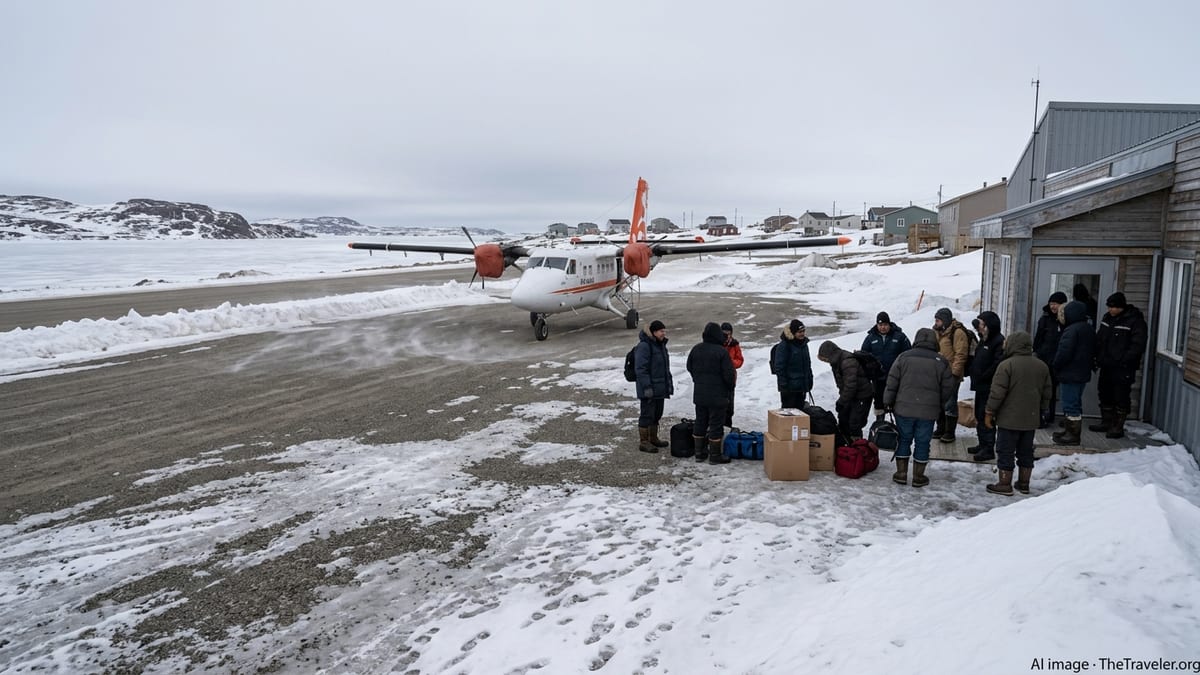
Cluster of Cancellations Hits Salluit Hub
Publicly available flight-tracking data and schedule information for May 27 indicate that a cluster of Air Inuit services involving Salluit Airport were withdrawn from operation, with four flights on regional routes listed as not operating or not scheduled as normal. The disruptions coincided with broader delays across the carrier’s northern network, affecting passengers who rely on Salluit as a critical waypoint in Nunavik.
Flight status records show that services touching Salluit, Ivujivik, Kangiqsujuaq and Kuujjuarapik were among those impacted, with several regularly timetabled rotations either cancelled outright or absent from the day’s operating program despite appearing in recent schedule updates. The pattern suggests that Air Inuit made short-notice adjustments to its timetable, concentrating the disruption on lightly served routes where alternative options are limited.
Salluit Airport, identified by the code YZG, is one of the core nodes in Air Inuit’s northern network and typically links smaller coastal communities to Kuujjuaq and to points farther south. When multiple flights are removed from the schedule on the same day, travelers often face missed connections, unplanned overnight stays and, in some cases, days-long waits for the next available seat.
Weather, crew availability and aircraft rotations frequently interact in complex ways across remote networks, and publicly available information does not yet attribute the Salluit cancellations to a single cause. However, the timing across several interconnected routes points to operational strain on a small fleet serving vast distances.
Key Communities Lose Crucial Links
The impact of the cancellations has been particularly acute for Ivujivik, Kangiqsujuaq and Kuujjuarapik, three northern communities whose airfields are tightly integrated with Salluit and Kuujjuaq in Air Inuit’s published schedule. With road access effectively non-existent, air service functions as a lifeline for residents, workers and visitors.
Ivujivik, located near the northern tip of Quebec, relies on small turboprop flights that often route through Salluit or other Nunavik hubs. When a Salluit service is pulled, passengers bound for or departing from Ivujivik can lose their only same-day connection, leaving rebooking dependent on spare capacity on later flights that may already be heavily subscribed.
Kangiqsujuaq, another coastal community served primarily by Air Inuit, faced similar vulnerabilities. Recent schedule documents and third-party timetable tools list Kangiqsujuaq among the regular stops in the Nunavik network, but on May 27 a planned link between Kangiqsujuaq and Kuujjuaq was shown as not operating. For travelers heading south to medical appointments, education programs or seasonal employment, such interruptions can have consequences that extend well beyond a missed travel day.
Further south on the eastern shore of Hudson Bay, Kuujjuarapik also features in the disrupted pattern. Data from schedule aggregators and historical flight histories indicate that Kuujjuarapik is both a destination and a transfer point for passengers moving between Nunavik and Eeyou Istchee communities and the larger hubs of La Grande Riviere and Montreal. When flights into or out of Kuujjuarapik are cancelled at short notice, onward journeys often need to be rebuilt across multiple carriers or dates.
Knock-On Effects Across Nunavik and Beyond
Although the primary operational issues on May 27 were centered on Salluit and its neighboring destinations, the ripple effects have reached farther across the northern network. Disruptions on one or two feeder routes can cascade through subsequent rotations, forcing schedule changes on seemingly unrelated sectors later in the day or week.
Travel planning tools and airline timetable downloads show that Air Inuit has been operating an intensive pattern of short regional hops linking small airstrips to Kuujjuaq, a key gateway airport for Nunavik. When flights from communities such as Salluit, Ivujivik or Kangiqsujuaq are removed from a given day’s program, aircraft and crew that would normally continue on to other points must be repositioned, sometimes reducing flexibility for handling weather or maintenance elsewhere.
According to published coverage and traveler accounts in recent months, regional carriers across Canada have been grappling with a mix of staffing pressures, aircraft availability challenges and harsh weather conditions that can quickly disrupt northern flying. In many cases, operators have responded with proactive cancellations designed to stabilize the system, even when that means leaving some communities with fewer options on particular days.
For passengers, this environment has translated into a heightened need to monitor flight status closely, build extra time into itineraries and prepare for last-minute changes. In the case of the May 27 Salluit disruptions, travelers connecting to southern flights from Kuujjuaq or La Grande Riviere may face rebookings, overnight stops or extended stays in transit communities while they await the next available segments.
Fragile Travel and Supply Chains in the North
The latest wave of cancellations at Salluit underlines how fragile travel and supply chains can be in Canada’s Arctic and subarctic regions. Unlike larger southern airports, where multiple airlines compete on the same routes, many Nunavik communities depend on a single carrier and a handful of weekly frequencies.
Publicly available information from Air Inuit’s regular schedule shows that destinations such as Salluit, Ivujivik, Kangiqsujuaq and Kuujjuarapik are connected by a tight web of short sectors flown by small turboprop aircraft. While this network is tailored to the geography and population of the region, it offers limited redundancy when even one aircraft or crew pairing is unavailable.
In addition to passengers, air disruptions can affect the movement of time-sensitive cargo, including food, mail and essential supplies. Logistics providers often plan shipments around published airline schedules, and when flights are removed with little notice, goods may be held at intermediate hubs until the next rotation with available space. For remote communities with high dependence on air freight, such delays can quickly be felt in local stores and services.
Observers of northern aviation note that while regulations provide frameworks for compensation and rebooking in the case of cancellations, the practical options for re-accommodating travelers in remote regions are inherently constrained. With limited hotel capacity and few alternative transport modes, even a single disrupted day can stretch local infrastructure and community resources.
What Travelers Can Do Next
For those affected by the May 27 disruptions at Salluit and on related routes, publicly available guidance recommends checking flight status directly with the airline before heading to the airport, as same-day adjustments remain possible when operations are under strain. Travelers with time-critical journeys, such as medical visits or tight international connections, may wish to speak with their booking provider about contingency options on earlier or alternative days when schedules allow.
Consumer information on Canadian air passenger rights also highlights the importance of documenting delays and cancellations, including keeping boarding passes, receipts and written notices of schedule changes. In some cases, passengers whose trips are significantly disrupted may be eligible for compensation or reimbursement, depending on the cause of the cancellation and the applicable fare rules.
More broadly, the latest situation at Salluit Airport reinforces the need for northern travelers to plan with flexibility. Booking longer connection windows, considering overnight stops at major hubs such as Kuujjuaq, and building buffer days into essential itineraries can reduce the risk that a single cancelled regional flight will derail an entire trip.
As Air Inuit and other northern carriers continue to adjust their operations in response to demand, infrastructure constraints and challenging weather patterns, communities across Nunavik and the eastern Arctic will be watching closely for signs of greater schedule stability. For now, the four cancelled flights linked to Salluit on May 27 serve as a reminder that, in the North, every seat and every rotation carries outsized importance for travelers and residents alike.