


More news on this day
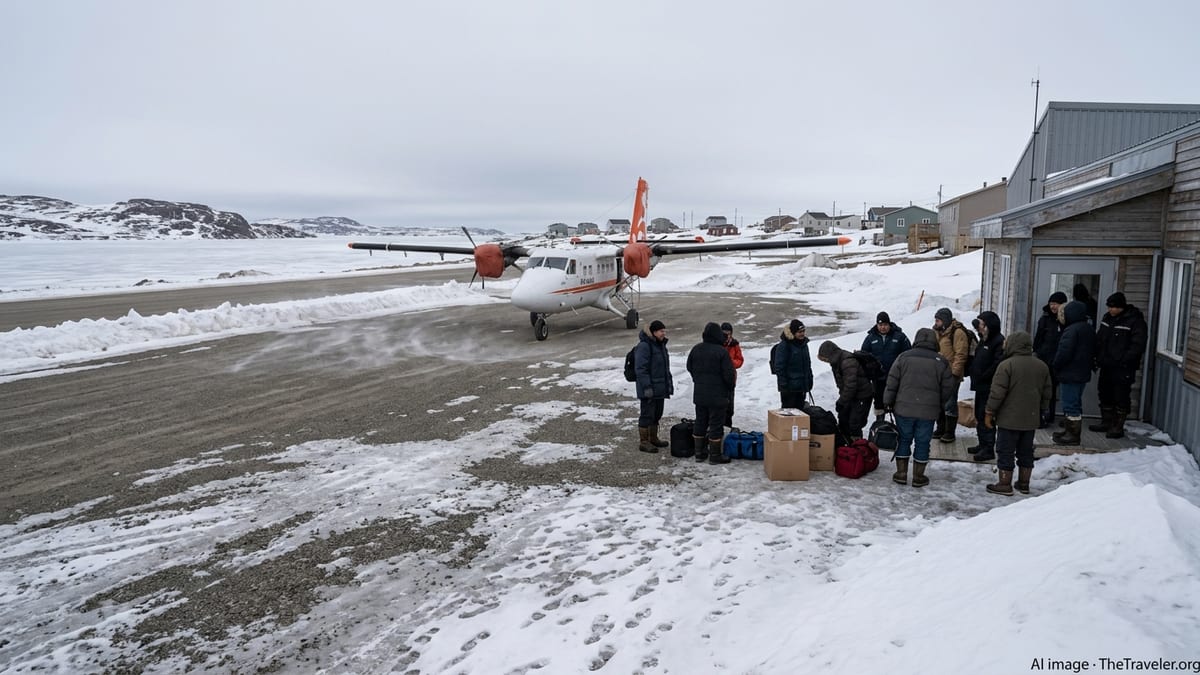
Travelers moving through Quaqtaq Airport in northern Quebec are facing major disruptions after a cluster of Air Inuit cancellations severed a key set of links between the remote Nunavik community and other regional hubs, including Kangirsuk and Kangiqsujuaq.
Get the latest news straight to your inbox!
Cluster of Cancellations Hits Quaqtaq on a Critical Route Network
Publicly available flight-tracking data and schedule tools indicate that at least four recent Air Inuit flights serving Quaqtaq and neighboring Nunavik communities were cancelled within a short window, affecting a network that connects Quaqtaq with Kangirsuk, Kangiqsujuaq, Kuujjuaq and smaller coastal villages.
Services on multi-stop routes that typically link Quaqtaq, Kangirsuk and Kangiqsujuaq have shown gaps and same-day cancellations on tracking platforms, including services normally operated with De Havilland turboprop aircraft. Historic schedule information lists these communities on Air Inuit’s regular network, but some flights that once appeared as routine segments are no longer operating on their previous patterns.
The pattern has translated into missed connections for travelers who depend on a chain of short-haul hops to reach regional centers such as Kuujjuaq or, in some cases, onward flights to Montreal. For many passengers, a single cancellation in Quaqtaq can unravel itineraries that span multiple aircraft and overnight stops.
While no single, detailed explanation has been issued for each cancellation, the clustering of four affected flights on routes touching Quaqtaq has highlighted how sensitive northern travel remains to small changes in fleet availability, crew planning and local operating conditions.
Remote Communities Feel the Strain on Essential Travel
Air Inuit serves Quaqtaq, Kangirsuk and Kangiqsujuaq as part of a lifeline network for Nunavik, carrying residents, medical travelers, government workers, teachers and seasonal visitors. In many cases, scheduled flights are the only practical way in or out of these communities for most of the year.
Regional schedule data shows that Kangirsuk and Kangiqsujuaq rely on short sectors to Kuujjuaq and other coastal airstrips, with travel times often under an hour but with tight turnarounds and limited daily frequency. When a single flight is removed from the schedule, travelers may have to wait until the next operating day or rebook via more indirect routings.
Reports from travelers and past coverage of disruptions in northern Canada suggest that cancellations can quickly cascade into extended waits and unexpected overnight stays, particularly where terminal facilities and accommodation options are limited. Even when airlines arrange rebooking, options are constrained by sparse schedules and small aircraft capacity.
For communities that already face higher prices for food and supplies, interruptions in passenger service can also complicate the movement of small, time-sensitive cargo that often travels in the holds of these flights, adding another layer of concern when cancellations occur in clusters.
Operational Pressures and Weather Risks in Nunavik Flying
Flying in Nunavik involves short gravel runways, rapidly changing Arctic weather and long stretches of coastline with few diversion options. Airlines serving the region, including Air Inuit, typically operate rugged turboprop aircraft designed for short takeoff and landing performance, but even these aircraft are subject to strict safety limits on visibility, winds and runway conditions.
Travel tools and historical flight data for Air Inuit routes show routine adjustments to frequency and routing across the northern network, especially outside peak travel periods. These adjustments can be driven by seasonal demand, aircraft maintenance requirements and crew rotations, all of which can lead to short-notice schedule changes.
Weather adds another layer of uncertainty. Publicly accessible aviation and traveler forums frequently describe Arctic operations where fog, blowing snow or crosswinds can shut down a small airport for hours, forcing airlines to cancel or consolidate departures. In a region where each community may see only a handful of flights a week, the margin for recovery is much narrower than at southern Canadian hubs.
When four cancellations intersect at or through Quaqtaq within a brief period, the result is a noticeable reduction in reliability for residents, even if the total number of affected passengers is relatively small compared to major-city disruptions.
Knock-On Effects for Kangirsuk, Kangiqsujuaq and Beyond
Because of the way northern routes are structured, flights that touch Quaqtaq often also serve Kangirsuk and Kangiqsujuaq on the same rotation, either as through services or as tag-on segments. Schedule documents list multiple combinations linking these three communities, illustrating how closely their air access is intertwined.
Cancellations on Quaqtaq legs can therefore ripple into Kangirsuk and Kangiqsujuaq, especially when an aircraft is scheduled to continue onward after dropping or picking up passengers. A single grounded rotation can mean that travelers in all three communities lose a same-day connection to Kuujjuaq, where medical services, administrative offices and onward flights are concentrated.
Travel planning tools that aggregate schedules for Air Inuit show that Kuujjuaq continues to function as a main hub for travelers linking the Nunavik coast to Montreal and other southern destinations. However, when coastal spokes such as Quaqtaq, Kangirsuk and Kangiqsujuaq experience several cancellations in close succession, seats on remaining flights can quickly become scarce as rebooked passengers vie for limited capacity.
This tightening of capacity can further extend travel times, with some passengers facing rebookings several days later or being rerouted through alternate coastal communities if space permits.
Airline and Passenger Responses Highlight the Need for Resilience
Air Inuit has been investing in parts of its network, including new ground operations at Montreal’s main airport, as part of a broader effort to improve reliability and the overall passenger experience. Public statements from the carrier emphasize service quality and operational control at larger hubs, even as the airline continues to serve a widely dispersed northern route map.
Travel advisories published by the airline outline policies for delays, cancellations and refunds, and point customers to online tools where they can monitor flight status and check in remotely. Industry observers note that these tools are increasingly important for northern travelers, who may need to adjust plans quickly if adverse weather or operational issues begin to affect a route.
For passengers caught up in the four cancellations linked to Quaqtaq, the immediate priority is securing new travel dates and, where necessary, arranging accommodation during extended waits. Over the longer term, the episode underscores ongoing debates in Canada about how to build more resilience into essential regional air links, particularly in remote Indigenous communities where alternatives to air travel are limited or non-existent.
As airlines, regulators and local governments continue to refine northern air policy, the experience at Quaqtaq Airport serves as a reminder that even a small number of cancellations can carry outsized consequences when they occur at the fragile edge of the country’s aviation system.