


More news on this day
Air New Zealand has completed a high-profile digital identity trial on its Auckland to Hong Kong route, showcasing how biometric checks and virtual documents could soon replace paper passports and boarding passes for much of the international journey.
Get the latest news straight to your inbox!
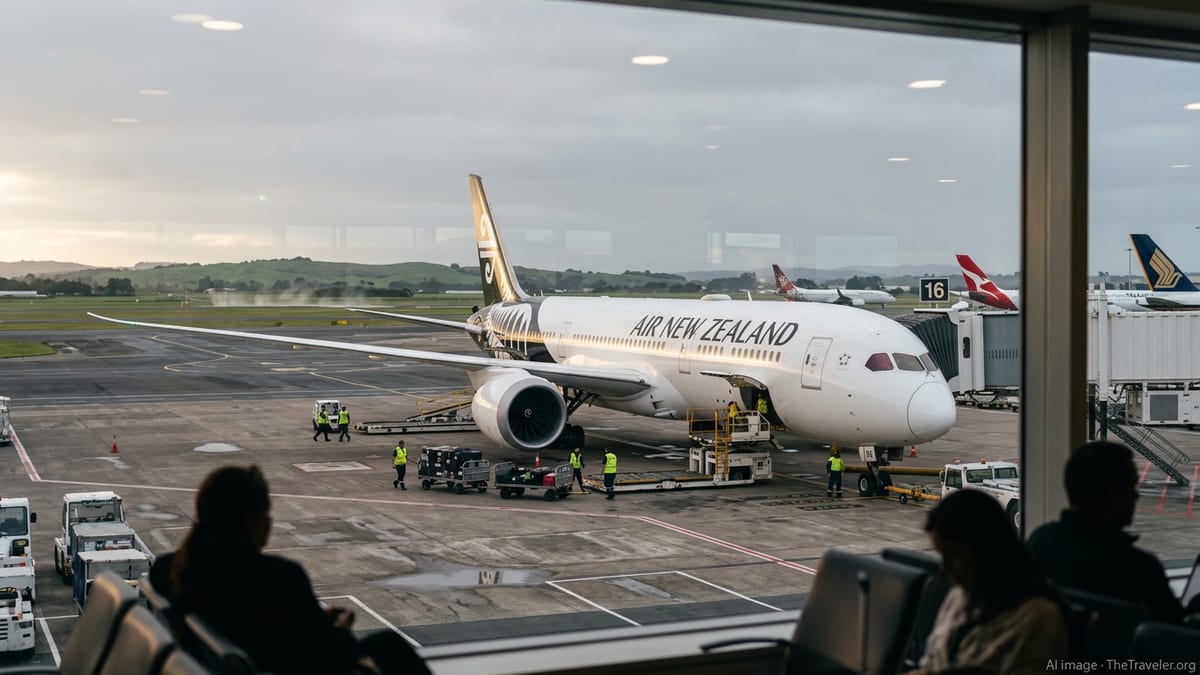
How the Digital ID Trial Worked on the Auckland–Hong Kong Route
According to recent coverage, the airline’s pilot brought together digital identity, mobile wallets and airport biometrics on selected flights between Auckland and Hong Kong. Participants scanned their physical passport into the Air New Zealand app before departure, creating a verified digital profile that could be reused throughout the trip instead of repeatedly presenting documents at the airport.
Publicly available information indicates that once verified, this Digital ID could be stored in a mobile wallet and shared securely at online check in. At the airport, special biometric touchpoints then used facial recognition to match the passenger standing at the gate to the encrypted passport data held in their digital profile. In effect, the traveler’s face functioned as both ID and boarding pass at key checkpoints.
Reports on the trial note that the project linked several systems behind the scenes. Air New Zealand’s app and check in platform were integrated with the New Zealand Traveller Declaration system, the IATA Travel Directory and Hong Kong International Airport’s Flight Token framework. This allowed identity and travel eligibility data to be validated in advance, while enabling contactless processing at selected airport, airline and border touchpoints.
The airline has framed the trial as a proof of concept rather than a full commercial rollout. Participation was limited and voluntary, and passengers still needed to carry their physical passport as a legal travel document. Even so, the test showed how much of the current document checking process can be transferred into the background once a trusted digital identity has been created.
Reducing Queues and Paperwork With Biometric Touchpoints
Air New Zealand has positioned the digital ID initiative as part of a broader effort to deliver what it describes in public material as a more seamless journey. By moving verification steps to the online check in stage and automating checks at the airport with facial recognition, the airline aims to cut the number of times staff need to manually inspect passports and boarding passes.
Reports on the trial suggest that enrolled passengers experienced faster progression through certain airport stages, particularly at self service bag drops and boarding gates configured with biometric readers. Instead of stopping to present documents at each point, they were able to look at a camera for a brief face scan while the system verified their identity and travel eligibility in the background.
Industry analysis notes that this type of contactless flow can benefit both travelers and infrastructure. Shorter interactions at check in and boarding can ease congestion at peak times, while digital pre validation may help airlines and border agencies spot issues earlier in the journey. For passengers, fewer paper checks can translate into less time queueing and a simpler experience, especially on long haul routes where fatigue and tight connections amplify small delays.
However, the Auckland to Hong Kong trial also underlines that biometric processing will coexist with conventional methods for the foreseeable future. Travelers who prefer not to enroll in digital ID programs, or who are unable to do so, are expected to retain access to standard document checks at staffed counters and gates.
Data Privacy, Security and Passenger Trust
The move toward biometric and paperless travel is closely linked to questions about privacy, data protection and consent. Air New Zealand’s earlier biometric boarding work in the United States, where it has used facial recognition gates at airports such as Los Angeles, has generally followed a model in which biometric templates created at the airport are not stored by the airline itself. In the new digital ID trial, the focus shifts to airline managed identity, where personal data is captured and reused within the carrier’s own ecosystem.
Available documentation on the latest trial indicates that passengers opted in through the Air New Zealand app and that identity data was handled under strict security protocols. The airline’s corporate governance and technology materials highlight ongoing investment in cybersecurity and digital identity infrastructure, as well as a stated commitment to responsible use of customer data.
More broadly, civil society groups and privacy advocates continue to scrutinize biometric travel programs across the aviation sector. Concerns range from the potential for data breaches and unauthorized sharing to the risk of function creep, where systems built for convenience are later expanded into more intrusive forms of surveillance. As digital ID moves from small pilots into mainstream use, airlines and governments are likely to face growing pressure to offer clear transparency, meaningful consent options and robust avenues for redress.
For now, Air New Zealand’s digital ID trial appears to align with a voluntary, choice based model. Published coverage stresses that passengers could still travel using traditional documents and processes, and that physical passports remain essential as the legal basis for crossing borders. The central challenge in the coming years will be maintaining this flexibility while scaling up the technology to handle large passenger volumes.
Part of a Wider Push for Global Digital Identity Standards
The Air New Zealand trial sits within a broader international push to define standards for digital travel credentials and biometric identity. Recent reporting from the Asia Pacific region describes collaborative trials involving the International Air Transport Association, technology providers and multiple airlines, all aiming to demonstrate that digital identities can replace many paper forms without compromising security.
These initiatives typically draw on specifications being developed at global level, including work around digital travel credentials that mirror the information in an e passport chip in a secure, virtual format. The goal is to allow passengers to complete many checks before they reach the airport, then rely on fast, contactless identity verification at automated touchpoints in terminals and at borders.
New Zealand is already familiar with biometric border control through systems such as SmartGate, which use facial recognition to match travelers to the chip in their passport. Air New Zealand’s project extends this concept into the airline domain by linking government, airport and carrier systems. Industry observers view this as a key step toward end to end digital journeys where the same trusted identity is recognized at booking, check in, security, boarding and arrival.
Other carriers and airports, from Europe to North America and Asia, are running similar pilots. Many now see digital identity as a critical component of future capacity planning, allowing them to handle forecast passenger growth without building proportionally larger terminals or hiring significantly more staff. Air New Zealand’s trial adds a high profile South Pacific example to this global trend.
What Comes Next for Travelers Using Digital ID
While the Auckland to Hong Kong trial has officially concluded, Air New Zealand is widely expected to build on the lessons learned as it refines its app and digital platforms. The airline’s recent strategy updates point to an expanded role for mobile technology, loyalty integration and passkey style authentication, all of which could support more sophisticated identity features in the near future.
Future phases could involve extending digital ID to additional international routes, adding more biometric touchpoints at partner airports and exploring options for interoperability with other airlines and alliances. Analysts suggest that, over time, digital identity profiles may become as routine as frequent flyer accounts, with passengers managing consent settings and document sharing from within a single app.
For travelers, the most immediate impact is likely to be felt in reduced paperwork and smoother airport flows, particularly for those comfortable with facial recognition and mobile wallets. At the same time, passengers will be watching closely to see how airlines and governments address concerns around data retention, cross border transfers and algorithmic bias in biometric systems.
As trials like Air New Zealand’s move the industry closer to paperless travel, the balance between frictionless journeys and digital rights will remain at the center of the debate. How airlines respond will help determine whether biometric, document free flying becomes a trusted new normal or a niche option taken up only by the most tech confident travelers.