


More news on this day
Regional carrier AirBorneo is warning travellers across Sabah and Sarawak to brace for continued flight delays and cancellations over the coming days, as a combination of concurrent aircraft maintenance and technical checks disrupts services on key Borneo routes.
Get the latest news straight to your inbox!
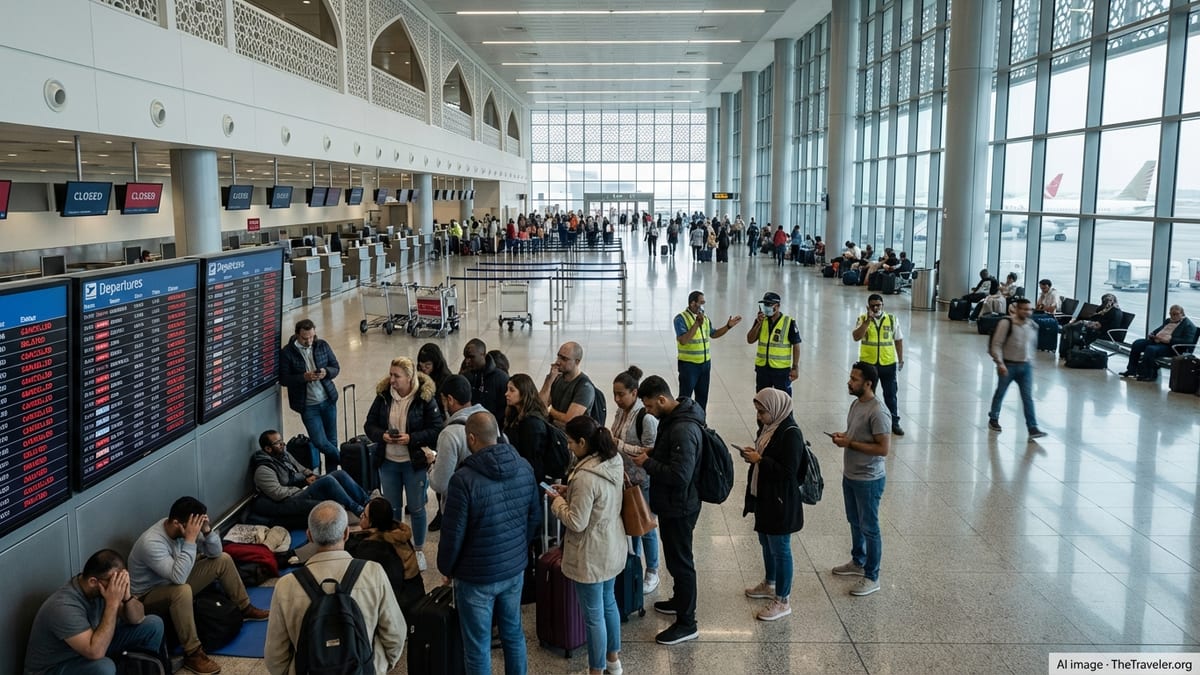
Maintenance bottleneck hits East Malaysia network
According to published coverage on June 8, AirBorneo’s current wave of disruption began on June 5 and has affected multiple services across its East Malaysia network. Publicly available information indicates that both scheduled maintenance and unexpected technical issues have forced several turboprop aircraft out of operation at the same time.
Reports describe an “operating fleet temporarily constrained” as engineering teams work through a backlog in maintenance bays. Aircraft requiring unplanned technical rectification have been withdrawn from service until inspections and repairs are completed, reducing available capacity on short-haul links that often have limited alternative options.
The overlap between planned maintenance and unplanned technical work has created an operational bottleneck for the Sarawak state-owned airline, which took over former MASwings routes at the start of 2026. With multiple aircraft on the ground concurrently, even minor schedule changes are cascading into wider delays and occasional cancellations across Sabah and Sarawak.
Industry observers note that such maintenance-driven disruptions are not unusual for regional carriers with relatively small fleets, where withdrawing just a few aircraft can significantly affect schedules. In AirBorneo’s case, the impact is being felt most acutely on rural and secondary routes that depend heavily on its turboprop operations.
Delays and cancellations to persist in coming days
Public statements from the airline and local media reports suggest that travellers should anticipate rolling schedule adjustments rather than a quick return to normal operations. With several aircraft still undergoing work, capacity remains tight and flight timings are being revised as engineering slots open and aircraft are progressively cleared to return to service.
Coverage from Malaysian business and news outlets highlights that delays are occurring throughout the day, with some flights cancelled outright and passengers shifted to later services. The pattern points to a network operating close to its limits, where any additional technical finding or weather disruption could extend the recovery timeline.
Regional travel analysts caution that the situation may be especially challenging for passengers connecting to other domestic or international flights, as rural and intercity sectors in Sabah and Sarawak often feed into larger hubs such as Kota Kinabalu and Kuching. Missed connections can lengthen journeys by many hours, given the relatively low frequency of some routes.
Operational data and prior scheduling patterns suggest that stabilising the network may require several days of consistently reliable operations, supported by the gradual return of aircraft from maintenance. Until then, passengers are being advised through public channels to treat all timings as subject to change.
What affected passengers can expect
Information shared by the airline through public notices indicates that affected travellers are being contacted directly to arrange alternative flights. Ground teams are reported to be reallocating passengers onto the earliest available services, with priority typically given to those whose travel plans are most time-sensitive or who have already experienced long delays.
Given the constrained fleet, some travellers may find themselves rebooked on flights departing significantly later than originally planned, particularly on thinner routes where daily frequencies are limited. On busier trunk routes, limited spare capacity within the existing schedule may allow more flexible reaccommodation, but even there seat availability is described as tight.
Published coverage suggests that AirBorneo is encouraging passengers to check their flight status before leaving for the airport, and to monitor public information channels for the latest updates. Travellers already at the airport are being advised to remain close to departure gates, as last minute aircraft substitutions and retimed departures remain possible while the airline works to optimise utilisation of its reduced fleet.
Consumer advocates in the region are using the disruption to reiterate standard advice for passengers: allow extra time for connections, keep essential items in carry-on baggage, and maintain flexible ground arrangements at destination where possible, especially when travelling to more remote communities.
Strain on critical rural connectivity
The timing of the disruption has drawn particular attention because of AirBorneo’s central role in operating Malaysia’s Rural Air Services across Sarawak, Sabah and Labuan. The carrier assumed responsibility for these public service routes at the start of the year, inheriting a network that provides vital links for remote towns and interior communities.
Background information on the airline’s fleet shows that it relies heavily on ATR turboprops and Twin Otter aircraft to serve short runways and challenging terrain. When several of these aircraft are grounded simultaneously, alternative options for affected communities are limited, since many destinations lack overlapping service from other carriers.
Travel and tourism stakeholders in Borneo have been closely watching AirBorneo’s performance, as reliable regional air links are seen as crucial for expanding visitor flows beyond major gateways. Prior to the current maintenance crunch, the airline had been positioning itself as a key connector for secondary cities and eco-tourism destinations throughout the island.
The present episode underscores how dependent East Malaysia’s air connectivity has become on a single operator for many routes. Analysts suggest that once the immediate disruption is resolved, there may be renewed discussion about fleet resilience, backup capacity, and the sequencing of major maintenance events on aircraft that underpin essential public transport links.
Fleet growth plans tested by operational realities
The maintenance-related disruption arrives at a pivotal moment for AirBorneo, which is in the midst of a broader transformation from a regional turboprop operator into a more diversified carrier. In recent months, the airline has announced plans to modernise its Rural Air Services fleet with new ATR aircraft and prepare for the introduction of leased Boeing 737-800 jets for longer routes.
Business coverage earlier this year highlighted ambitions to scale up connectivity across Borneo and beyond, with new jets expected to support higher-capacity services and potentially open additional intercity links. These expansion plans are intended to complement, rather than replace, the existing turboprop network that is now under strain.
Aviation analysts note that such fleet transitions can test an airline’s internal capabilities in maintenance planning, engineering resources and crew management. The current situation in Sabah and Sarawak illustrates how tight margins in regional operations can leave little room for error when planned maintenance overlaps with unplanned technical rectification.
For now, travellers and industry observers alike will be watching how quickly AirBorneo can clear its maintenance backlog and restore schedule reliability, while continuing to build the more robust fleet and operational systems that its long-term growth strategy requires.