


More news on this day
Ebola infections are climbing again in eastern Democratic Republic of the Congo, and publicly available information shows the government has revived travel restrictions that are starting to reshape movement within Central Africa and on long-haul air routes.
Get the latest news straight to your inbox!
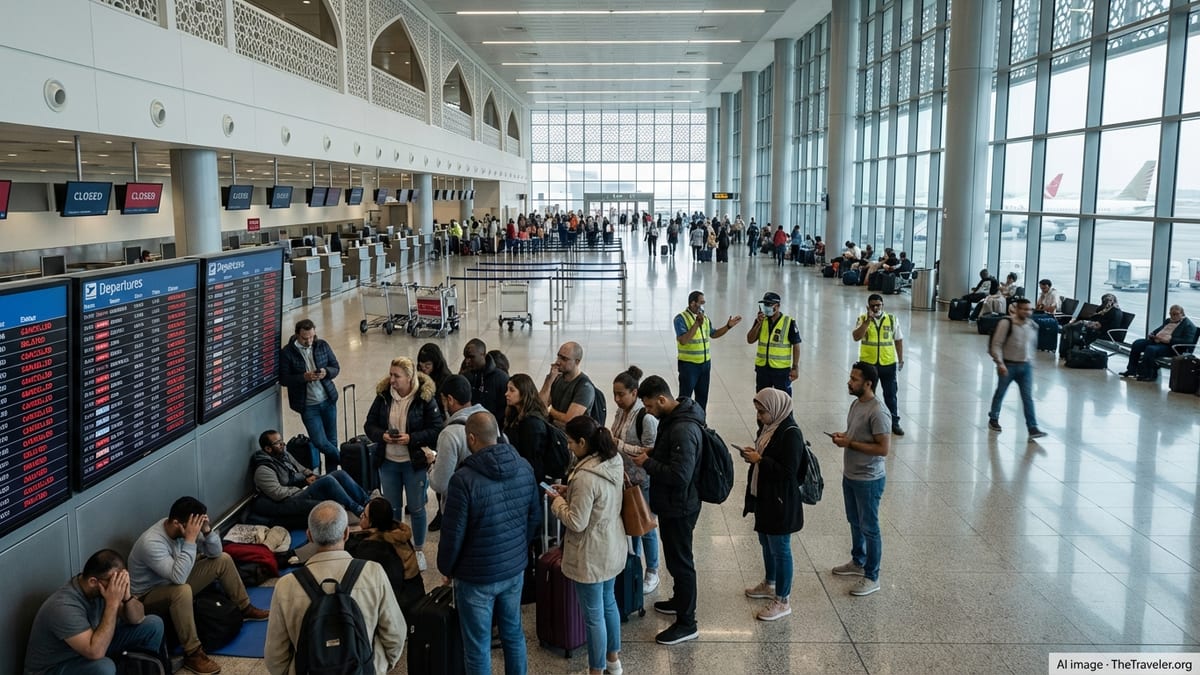
Cases climb as Bundibugyo strain spreads in Ituri
Recent updates from international health agencies describe a fast-evolving Ebola outbreak centered in Ituri Province, in northeastern Democratic Republic of the Congo. Reports indicate that Congo’s National Institute for Public Health has confirmed more than 500 Ebola cases nationwide, with nearly 100 deaths, and a significant share of new infections emerging around the mining town of Mongbwalu and the provincial capital, Bunia.
The current epidemic is attributed to the Bundibugyo strain of the virus, a rarer form of Ebola for which there is currently no licensed vaccine. Situation reports from the World Health Organization and regional partners note that cases have also been detected in neighboring Uganda, some linked to cross-border movement from Congo. The pattern of spread, combined with high mobility in conflict-affected areas, has raised concern that the outbreak could continue to expand along trade and transport corridors.
On 17 May 2026, the World Health Organization classified the Bundibugyo Ebola situation in Congo and Uganda as a public health emergency of international concern, citing the potential for wider regional dissemination. Since then, daily case tallies from Congo’s public health institute have shown periodic surges, including clusters of more than two dozen confirmed infections recorded within single 24 hour periods.
Analysts note that while the current numbers remain well below the scale of the 2014 to 2016 West Africa crisis, the combination of a hard to reach epicenter, limited health infrastructure, and population displacement makes containment particularly challenging. For travelers, this epidemiological backdrop is shaping a new wave of movement controls and advisories.
Kinshasa revives domestic checkpoints and exit controls
According to reporting from regional media and humanitarian situation briefs, the Congolese government has reintroduced a patchwork of internal travel measures aimed at slowing further spread from Ituri to larger urban centers. These measures include health checkpoints on major roads out of affected zones, temperature screening at bus depots, and tighter monitoring of river transport routes that link remote communities with larger markets.
Provincial authorities in Ituri are reported to have revived requirements for travel permits for those leaving high risk health zones, particularly around Mongbwalu and Bunia. Publicly available decrees describe mandatory health screenings and documentation of travelers’ contact histories before they are allowed to board interprovincial buses or small aircraft. In some cases, night buses on popular corridors have been temporarily halted, reflecting concern about overnight mixing of passengers from multiple localities.
At the national level, updated notices from several governments refer to Congo’s use of “enhanced exit screening” at key airports, including Kinshasa and Goma, for passengers with recent stays in Ituri and neighboring provinces. These measures typically involve health questionnaires, visual assessments, and in some cases rapid testing for symptomatic travelers. While these practices fall short of blanket domestic travel bans, they can lead to delays and last minute itinerary changes for residents and visitors alike.
Travel analysts tracking on the ground reports suggest that these renewed checks mirror measures used during previous Ebola episodes in eastern Congo, which relied on community based surveillance and transport hubs as critical control points. For visitors, the result is a more fragmented internal transport environment, where journeys that once took a day can now stretch considerably longer.
International response and evolving travel advisories
Outside Congo, governments and public health agencies are adjusting their own travel policies in response to the outbreak. Updated advisories from North American and European authorities currently warn against nonessential travel to parts of eastern Congo affected by Ebola, with some classifying Ituri as an area where travel should be avoided altogether. These notices typically emphasize that the risk to most international travelers remains low but urge careful planning and strict adherence to health precautions.
Publicly available information from the United States Centers for Disease Control and Prevention indicates that Washington has layered enhanced entry screening and route restrictions on passengers with recent stays in Congo, Uganda, or South Sudan. Travelers who have been in these countries within the past 21 days are being funneled through designated airports for health assessments, and nonessential travel from certain areas has been temporarily curtailed. Similar screening focused approaches are appearing in other regions, including parts of the Middle East and Asia that host large Congolese and Ugandan diasporas.
At the same time, guidance from multilateral health and aviation bodies continues to caution against comprehensive international travel bans, citing experience from past outbreaks where blanket suspensions hindered the flow of aid and personnel. Recent technical statements encourage countries to prioritize robust exit screening in affected areas, transparent reporting of cases, and preparedness at arrival points, while allowing essential air connectivity to continue under strict protocols.
For the travel sector, this mix of national level restrictions and global level recommendations has created a patchwork of rules that can change rapidly. Airlines are adjusting schedules and rebooking policies on routes touching Central and East Africa, while tour operators that feature Congo’s national parks and river expeditions are reviewing safety plans and cancellation terms with clients.
Impact on regional mobility and long haul itineraries
The resurgence of travel controls within and around Congo is already reshaping how people move across Central Africa. Reports from humanitarian agencies describe slower cross border trade in areas where informal footpaths and river crossings are now subject to health checks, with communities along the Congo Uganda frontier experiencing delays in accessing markets and services.
Bus companies and small regional carriers are reassessing routes that pass through or near Ituri, in some cases shortening services to avoid high risk zones. Travelers heading to more stable destinations in the region, such as Rwanda or Tanzania, may find that their usual overland or multi stop flight options are no longer available or come with additional medical documentation requirements.
For long haul travelers, the most visible changes are appearing in booking engines and airport arrival procedures. Some international airlines have implemented temporary restrictions on tickets originating in or transiting through affected parts of Congo, while others are updating their conditions of carriage to reflect health screening obligations. In major hubs in Europe and North America, passengers arriving from Central Africa can expect targeted questionnaires, contact detail verification, and advice on what to do if symptoms develop after travel.
Travel industry analysts note that the timing of the outbreak, in the run up to a global summer of major sporting events, has heightened scrutiny of passenger flows from outbreak countries. While mass cancellations have not yet materialized, event organizers and host cities are reviewing contingency plans in case further escalation leads to tighter cross border travel rules.
What travelers should watch in the weeks ahead
For leisure and business travelers planning trips that touch Central or East Africa in the coming months, the situation in Congo merits close monitoring. Although most travel outside the outbreak areas continues, the revival of both domestic and international restrictions means itineraries can be disrupted with little warning if case numbers spike or new clusters emerge along transport routes.
Specialists in travel health recommend that travelers pay attention to three main elements as the situation evolves. The first is the geographic footprint of confirmed cases, which will influence whether authorities classify specific provinces as off limits. The second is the level of travel notice issued by individual governments, which can affect insurance coverage and the availability of commercial flights. The third is the operational status of local health systems and border posts, as strain on these services can translate into longer waits and more complex documentation requirements at checkpoints.
For now, publicly available guidance from health agencies emphasizes that Ebola is not transmitted through casual contact or the air during normal travel interactions, and that the greatest risks are associated with direct exposure to bodily fluids in health care and caregiving settings. Nonetheless, the rise in confirmed infections in Congo and the government’s decision to revive travel controls underline how quickly an isolated outbreak can become a central factor in global mobility planning.