


More news on this day
Tirana International Airport has begun a significant digital upgrade of its airside operations, deploying Airbus’ Agnet mission-critical communications platform over Vodafone Albania’s 5G network in a move aimed at strengthening safety and efficiency across the country’s busiest aviation hub.
Get the latest news straight to your inbox!
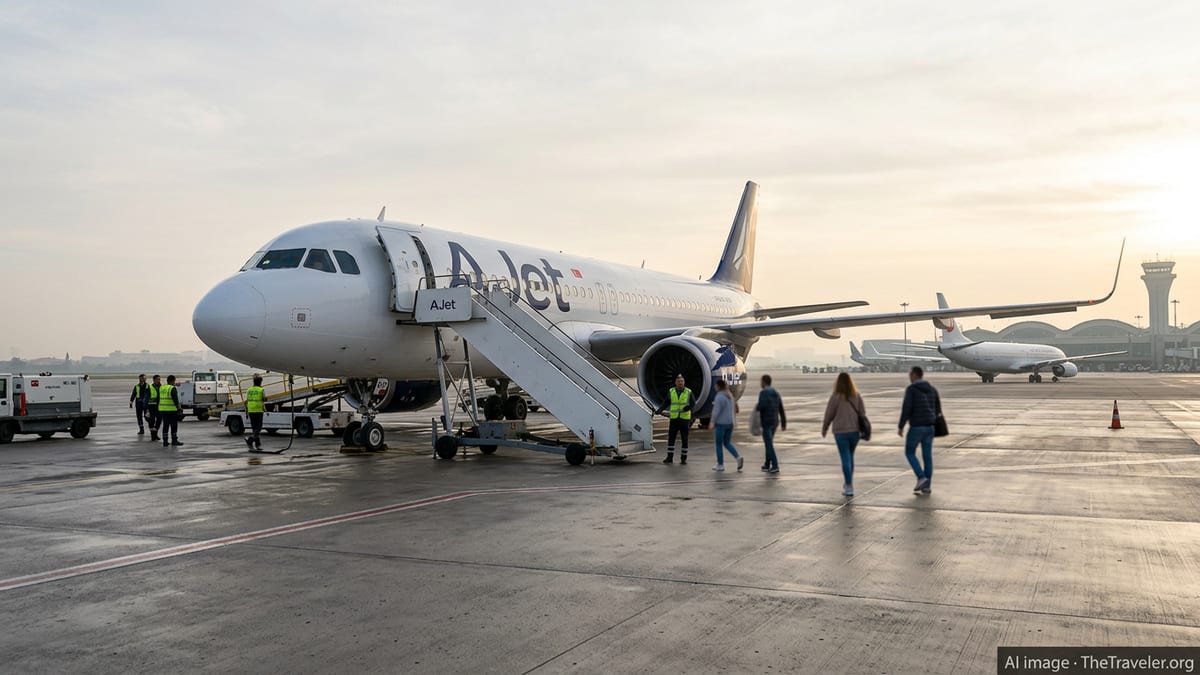
Landmark 5G Partnership at Albania’s Main Gateway
Publicly available information shows that Tirana International Airport, the primary gateway to Albania and one of the fastest growing airports in the Balkans, has rolled out a new 5G-enabled communications system for staff and operational teams. The deployment is the result of a partnership between the airport operator, Vodafone Albania and Airbus, combining next-generation connectivity with a platform designed for high-reliability, real-time coordination.
According to recent coverage of the project, the new system replaces traditional analogue and radio-based tools with a fully digital environment built around Airbus’ Agnet solution and Vodafone’s standalone 5G network. The aim is to give ground handlers, security personnel, maintenance crews and terminal staff a common, resilient channel so that they can share information instantly, particularly during peak traffic or incidents.
Tirana International Airport has handled record passenger volumes in recent years, and reports indicate that sustained growth continues in 2024 and 2025. Concentrating almost all of Albania’s commercial air traffic into a single, compact terminal has increased the pressure on apron logistics, turnaround times and crowd management, making reliable, secure communications a central concern for airport planners.
The 5G-enabled system is described in public materials as mission-critical, indicating performance expectations that go beyond consumer mobile services. Low latency, priority handling for voice and data, and hardened cybersecurity features are positioned as key components of the upgrade as the airport modernises its operations.
How Airbus Agnet Changes Day-to-Day Operations
Agnet is Airbus’ flagship mission-critical collaboration platform, originally developed for public safety users such as emergency services and now adapted for demanding industrial environments. The solution is based on 3GPP standards and supports 4G and 5G networks, enabling secure push-to-talk voice, real-time video, file transfer and geolocation across smartphones, tablets and specialised devices.
In the Tirana deployment, the platform allows airport teams to communicate in talk groups that mirror operational structures, such as runway inspections, baggage handling, terminal security and aircraft turnaround coordination. Reports indicate that staff can move between radio-style group calls, one-to-one conversations and multimedia sharing without changing devices, which reduces the fragmentation that often exists between radio, phone and messaging tools.
Published information from Airbus describes Agnet as interoperable with existing professional mobile radio systems, which is relevant for airports that have invested heavily in TETRA or similar networks. At Tirana, the solution is presented as a step towards broadband-centric operations where high-bandwidth services such as live video streaming from the apron, sharing of incident photos and rapid access to operational documentation are integrated into routine workflows.
For airport workers, the change is also practical. Using standardised, ruggedised smartphones or tablets over 5G, teams can access both communications features and operational apps through a single device. This approach reflects a wider aviation trend where mobile tools are increasingly replacing paper-based processes and fixed workstations around the terminal and on the airfield.
5G as a Backbone for Mission-Critical Airport Communications
The Tirana project illustrates how 5G is beginning to serve as an underlying fabric for mission-critical communications in aviation. Compared with legacy networks, 5G offers higher capacity and lower latency, allowing many more devices to connect simultaneously while maintaining the responsiveness required for safety-related coordination.
Vodafone Albania’s role in providing a dedicated, secure 5G infrastructure is central to the solution. Publicly available descriptions emphasise quality-of-service controls that prioritise airport traffic and aim to keep communications running smoothly even during network congestion, such as during peak holiday periods or irregular operations caused by weather disruptions.
Industry analysis of mission-critical 5G notes that deterministic performance, strong encryption and network slicing are key to convincing safety-focused sectors like aviation to trust commercial mobile technologies. The Tirana deployment aligns with these trends, demonstrating how a public operator and an aviation concessionaire can combine their capabilities to create a quasi-private environment on top of a national 5G footprint.
More broadly, Airbus has been working on integrating terrestrial 5G with satellite and non-terrestrial networks, positioning Agnet as a solution that can eventually operate seamlessly across different types of connectivity. While Tirana’s upgrade is focused on ground operations at a single site, it forms part of this larger shift toward globally consistent, broadband-based mission-critical communications.
Implications for Safety, Resilience and Passenger Experience
The most visible outcome of the Agnet-powered, 5G-enabled system is intended to be faster, clearer coordination among operational teams, which can translate into more resilient handling of routine and exceptional situations. When an aircraft arrives late, baggage offloading, gate reassignment, refuelling and cleaning crews need to be re-sequenced quickly. Real-time group communication helps controllers and supervisors reorganise tasks, aiming to reduce knock-on delays that passengers experience as missed connections or extended waits at gates.
In a safety context, published information on mission-critical platforms highlights how group calls, emergency alerts and location-aware features can support quicker responses to incidents on the apron or in terminal areas. For Tirana, where all international traffic is channelled through a single runway and compact terminal, improving the speed and accuracy of internal alerts has potential to reduce risk exposure when events occur in crowded or operationally complex zones.
The upgrade also has implications for crisis management planning. With a digital, data-driven system, airport operators can review logs, recordings and analytics after disruptions, assessing how teams reacted and where communications bottlenecks occurred. Over time, this can feed into revised procedures, training programmes and infrastructure investments tailored to the realities of a rapidly growing airport.
Although passengers will not interact directly with the Agnet platform, the downstream effects of fewer communication breakdowns and smoother coordination are likely to be felt through more predictable operations. As Tirana adds new routes and carriers, the ability to maintain safety margins and throughput on constrained infrastructure becomes an important competitive advantage in the regional travel market.
A Model for Regional Airports Embracing Digital Transformation
Tirana International Airport’s adoption of Airbus Agnet over 5G positions the Albanian hub as an early regional example of how mission-critical mobile communications can be modernised without waiting for entirely new airport infrastructure. By building on existing facilities and a national operator’s 5G network, the project shows a path that other mid-sized airports in Southeastern Europe could follow.
Reports from the airport and its partners frame the upgrade as part of a broader digital transformation strategy that also includes new operational systems and investments from the concessionaire. In this context, the Agnet deployment is one piece of a larger puzzle in which data, real-time visibility and integrated platforms become the foundation of airport management.
The partnership model underlying the Tirana project is significant as well. By aligning an airport operator’s operational needs with a telecom provider’s 5G capabilities and an aerospace company’s mission-critical expertise, the initiative bridges sectors that have traditionally developed solutions in parallel. This collaborative structure could influence how future projects are designed at other airports facing similar growth and capacity challenges.
For the wider travel industry, the development is another signal that the line between passenger experience, digital infrastructure and safety management is blurring. As more airports explore private and dedicated 5G, and as platforms like Agnet mature, travellers are likely to encounter hubs where invisible but highly capable communications systems are a key enabler of reliable journeys through increasingly busy skies.