


More news on this day
Japan’s New Chitose Airport, the main aviation gateway to Hokkaido, is emerging as a test bed for artificial intelligence and data-driven operations as regional planners search for ways to squeeze more capacity and passenger growth out of existing runways and terminals.
Get the latest news straight to your inbox!
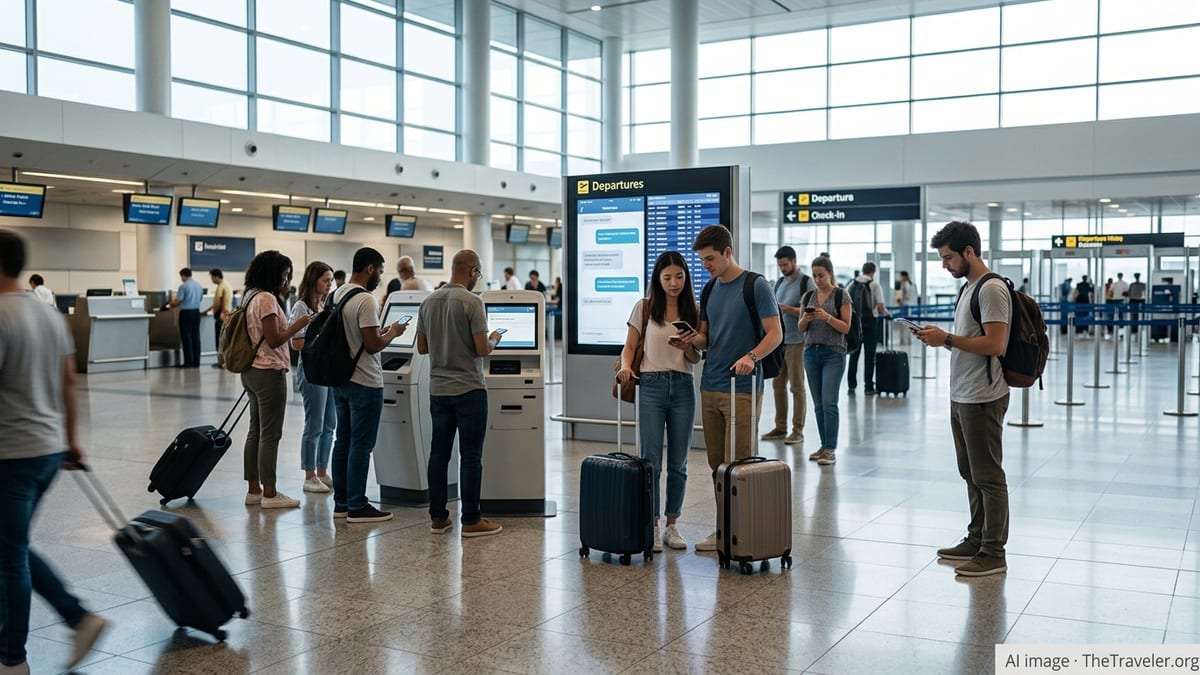
AI Arrives in a 24-Hour Snowbound Hub
Publicly available airport planning documents describe New Chitose as a 24-hour dual-runway hub that already handles hundreds of aircraft movements a day, with traffic constrained by airspace sharing with nearby Self Defense Force facilities and by Hokkaido’s harsh winter conditions. Operators face the challenge of maintaining reliable schedules while coping with frequent runway closures for snow clearance and visibility-related disruptions.
Industry analysts note that these constraints make New Chitose an ideal candidate for artificial intelligence systems that can model capacity in real time. By combining weather feeds, historical delay patterns and live flight data, AI tools can help tower, apron and terminal teams anticipate pinch points before they spill over into long queues or cascading delays across Japan’s domestic network.
In parallel with physical upgrades and timetable adjustments, airport and regional planning materials increasingly reference advanced analytics for snow operations and runway use, highlighting a shift toward software-enhanced infrastructure. Rather than relying solely on new concrete or additional runways, New Chitose is positioning digital optimisation as a way to unlock “hidden” capacity that traditional methods struggle to capture.
The move mirrors a broader wave of AI adoption across Asia-Pacific hubs, from automated security screening trials to predictive maintenance platforms for ground equipment. In this context, New Chitose’s experiments are being watched as a bellwether for how mid-sized airports can modernise without the megaproject budgets of Tokyo or Osaka.
From Static Schedules to Predictive Capacity Management
Historically, capacity at New Chitose has been managed through fixed slot limits and negotiated increases in hourly movements, an approach that can be slow to adjust to changing demand or improved procedures. Recent research and policy papers on Japanese aviation strategy point to artificial intelligence as a way to move beyond static scheduling toward dynamic capacity management that shifts minute by minute.
AI-powered demand forecasting models can ingest airline booking curves, seasonal tourism data and macroeconomic indicators to refine passenger projections months ahead. Closer to the day of operation, these tools can be combined with machine learning models that predict departure and arrival delays, allowing airport teams to adjust stand assignments, gate rotations and tow plans more aggressively than in the past.
For New Chitose, which must coordinate closely with military air traffic while also accommodating surges in domestic leisure traffic and growing international services, such predictive systems promise more efficient use of each available runway slot. Analysts suggest that even a modest improvement in on-time performance and taxi time reductions could translate into additional movements over a full operating day, effectively creating capacity without new infrastructure.
Academic studies on airport delay prediction and queue optimisation also indicate that AI-driven tools can help flatten peak congestion in security, immigration and baggage handling. For passengers, that can mean shorter queues and more predictable journey times, a critical factor for an airport that serves both heavy winter tourism and increasingly year-round business travel.
Passenger Growth Strategy for Hokkaido’s Tourism Engine
Regional development plans for Chitose and wider Hokkaido describe New Chitose Airport as a cornerstone of tourism growth, with authorities seeking to attract more international visitors alongside robust domestic demand. Sapporo’s snow festivals, ski resorts and emerging summer tourism have pushed passenger numbers upward over the past decade, and aviation planners expect further growth tied to inbound travel from Asia and North America.
To capture that demand within existing infrastructure, strategy documents highlight a combination of targeted route development incentives and operational efficiency gains. AI-based forecasting can help identify underserved city pairs and seasonal opportunities, while data analytics on passenger flows through the terminal can guide retail placement, staffing levels and wayfinding improvements that keep people moving even as volumes rise.
Observers also point to the importance of coordinating AI-led improvements “outside the fence,” notably on rail links between New Chitose and Sapporo. National and local reports describe plans to upgrade the JR Chitose Line airport service to increase train frequency and reduce crowding on a route that is already busy with commuters and air travelers. Better ground access, supported by demand-modelling tools, is expected to reinforce the airport’s role as a gateway for both tourism and high-tech industry investment in Hokkaido.
As airlines add or consider new routes to Sapporo, including additional long-haul and seasonal services, the ability of New Chitose to demonstrate reliable, efficient operations becomes a key selling point. AI systems that stabilise turnaround times, sharpen weather planning and reduce knock-on delays can help reassure carriers that the airport can absorb more flights without eroding schedule quality.
Data-Driven Winter Resilience and Snow Operations
Few large airports operate in winter conditions as persistently challenging as those at New Chitose. Official presentations on cold-weather procedures detail intensive runway and taxiway snow removal efforts that can exceed one hundred operations per season, with alternating runway closures used to keep at least one strip open whenever possible.
In this environment, machine learning models trained on years of snowfall, temperature, wind and runway friction data can play a significant role in planning. By predicting when and where snow and ice will create hazards, AI tools can help schedule snowplow convoys, deicing resources and temporary closures in ways that minimise disruption to peak travel periods.
Advanced decision-support systems can also suggest the least disruptive times to shift from dual-runway to single-runway operations, balancing safety margins with traffic demand and airspace constraints. This kind of optimisation is particularly valuable when tourism peaks overlap with severe weather, such as during major winter events when thousands of leisure passengers converge on Hokkaido’s resorts.
For passengers, smoother winter operations could mean fewer last-minute cancellations, shorter tarmac waits and more consistent connection windows at onward hubs in Tokyo and beyond. For airlines and the regional economy, every reduction in weather-related disruption helps protect revenue and maintain confidence in Hokkaido as a year-round destination.
New Chitose in a Global AI Aviation Race
Globally, major hubs from North America to Southeast Asia are testing AI-powered tools across the airport value chain, from automated baggage sortation and biometric boarding to predictive maintenance for jet bridges and fueling trucks. New Chitose’s emerging initiatives place it within this broader wave, albeit with a focus tailored to its unique mix of military coordination, winter weather and tourism-driven demand.
Industry commentators argue that airports that move early on AI stand to gain a competitive edge, particularly in markets where building new runways or terminals faces financial, environmental or political hurdles. By showing that software can unlock meaningful capacity and improve passenger experience, mid-sized gateways like New Chitose can strengthen their bargaining position with airlines deciding where to deploy new aircraft.
For Japan, the experience gathered at New Chitose may also inform how AI is rolled out at larger hubs such as Haneda and Narita, where capacity pressures and growth ambitions are even more acute. Lessons learned on predictive scheduling, snow and weather resilience, and multimodal access planning could be applied across the national network.
While many of these systems remain in pilot or early deployment stages, the trajectory is clear: artificial intelligence is becoming a central pillar of airport strategy. New Chitose’s embrace of AI-backed operations underlines how digital innovation, rather than concrete alone, is set to shape the next chapter of aviation growth in northern Japan.