


More news on this day
Newly released May 2026 commercial aircraft figures show Airbus extending its advantage in deliveries while Boeing steps up output and booking activity, underscoring diverging but steadily improving recovery paths for the world’s two largest jet manufacturers.
Get the latest news straight to your inbox!
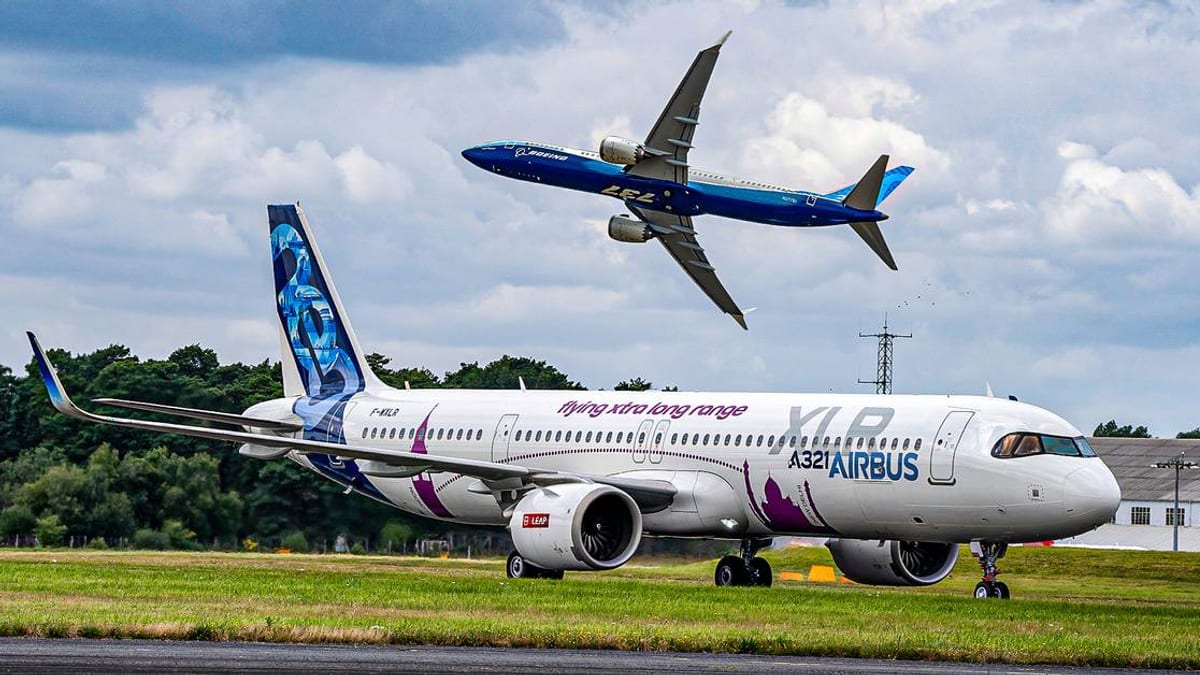
Airbus Lifts Deliveries to 81 Jets as China Bottleneck Eases
Publicly available data compiled from Airbus’s monthly orders and deliveries tables and recent news coverage indicate that the European manufacturer handed over 81 commercial aircraft in May 2026, its strongest month of the year so far and a sharp increase from the same period in 2025. Reports describe the deliveries as going to more than 40 customers worldwide, with the A321neo once again providing much of the volume as airlines continue to prioritize high-density, fuel-efficient narrowbodies for short and medium haul networks.
Coverage from financial and industry outlets notes that May’s performance allows Airbus to pull ahead of its 2025 delivery pace after trailing through the first four months of 2026. The company is working toward a full-year target of around 870 commercial aircraft, a goal that analysts characterize as demanding given ongoing supply chain constraints and engine availability issues that have slowed the narrowbody ramp-up.
Reports also link part of May’s jump to an easing of a delivery logjam involving Chinese customers. Earlier this year, a backlog of undelivered aircraft bound for China raised questions about whether broader trade and certification tensions might be affecting handovers. Recent reporting indicates that several of those aircraft moved in May, giving Airbus a one-month boost and reducing some of the uncertainty around its ability to place finished jets with Chinese carriers.
Despite the stronger month, industry commentary suggests that Airbus still needs a sustained run of high double-digit monthly deliveries to close the gap to its annual objective. Observers point out that the company would have to hold close to, or above, the May rate for much of the second half of 2026 to comfortably reach its guidance, leaving little room for fresh disruption in the supply base.
Boeing Delivers 60 Jets and Books 22 Net Orders
On the US side of the duopoly, Boeing’s latest figures show 60 commercial aircraft delivered in May 2026 and 22 net new orders added to its backlog. Industry summaries based on the company’s published order and delivery tables describe a roughly one-third increase in deliveries compared with April, signaling that output is gradually recovering following quality inspections and rework on certain 737 MAX airframes earlier in the year.
The 737 MAX family once again accounted for the bulk of Boeing’s May handovers, reflecting continued demand from low-cost and network carriers looking to refresh and upgauge domestic and regional fleets. Additional deliveries were recorded across the 767, 777 and 787 widebody programs, with twin-aisle jets flowing primarily to long-haul operators and cargo carriers as intercontinental travel and freight markets stabilize.
Order activity in May, while modest compared with some recent months, helped push Boeing’s net commercial bookings for the first five months of 2026 into what reports describe as the second-highest level on record for that period, behind only 2025. Analysts note that this momentum in orders is important for supporting the company’s long-term production plans, even as near-term deliveries remain constrained by regulatory oversight and ongoing efforts to standardize factory processes.
Even with the improvement, Boeing continued to trail Airbus on deliveries in May, reinforcing a pattern seen throughout the post-pandemic recovery. However, some industry commentary emphasizes that Boeing’s order intake over the past year, particularly in widebody markets, has allowed the US planemaker to narrow the gap in total backlog value, setting the stage for a more balanced contest over the longer term if production issues can be contained.
Widebody and Narrowbody Trends Shape Airline Fleet Strategies
The May data highlight how both manufacturers are leaning heavily on single-aisle workhorses to drive volume, even as they secure strategically important widebody deals. For Airbus, the A320neo family and especially the A321neo remain the centerpiece of monthly delivery tallies, mirroring strong order activity for the high-capacity, long-range A321XLR variant that many airlines see as a way to open thinner transcontinental and transatlantic routes.
Boeing’s narrowbody strategy continues to revolve around the 737 MAX family, which has gradually rebuilt market confidence after extended grounding and production disruptions. Fleet plans disclosed by major carriers in North America, Europe and Asia show the MAX and the A320neo family at the core of domestic and regional expansion programs, with both manufacturers benefiting from airlines’ focus on fuel burn, emissions performance and commonality with existing fleets.
In the widebody segment, recent months have seen Airbus continue to build its A350 order book, including freighter variants aimed at cargo operators looking to replace older 747 and 777 freighters with more efficient twin-engine models. Boeing, for its part, has reported fresh commitments for the 787 and 777 families in recent order updates, positioning those programs to capture demand as long-haul passenger traffic returns toward pre-pandemic levels.
Industry observers say May’s figures underscore how airlines are using a combination of high-density narrowbodies and new-generation widebodies to recalibrate networks. Shorter-haul routes increasingly rely on larger single-aisle jets to maximize revenue per flight, while long-haul operations shift toward point-to-point services supported by aircraft with better fuel efficiency and lower operating costs.
Supply Chain and Regulatory Headwinds Remain
Despite the positive signals in May’s orders and deliveries, both Airbus and Boeing continue to navigate a challenging industrial landscape. Reports from suppliers and airline customers reference persistent shortages of certain components, as well as capacity constraints in engine maintenance and overhaul shops that can delay aircraft handovers or limit utilization of delivered jets.
For Airbus, engine availability on some A320neo-family aircraft and the need to coordinate across a sprawling European and transatlantic supply chain have been recurring themes in commentary around its 2026 guidance. Analysts caution that while the May surge is encouraging, any renewed disruption in critical systems or labor availability could quickly erode the margin for error embedded in the company’s delivery plan.
Boeing remains under close regulatory and customer scrutiny following a series of quality and safety concerns involving the 737 MAX and certain widebody production lines. Publicly available information shows that the company has incorporated additional inspections and process checks into its manufacturing system, steps that support long-term confidence but can temporarily slow output as factories adjust to new requirements.
Market watchers note that the balance between restoring production speed and maintaining elevated quality oversight will be a central question for Boeing over the remainder of 2026. Any further manufacturing setbacks could affect delivery schedules for key customers and risk ceding additional ground to Airbus in the near term.
Implications for the Global Aircraft Market
With global passenger traffic forecasts pointing to sustained growth over the next decade, May’s mixed but generally improving results at Airbus and Boeing carry broader implications for airlines, leasing companies and airport planners. Robust order books at both manufacturers suggest that capacity additions will continue at a steady pace once supply chains stabilize, potentially easing aircraft leasing rates and giving carriers more flexibility to refresh older fleets.
At the same time, the divergence in delivery performance between the two firms highlights how individual program challenges can shape competitive dynamics in specific market segments. Airbus currently enjoys a clear lead in narrowbody deliveries, which translates into more of its jets entering day-to-day airline operations, while Boeing’s strong recent order intake hints at a longer-term fight for share as it works through production constraints.
Financial analysts tracking the sector say that investors are increasingly focused on execution risk rather than demand risk. With airlines and lessors continuing to place sizable orders for both narrowbody and widebody aircraft, the primary question for 2026 and beyond is how quickly and consistently manufacturers can convert those contracts into deliveries without compromising quality.
For now, the May 2026 data show an industry still in transition: Airbus pressing its advantage through higher monthly output, Boeing rebuilding momentum from a lower base, and both manufacturers racing to align complex global supply networks with one of the strongest demand cycles commercial aviation has seen in decades.