


More news on this day
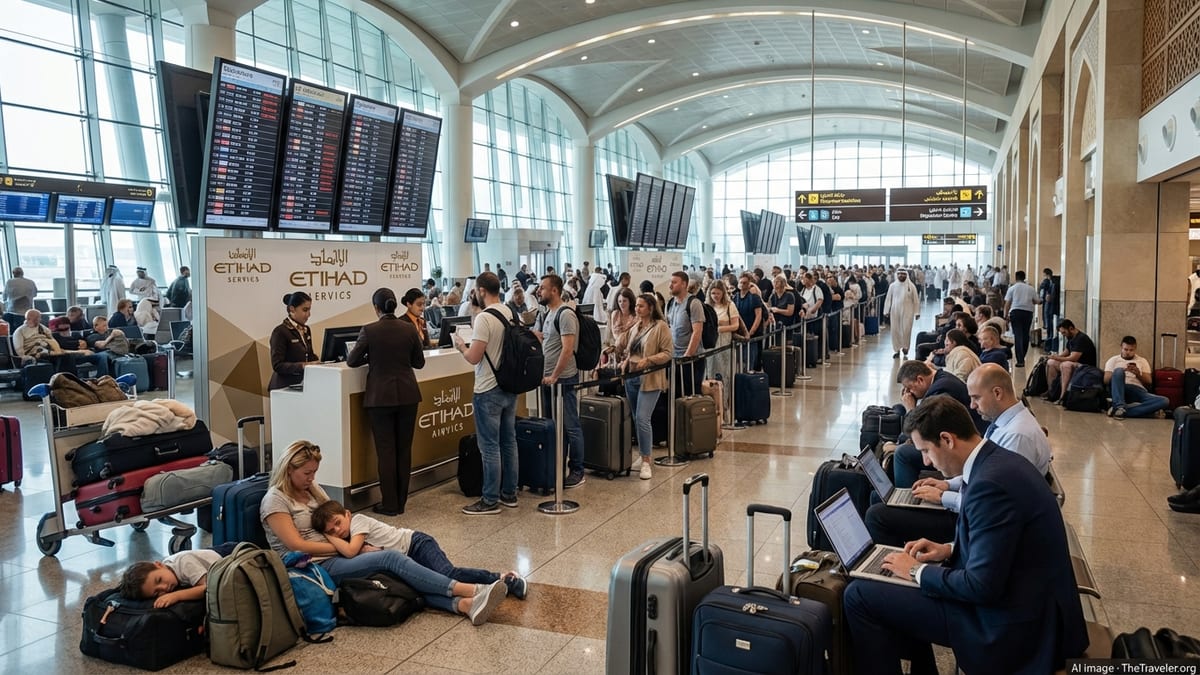
Airlines are entering the peak Northern Hemisphere summer with a patchwork of suspensions, diversions and longer routings across the Middle East, as renewed US Iran hostilities and evolving safety advisories reshape how carriers use the region’s airspace in July 2026.
Get the latest news straight to your inbox!
Expanded Safety Advisories Redraw Regional Airspace
Publicly available aviation bulletins indicate that regulators have tightened their guidance for carriers flying in the Middle East this month, following a fresh escalation in the US Iran conflict. In mid July, the European Union Aviation Safety Agency reinstated and strengthened a warning that urges operators to avoid the airspace of Bahrain, Kuwait, Qatar, the United Arab Emirates and parts of the Gulf of Oman, citing increased risks from missile and drone activity. That advisory comes on top of earlier calls to steer clear of Iranian and Iraqi skies, leaving airlines with a shrinking corridor between Europe, Asia and Africa.
Industry analyses show that these layered restrictions are compressing traffic into narrower routes and forcing many carriers to adopt longer trackings that skirt the region entirely. Business aviation specialists report that large portions of the Baghdad and Tehran flight information regions remain effectively closed for many types of traffic, with complex flow control measures in surrounding airspace. The result is a highly dynamic operating environment in which route approvals and overflight permissions can change at short notice.
Airline associations have warned in recent briefings that detours around the conflict zone are adding time and cost to long haul operations. Depending on the origin and destination, some Europe Asia services are flying hundreds of additional nautical miles to avoid sensitive areas, increasing fuel burn and occasionally requiring extra technical stops. These operational pressures are feeding into broader discussions about global airline profitability in 2026, with the Middle East once again a focal point for geopolitical risk.
Flag Carriers Extend Suspensions on Key Middle East Routes
Alongside rerouting, a growing list of airlines has opted to suspend certain Middle East destinations or defer restarts that had been planned for later in the year. Travel alerts and schedule updates from European carriers show ongoing pauses on services to cities such as Dubai, Riyadh, Dammam and other Gulf gateways, in some cases stretching well into the autumn. Several operators are also maintaining longer standing suspensions to Tehran and other Iranian airports, where commercial traffic has been sharply curtailed since the onset of the war.
Recent coverage from regional and specialist outlets highlights a particularly complex picture in and around the Gulf hubs. While locally based airlines in Dubai and Abu Dhabi have restored a large share of their networks compared with the early weeks of the conflict, many foreign carriers have yet to return. Reports indicate that airlines from North America, Europe and Asia, including some large network brands, continue to keep Dubai and other major Gulf destinations off their active schedules, or are operating at significantly reduced frequencies.
Elsewhere in the region, airports in Kuwait, Iraq and Lebanon remain subject to intermittent disruption and reduced connectivity. Travel industry bulletins compiled in late June mapped constrained or highly conditional operations at several airports in Iraq, with services dependent on day to day security assessments. Beirut is open but operating under routing constraints, and has seen fluctuating schedules as airlines adjust capacity in response to changing overflight options and demand.
Gulf and Regional Airlines Focus on Rerouting Over Cancellation
Despite the heightened risk environment, many Middle Eastern carriers are prioritising network continuity and rerouting rather than widespread cancellation. Coverage from Gulf based media indicates that the majority of flights at major hubs in the United Arab Emirates and Saudi Arabia have been operating broadly on schedule in recent days, even as military activity and missile incidents have been reported elsewhere in the region. Live departure boards at key airports have shown a high proportion of flights departing on time, suggesting that local airlines are managing to absorb much of the disruption through route adjustments.
At the same time, some regional operators have made targeted cuts. A recent update from a Central Asian carrier announced the suspension of flights to the United Arab Emirates, citing the evolving security situation. Smaller low cost and regional airlines have also issued travel advisories and introduced flexible policies for passengers booked on affected routes, including options to rebook, reroute or request refunds without additional fees.
Gulf network airlines are using their hub structures to maintain connectivity, even as they reshape flight paths. Freight and logistics reports from late June describe growing reliance on alternative routings via secondary hubs, as well as increased use of longer north south corridors that bypass Iran and Iraq. These strategies aim to keep schedules intact where possible, while reducing exposure to the most sensitive airspace.
Global Ripple Effects on Long Haul Travel and Freight
The impact of Middle East airspace restrictions stretches far beyond the region itself. Analytical work by European air traffic organisations and freight consultancies shows that the closure or partial closure of several key flight information regions has disrupted some of the main corridors linking Europe with Asia and Africa. Airlines operating between northern Europe and South or Southeast Asia, for example, are facing a choice between extended routings to the south of the Arabian Peninsula or lengthy deviations to the north, each with different fuel and operational implications.
For passengers, these changes are manifesting as longer flight times, tighter connection windows and, in some cases, reduced non stop options. Travel data providers have recorded significant cuts in scheduled capacity on certain Europe Middle East and North America Middle East city pairs compared with pre conflict plans for summer 2026. Some carriers have withdrawn specific routes altogether and are instead funnelling traffic through alternative hubs where overflight and airport access are more predictable.
Cargo flows are also being reshaped. A June freight market report focused on the Middle East noted that airlines are contending with restricted freighter capacity into some conflict adjacent markets, while simultaneously trying to preserve critical supply chains that rely on Gulf transit points. The report described a trend toward consolidating shipments through a reduced number of stable gateways, combined with greater use of multimodal routings that blend air and sea transport to circumvent affected zones.
What Travellers Should Expect Through Late Summer 2026
Travel industry observers expect the current pattern of suspensions and route changes to persist at least through the late summer period, unless there is a sustained easing of regional tensions. Conflict zone bulletins issued in July typically run well into August, and some airlines have already pushed back their planned resumptions of Middle East services to September or October. That timeline suggests that network planners are preparing for a prolonged phase of caution in how they deploy aircraft and crews in and around the region.
Publicly available advisories from airlines and corporate travel managers continue to stress the importance of flexibility for anyone flying to, from or via the Middle East. Passengers are being encouraged to monitor their bookings closely, allow additional time for connections, and be prepared for last minute schedule changes as carriers react to new notices to air missions and shifting regulatory guidance. Many airlines have extended fee waivers and relaxed change policies on affected itineraries, at least on a temporary basis.
For now, the picture is one of relative operational resilience layered over persistent geopolitical uncertainty. Major hubs in the Gulf are largely functioning, and airlines with strong regional bases are keeping much of their flying in the air. Yet the renewed wave of suspensions by foreign carriers, coupled with stringent overflight warnings and intermittent airport disruptions, underlines how vulnerable Middle East air connectivity remains to shifts in the security landscape as the summer of 2026 progresses.