


More news on this day
Families flying in the United States increasingly have ways for children to use TSA PreCheck lanes without paying separate enrollment fees, thanks to a mix of long-standing family benefits and newer rules across the government’s trusted traveler programs.
Get the latest news straight to your inbox!
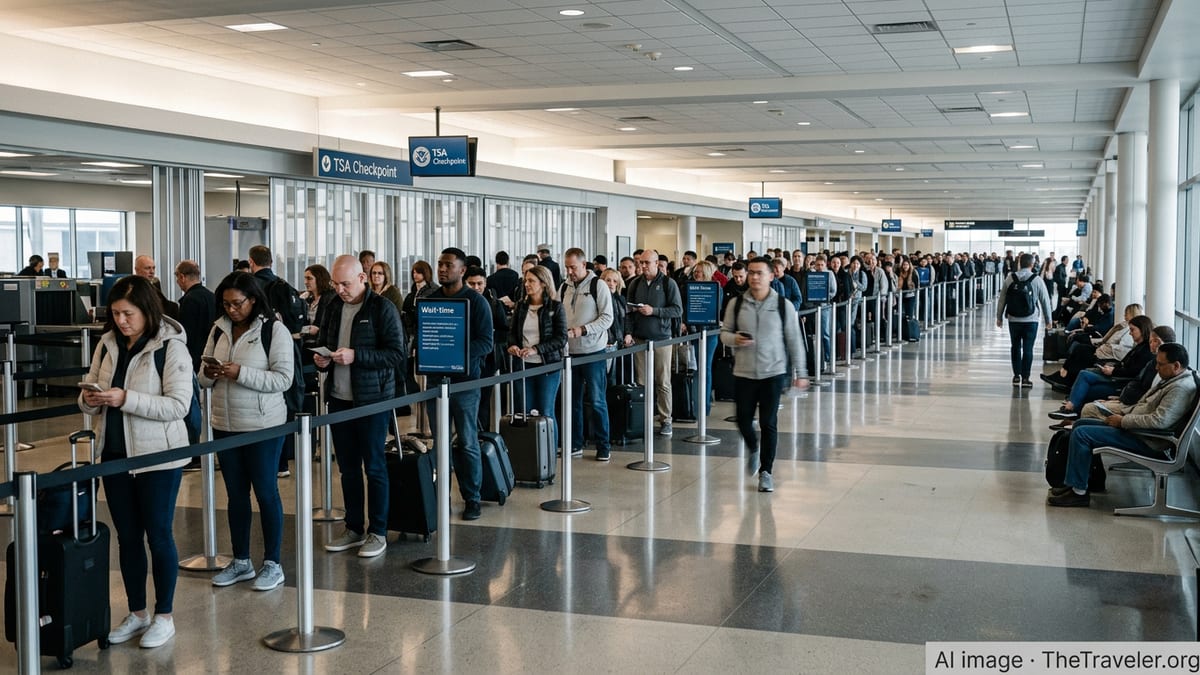
Expanded family benefits at TSA checkpoints
Publicly available guidance from the Transportation Security Administration and the Department of Homeland Security shows that most children can already enjoy TSA PreCheck-style screening for free when they travel with an enrolled adult. Children 12 and under may accompany a parent or guardian with TSA PreCheck through the dedicated lanes without holding their own membership or Known Traveler Number, as long as the adult’s boarding pass carries the PreCheck indicator.
For teenagers, the rules are more nuanced but can still mean no extra cost. Current TSA and enrollment-provider information states that children 17 and under can join an adult with TSA PreCheck when the indicator appears on the child’s boarding pass and they are traveling on the same reservation. In practice, airlines often extend the benefit automatically during check-in, which allows many teens to clear security in the same expedited lane as their parents without paying for a separate application.
These arrangements effectively allow families to spread the value of a single paid or complimentary PreCheck enrollment across multiple travelers. While parents still pay the standard enrollment fee or rely on credit card statement credits and employer benefits, their children can in many cases access the same shorter lines and lighter screening rules at no added charge.
How Global Entry and other trusted traveler programs make kids free
The most direct path for children to receive a trusted traveler benefit with no application fee now often runs through programs managed by U.S. Customs and Border Protection. Updated federal guidance indicates that, beginning in late 2024, minors under 18 applying for Global Entry, NEXUS or SENTRI can have their application fees waived if a parent or legal guardian is already enrolled or applies at the same time.
Because Global Entry membership automatically includes TSA PreCheck eligibility for domestic flights, this shift has important implications for families who travel frequently or fly internationally. A parent who pays the Global Entry fee, sometimes offset by a travel credit card, can now add children as separate Global Entry members without additional program charges. Those children then receive their own Known Traveler Numbers, which can be entered into airline reservations to trigger the TSA PreCheck mark on their boarding passes.
Similar fee waivers are being rolled out for minors in NEXUS and SENTRI, the land and sea border-focused trusted traveler programs. While those memberships are primarily aimed at streamlining cross-border travel, they can help unlock TSA PreCheck access when combined with TSA’s reciprocal arrangements and the broader Trusted Traveler Program framework.
Military and government families see wider no-cost access
Military personnel and some Department of Defense civilian employees have long been able to receive TSA PreCheck benefits without paying application fees by using their DoD identification numbers in place of a Known Traveler Number. Recent public communications from TSA and defense agencies have highlighted renewed efforts to promote these benefits under military-focused initiatives designed to ease travel burdens for service members and their families.
Children in these households benefit in two different ways. First, they may accompany eligible adults through TSA PreCheck lanes under the standard family rules for travelers 17 and under on the same reservation. Second, because many military families travel often and sometimes live abroad, they are among the groups most likely to enroll in Global Entry or other trusted traveler programs that now waive application fees for minors connected to an enrolled parent or guardian.
Taken together, the combination of free adult eligibility and fee-free enrollment for minors in related programs means some military and government families can equip every traveling family member with TSA PreCheck access without paying individual fees for each child.
Step-by-step: how families can unlock free TSA PreCheck for kids
For parents starting from scratch, the first step is deciding whether to apply directly through a TSA PreCheck enrollment provider or to pursue Global Entry or another trusted traveler program that covers both security screening and border control. Either way, an adult must secure some form of PreCheck-eligible status before any children can use the lanes at no charge.
Once a parent or guardian is enrolled, families should pay close attention when booking airline tickets. Children who are 12 or younger can generally be added to the same reservation and will be permitted to enter the PreCheck lane with the adult, even if the child’s boarding pass does not display the PreCheck logo. For teens 13 to 17, it is more important to ensure everyone is on a single booking so that the reservation system has the best chance of assigning the TSA PreCheck indicator to the child’s boarding pass.
Families interested in securing guaranteed PreCheck access for each child may choose to take advantage of the new minor fee waivers in Global Entry and other trusted traveler programs. That process typically involves setting up an online account for each child, submitting an application tied to the parent’s membership, and completing any required interview or identity verification at an enrollment center. Once approved, the child receives a Known Traveler Number of their own, which should be stored in airline frequent flyer profiles so that the TSA PreCheck symbol appears reliably on future trips.
Travelers are also encouraged by consumer advocates to verify that boarding passes show the correct information before arriving at the airport. If a PreCheck-eligible child’s pass lacks the indicator despite meeting all requirements, airline agents at the check-in counter or customer service desk may be able to reissue boarding passes with the updated data.
What this means for family travel in peak seasons
The move toward free or low-cost TSA PreCheck access for children arrives as U.S. airports continue to experience some of the busiest travel periods on record. Airline planners and federal travel forecasts point to sustained high passenger volumes through holiday peaks and summer vacation months, putting pressure on standard security lanes at major hubs.
By enabling more families to consolidate in TSA PreCheck and related lanes without layering on additional enrollment costs for every child, the evolving policies could reshape how households plan airport arrivals. Parents who secure a single enrollment and take a few extra steps when booking may be able to cut wait times significantly, reduce the need to remove shoes and light jackets, and keep electronics and small liquids packed, all of which can make navigating security with young children less stressful.
Analysts who track airport operations note that the changes also align with broader efforts in Congress and at security agencies to adapt checkpoint design for family travelers, including proposals for dedicated family screening lanes and investments in updated screening technology. While those ideas remain in varying stages of development, the growing ability for children to receive TSA PreCheck benefits at no extra cost is already available to many U.S.-based families planning their next trip.