


More news on this day
Airlines are accelerating deployment of artificial intelligence rebooking systems in 2026, aiming to move more disruption handling from congested call centers to self-service apps and automated decision engines that can replan journeys in seconds.
Get the latest news straight to your inbox!
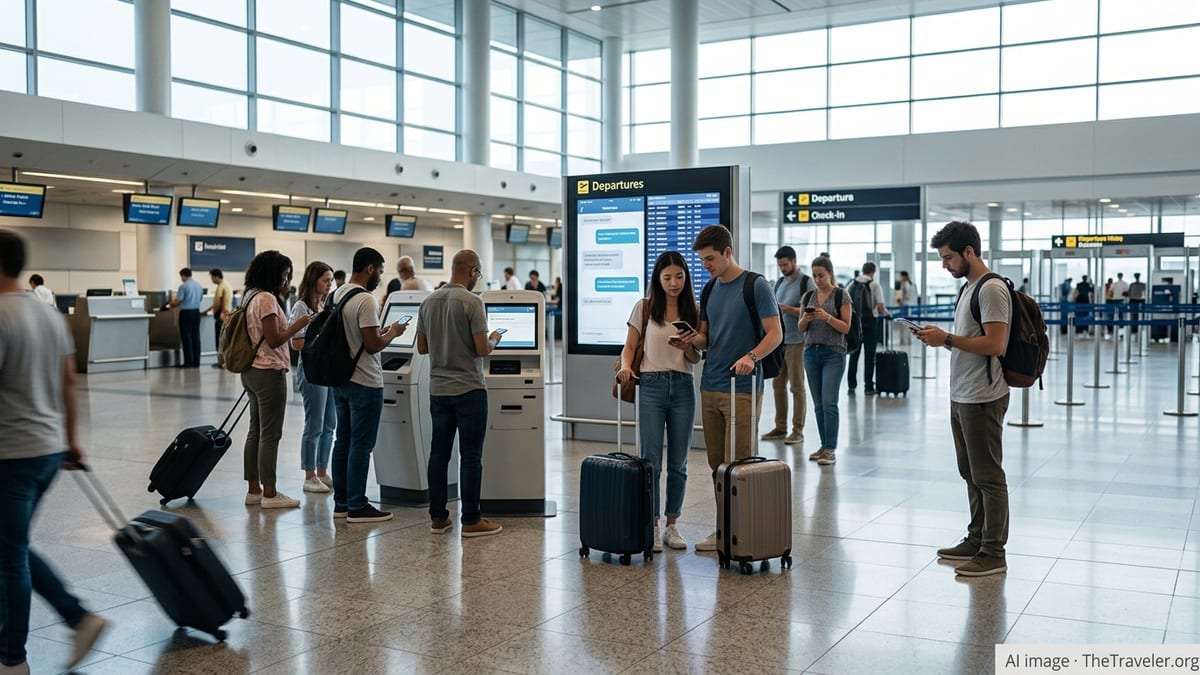
From Phone Queues to Predictive Recovery Engines
Flight disruption has long meant hours on hold as call centers struggled with surging demand during storms, strikes, and technology outages. Airlines and technology providers are now rolling out AI-driven rebooking platforms designed to anticipate irregular operations, generate contingency plans in advance, and push personalized options directly to passengers’ phones when schedules unravel.
Operational research and AI studies published in recent years describe integrated disruption management systems that jointly optimize aircraft, crew, and passenger itineraries, achieving viable recovery plans in under a minute. These systems use local search and machine learning to weigh millions of options and propose solutions that keep more travelers on roughly their planned timetable while minimizing knock-on delays across the network.
In 2026, these once-theoretical tools are increasingly embedded in commercial airline operations. Industry reports highlight a shift from fragmented legacy systems that treated fleet, crew, and customer rebooking separately to integrated, AI-assisted platforms that can recompute entire daily schedules as soon as weather, airspace constraints, or staffing issues appear.
For travelers, the most visible change is not in the algorithms but in the experience: instead of being told to call an agent, many passengers now see same-day alternatives, connection protection, and voucher options appear in their airline apps and via text, often before they reach the airport help desk.
Major Carriers Expand Self-Service AI Rebooking
Several large airlines have publicized expanded digital tools that lean on AI and machine learning to keep customers informed and rebooked. United Airlines has described a suite of self-service features that automatically surface personalized rebooking options, bag tracking details, and meal or hotel vouchers when eligible in the event of delays or cancellations. These tools are supported by generative AI systems that also power more granular messaging about disruptions and recovery options.
American Airlines has outlined how machine learning has for years helped surface rebooking options in its app and on its website when trips are disrupted, part of a broader AI strategy that includes “Smart Gating” to optimize gate assignments. In 2026, American introduced a centralized digital disruption platform that appears directly on the home screen and within reservations in its app, giving passengers a single interface to review explanations for delays or cancellations and select alternative flights without making a phone call.
In Europe, Lufthansa Group has been adding digital rebooking features and AI-powered customer service functions across its hub airlines. Company disclosures describe automatic flight rebooking and AI-based customer support among its technology priorities, with recent app updates focused on stronger self-service for schedule changes, cancellations, and ancillary services through an expanded help center and digital tools.
These initiatives reflect a broader trend among full-service carriers to make proactive rebooking and disruption handling a core element of their digital strategies, positioning AI not only as an operational efficiency tool but as a customer-experience differentiator.
Specialist Tech Providers Power Airline Disruption Tools
Behind many of the new rebooking flows are specialist aviation technology firms retooling their products around AI. Amadeus, a major provider of airline IT and passenger service systems, has promoted disruption management modules that offer more comprehensive rebooking capabilities and intelligent passenger handling when operations are interrupted. Company materials describe a shift toward “agentic” AI and intelligent rebooking as part of a wider strategy to automate more decision-making across airline and airport systems.
New entrants are also targeting the problem. In April 2026, engineering services company Coforge announced FlightFlex.AI, pitched as a unified disruption recovery solution that uses real-time decisioning, contextually optimized automated rebooking, and proactive passenger communication. The platform is designed to combine network operations data with customer profiles so airlines can automatically propose re-routes and alternatives that reflect both operational constraints and individual preferences.
These systems typically draw on schedule data, crew rosters, aircraft routing, historical delay patterns, and live feeds from air traffic control and weather providers. Some platforms are designed to integrate with airline mobile apps and communication tools so that once a recovery plan is generated, customized options are immediately presented to customers, reducing the volume of calls and in-airport queueing.
Industry case studies indicate that when AI-enabled disruption tools are tightly integrated with passenger service systems, airlines see faster recovery times and a higher share of customers reprotected digitally, rather than through agents. That, in turn, helps call centers focus on complex edge cases that require human judgment.
Impact on Call Centers and Traveler Experience
Publicly available data suggests that automated rebooking is already taking pressure off traditional support channels. Airlines report that growing numbers of passengers now handle changes through self-service channels, particularly during large-scale disruptions with weather or technology as the root cause. Users of modern mobile apps frequently describe being automatically moved to later flights, offered hotel or meal vouchers, and given clear guidance about next steps without needing to speak to an agent.
At the same time, traveler feedback shared in public forums shows the limits of these systems. Some passengers report that AI chat assistants and automated rebooking tools can fail in complex scenarios, such as itineraries involving multiple partner airlines, strike-related cancellations, or visa-sensitive routings. In such cases, customers still find themselves facing long call center queues or needing to seek help at airport counters when the automation cannot accommodate their specific constraints.
For airlines, the balance involves shifting routine transactions into automation while preserving human support for high-stakes or atypical journeys. AI routing tools also help contact centers by triaging simple disruption cases toward self-service options, reserving agents for rebookings that require waivers, interline coordination, or policy exceptions.
As more carriers adopt these systems, expectations are changing. Travelers increasingly look first to apps for fixes when flights are delayed or canceled, and prolonged waits on hold are increasingly seen as a sign that back-end automation is either immature or overwhelmed by an unusually complex disruption.
Aviation Infrastructure Modernization Strengthens AI Rebooking
The effectiveness of AI-based rebooking is closely linked to the broader modernization of aviation data infrastructure. In June 2026, the US Federal Aviation Administration announced contracts for new flow management and decision-support platforms designed to bring together schedules, weather, capacity, and operational constraints in a more unified way. These tools are intended to help the agency and airlines identify potential bottlenecks and severe-weather impacts earlier and to orchestrate more precise reroutes.
Industry analysis suggests that richer, more timely data from air traffic control and airport systems can feed into airline disruption-management engines, improving the accuracy of delay predictions and the quality of alternative itineraries presented to customers. When the network can anticipate where capacity will be constrained hours or days in advance, AI systems have more opportunity to reoptimize schedules and preemptively move travelers off vulnerable flights.
Academic research continues to explore related ideas, such as integrating alternative ground transport into air networks and applying advanced local-search and neural-network techniques to fleet and crew recovery. While many of these studies remain at the prototype stage, they point toward a future in which AI not only reacts to disruptions but helps airlines design more resilient schedules and multimodal contingency plans from the outset.
For passengers in 2026, the immediate effect is most visible on their phones: more detailed alerts, clearer explanations of what is happening, and a growing likelihood that viable rebooking options will arrive digitally long before a human agent can pick up the line.
American Airlines disruption management platform, 2026
United Airlines automated rebooking and AI messaging
Lufthansa Group AI-powered rebooking and customer service