


More news on this day
Alaska Airlines’ rollout of Boeing 787 long-haul flights to Europe and Asia is drawing growing criticism from flight attendants, who argue that current staffing and service expectations make the operation “impossible to deliver” as advertised.
Get the latest news straight to your inbox!
Staffing Levels Under Scrutiny on New Dreamliner Routes
Alaska Airlines began operating Boeing 787 Dreamliners on long-haul routes such as Seattle to London, Rome and Seoul earlier in 2026, positioning the aircraft as the centerpiece of its expanded international network. Reports indicate that the airline is using largely ex-Hawaiian Airlines crews on these flights while merger integration and joint labor agreements continue.
Online discussions and passenger accounts describe a 787 staffing model that typically assigns four flight attendants to the premium cabin and five to economy, in line with or slightly above some other North American carriers using similar aircraft. Even so, crew members posting publicly argue that this headcount is not adequate for the ambitious onboard service Alaska has chosen to offer, particularly on full flights.
Several contributors to aviation and traveler forums say crews have framed the situation as a “give us more crew or cut service” dilemma, contending that the present configuration leaves little margin to handle both routine service and operational disruptions. The 787 launches coincide with a broader industry environment in which airlines are attempting to maximize productivity on widebody fleets while keeping labor and operating costs in check.
Alaska Air Group’s recent financial filings highlight its dependence on Boeing 787 deliveries to support long-haul growth, as well as ongoing negotiations with flight attendant unions across its brands. Publicly available disclosures note that collective bargaining talks remain active as the company works to integrate Hawaiian Airlines and expand international flying.
“Train Service” Flow and Compressed Timelines
A key source of tension appears to be the service design Alaska has adopted on its 787s. According to traveler writeups and detailed trip reports, the airline uses a “train service” approach in long-haul economy, with carts progressing methodically from front to back for beverages and meals across the entire cabin.
Crew members commenting in public forums say this model, combined with the number of passengers on a fully loaded Dreamliner, makes it difficult to execute two full meal services, mid-flight offerings and individual requests within standard time windows. In some accounts, staff describe racing to complete service, then facing criticism from passengers when response times slow later in the flight.
Premium cabins have drawn similar feedback. Business-class reviews of early Rome and London flights cite lengthy, multi-course meal experiences that can run several hours when the cabin is full. Some passengers describe the product as competitive on paper but note visible strain on crew as they juggle elaborate service standards, cabin requests and operational tasks with limited manpower.
Observers within Alaska’s frequent-flyer community suggest that the root of the problem is less the raw number of flight attendants and more the combination of staffing, service design and workflow. They argue that the carrier is attempting to debut a full-scale long-haul premium product without having fully refined processes and support systems that airlines with decades of international experience typically rely on.
Merger Dynamics and Union Friction
The staffing debate is unfolding against the backdrop of Alaska Air Group’s acquisition of Hawaiian Airlines, which closed earlier in 2026. Public commentary and internal discussion summaries indicate that most 787 and Airbus long-haul flying continues to be operated by Hawaiian crews, while Alaska-branded staff remain focused largely on Boeing 737 operations.
Flight attendants posting online say that joint collective bargaining agreements covering the combined workgroups have not yet been finalized. As a result, Hawaiian contract terms are believed to govern crews on the 787, while Alaska flight attendants work under separate agreements. That split reportedly complicates scheduling, training and staffing decisions for the new long-haul network.
Union communications and member discussions reference concerns that current service expectations on the 787 exceed what is realistically achievable without either more crew or adjusted standards. Some contributors frame the public complaints as leverage in ongoing negotiations, while others argue they reflect genuine safety and fatigue worries as crews adapt to longer duty days and unfamiliar routes.
Alaska’s public financial reports emphasize the importance of maintaining “competitive collective bargaining agreements” across its brands and acknowledge that unresolved labor contracts present operational and financial risk. The 787 staffing controversy has quickly become one of the most visible friction points as the merged group attempts to forge a single international operation.
Passenger Experience: Mixed Reviews on Early Flights
From the passenger perspective, early reviews of Alaska’s 787 long-haul service have been sharply mixed. Some travelers report smooth experiences and attentive crews, particularly on lightly loaded flights or in premium cabins. Others describe what feels like an under-resourced operation, citing long meal-service times, limited mid-flight presence from flight attendants and inconsistent communication.
Multiple accounts from the Seattle to London route portray check-in and boarding as disorganized, with staff appearing overextended and unfamiliar with new procedures. Passengers on the Rome service have highlighted catering issues and subpar food quality compared with other transatlantic carriers, while noting that cabin crews seemed to be working under considerable pressure.
Onboard, some long-haul economy passengers say meal and beverage services are completed quickly, after which crew visibility in the cabin drops off. Others recount multi-hour meal services in both cabins that leave little time for rest on overnight flights. Reactions vary widely, with some travelers sympathizing with crews and others interpreting the experience as poor service for the fare paid.
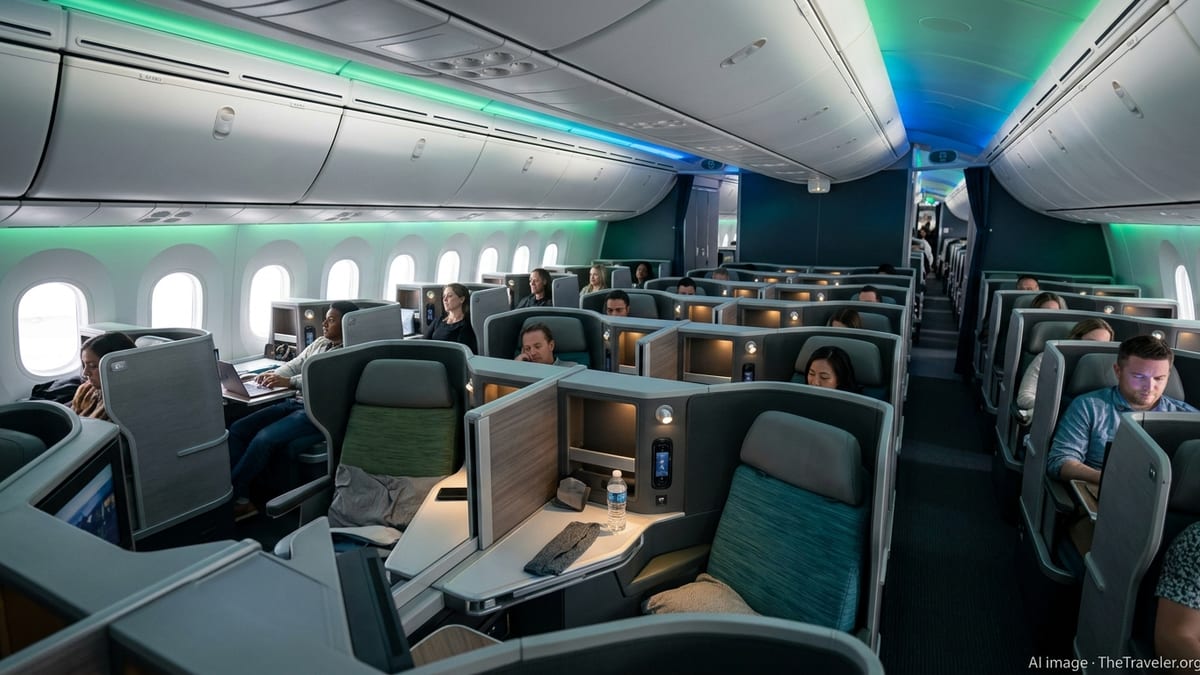
Discussion across frequent-flyer communities suggests that Alaska’s new business-class suites and hard product are generally well received, but that the “soft product” of food, service pacing and staffing is lagging the competition on key routes to Europe and Asia. The 787 staffing model has become a focal point for those concerns.
What Comes Next for Alaska’s Long-Haul Ambitions
Industry analysts and aviation commentators watching Alaska’s international expansion note that the airline faces a delicate balancing act. The carrier is under pressure to monetize its investment in widebody aircraft and the Hawaiian acquisition while also maintaining operational reliability and customer satisfaction on new long-haul routes.
Publicly available information indicates that Alaska continues to face aircraft delivery challenges on the 787 program, limiting its ability to add frequencies and spread crews across a larger schedule. At the same time, the airline is working through complex labor negotiations and integration steps that affect how, and by whom, these flights are staffed.
For flight attendants, the outcome of the current dispute could shape the long-term character of Alaska’s long-haul product. Adjustments could range from adding one or more crew members on select routes to simplifying service flows or reducing certain amenities. Each option carries cost, branding and competitive implications in an increasingly crowded transatlantic and transpacific market.
For travelers, the near-term reality is that experiences on Alaska’s 787 network may remain uneven as the carrier fine-tunes staffing, training and service design. The tension between ambitious marketing of a new international product and the day-to-day limits of crew resources is likely to remain in focus as the airline and its unions seek a more sustainable balance.