


More news on this day
Alaska Airlines is pushing deeper into long-haul international flying from its Seattle hub with the launch of two new nonstop routes to Athens and Paris, extending the carrier’s fast-growing intercontinental network beyond Asia and northern Europe.
Get the latest news straight to your inbox!
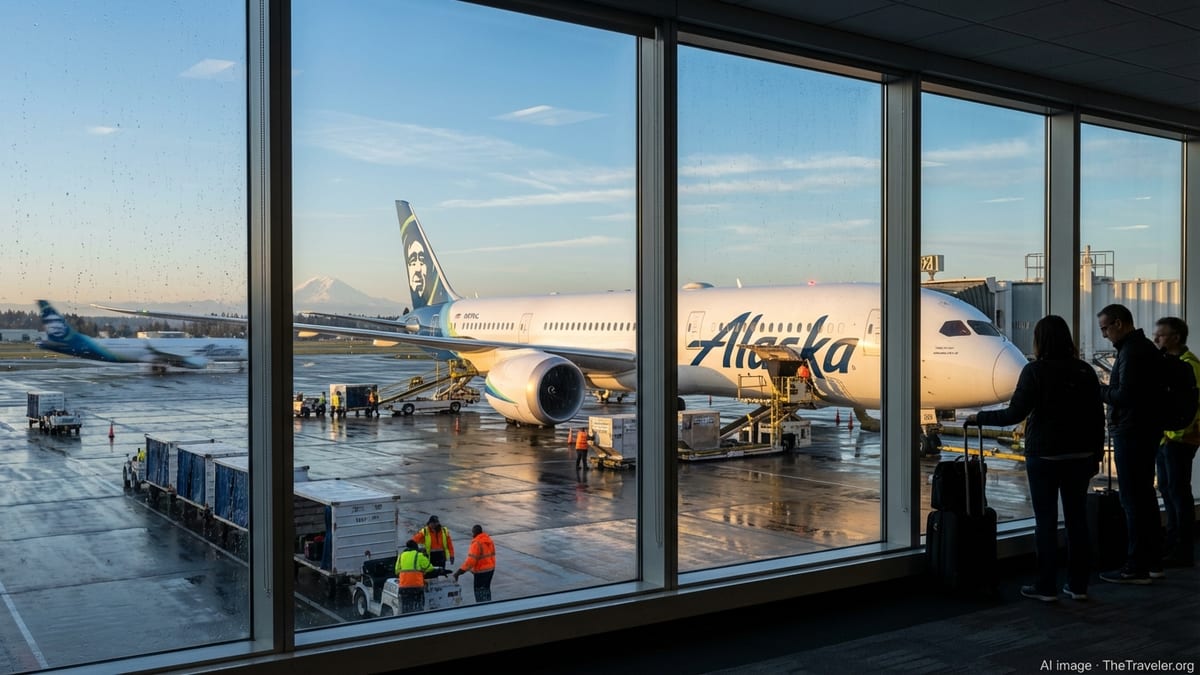
New links from Seattle to Athens and Paris
Publicly available announcements indicate that Alaska Airlines will introduce nonstop service from Seattle to Athens and Paris, adding two more intercontinental destinations to its timetable. The new flights build on earlier long-haul launches from Seattle to London, Reykjavik, Tokyo Narita and Seoul Incheon, turning the Pacific Northwest city into a true global gateway for the carrier.
Seattle to Athens will connect the U.S. West Coast to one of Europe’s most popular summer destinations. The seasonal timing of the route is expected to appeal to leisure travelers heading for the Greek islands as well as to visiting friends and relatives traffic between North America and Greece. Reports indicate that Alaska will operate the route several times per week during the peak travel season.
The new Seattle to Paris service will offer a nonstop link to one of Europe’s largest aviation hubs. From Paris, travelers are expected to have options to continue on partner airlines to cities across continental Europe and North Africa. For Seattle, the flights add another major European capital to its roster of nonstop services, underscoring the region’s growing demand for transatlantic travel.
According to published coverage, both routes form part of a broader Alaska Air Group strategy to diversify beyond its historic North American focus and to capture a larger share of high-yield international demand. The carrier has highlighted Seattle as the centerpiece of that expansion, using the airport’s location, local economic growth and existing domestic network as key advantages.
Dreamliner aircraft and upgraded long-haul experience
Industry reports show that Alaska plans to deploy Boeing 787-9 Dreamliners on the new Athens and Paris routes. These widebody aircraft are being positioned as the backbone of the airline’s long-haul fleet from Seattle, supporting flights of 10 hours or more with modern cabin features and improved fuel efficiency compared with older twin-aisle jets.
The airline has recently introduced an enhanced international business-class product on its 787-9 fleet, including private suites and lie-flat seating tailored to overnight flights to Europe and Asia. Travel publications note that this long-haul offering is a significant step up from the narrowbody cabins that have traditionally defined Alaska’s brand, and is designed to compete more directly with legacy global carriers.
For economy travelers, the Dreamliner brings higher cabin humidity, lower cabin altitude and quieter interiors, all of which can help reduce jet lag on transatlantic journeys. Observers have also pointed to the 787’s fuel efficiency as a factor that can help support thinner long-haul routes where demand is strong but still developing, such as Seattle to Athens.
By standardizing new intercontinental routes like Athens and Paris around the Dreamliner, Alaska is signaling that these markets are not experimental side projects but core elements of its evolving global network. The move also complements previous decisions to base additional 787 aircraft in Seattle to support long-haul growth.
Seattle’s role as a growing global gateway
Data from the Port of Seattle and industry analyses show that Alaska is the largest airline at Seattle-Tacoma International Airport by passenger share, with an extensive domestic and regional footprint across the West Coast, Alaska and parts of the Midwest and East Coast. That scale provides a strong foundation of connecting traffic for new long-haul flights.
In recent seasons, Alaska has added or announced intercontinental routes from Seattle to Tokyo Narita and Seoul Incheon in partnership with the former Hawaiian Airlines operation, alongside its own services to London Heathrow and Reykjavik. The Athens and Paris launches are widely described as the next phase of this long-haul buildout, nudging the company closer to its stated ambition of serving at least a dozen intercontinental destinations from Seattle over the next several years.
Seattle’s status as a technology and trade hub, combined with tourism links to Europe and Asia, has helped underpin demand for such routes. According to airport statistics, international passenger numbers through Seattle have been climbing, and several foreign carriers have introduced or expanded their own long-haul services in parallel with Alaska’s growth.
With Athens and Paris added to the map, Seattle travelers gain more options to avoid connections at crowded Midwest or East Coast hubs. At the same time, inbound visitors from Europe can tap Alaska’s network for one-stop connections to secondary cities across the Pacific Northwest, California, the Mountain West and Alaska.
Competitive implications in the transatlantic market
Alaska’s decision to add Athens and Paris from Seattle places it more directly in competition with longstanding transatlantic players. Large U.S. legacy airlines and European flag carriers already operate significant networks between North America and Europe, including service to major gateways on both coasts. By entering with its own metal on city pairs where partner airlines once handled most of the long-haul flying, Alaska is shifting its role from feeder to primary operator on selected routes.
Analysts note that Seattle to Paris is especially strategic because Paris is a major hub with onward connectivity. The route gives Alaska’s loyalty program members another option for earning and redeeming rewards on long-distance journeys without having to connect via another U.S. gateway. It also introduces a new competitor on the corridor between the Pacific Northwest and France, a market that has typically been served through other hubs.
Athens, by contrast, is more heavily weighted toward leisure travel, with strong summer peaks and quieter winter demand. Industry commentary suggests that seasonal or less-than-daily frequencies may help Alaska match capacity more closely to demand patterns while testing the long-term potential of the route. Successful performance could encourage the airline to maintain or even grow its presence in Greece over time.
Across both routes, Alaska’s oneworld and other global partnerships are expected to remain central. Public information indicates that travelers will be able to connect beyond Athens and Paris on partner carriers, allowing Alaska to extend its virtual network deep into Europe while focusing its own aircraft on trunk intercontinental segments.
What the expansion means for travelers
For passengers based in the Pacific Northwest and Western Canada, the new Athens and Paris flights create additional nonstop choices at a time of robust demand for international travel. Travelers planning European vacations gain more flexibility in selecting departure dates, destinations and connection points, particularly during busy summer months when flights through traditional East Coast hubs can be congested.
Loyal customers stand to benefit from more opportunities to earn and redeem miles on long-haul itineraries using Alaska’s own flight numbers. Travel writers have emphasized that the addition of a true long-haul business-class product and modern cabins on the Dreamliner may also appeal to premium travelers who previously looked to other airlines for intercontinental comfort.
The expansion underscores an evolution in Alaska’s identity from a primarily domestic and regional operator into a carrier with a meaningful, if still concentrated, global footprint. While the airline’s network remains anchored in North America, the steady rollout of new intercontinental routes from Seattle suggests a long-term commitment to competing on select global corridors.
How the Athens and Paris flights perform will likely influence which destinations come next as Alaska works toward its target of a dozen or more intercontinental routes from Seattle in the coming years. For now, the additions mark a notable milestone in the transformation of Seattle-Tacoma International Airport into a more fully fledged global hub for the airline.