


More news on this day
United Airlines is accelerating investment in its network of flight training facilities, with its flagship complex in Denver emerging as a centerpiece of the carrier’s long-term growth strategy and a visible sign of how crucial pilot training has become to the post‑pandemic aviation recovery.
Get the latest news straight to your inbox!
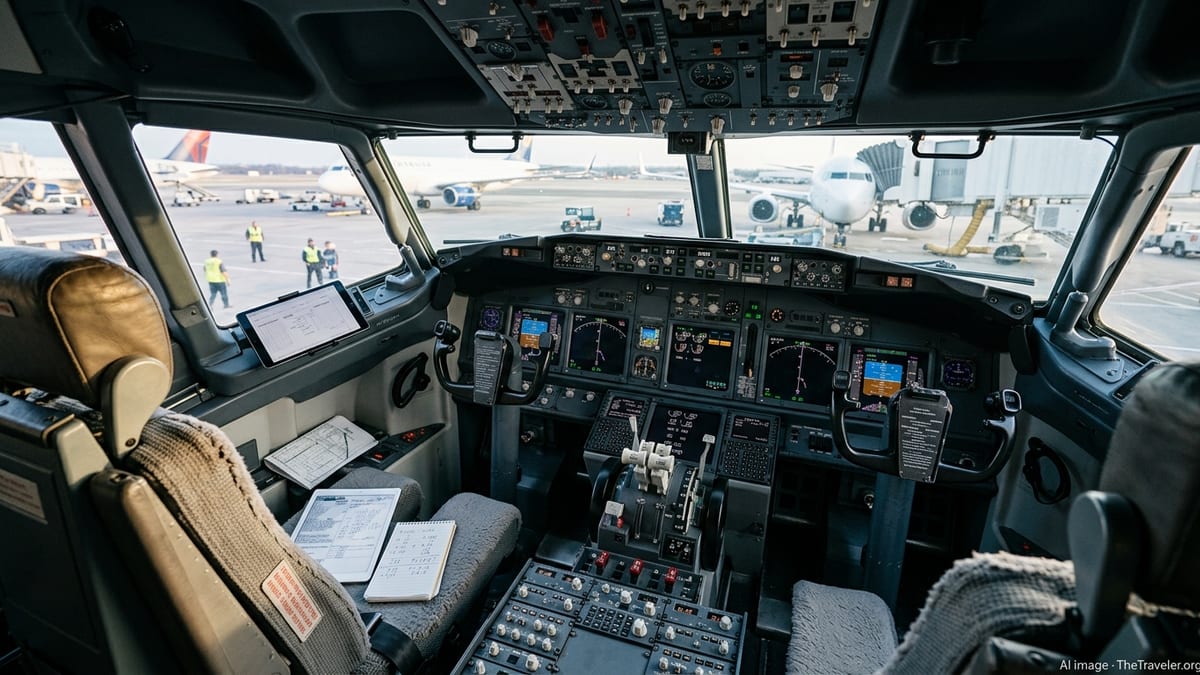
Denver Complex Grows Into World’s Largest Pilot Training Center
United’s Flight Training Center on the east side of Denver has been steadily expanded over the past several years into what the airline describes as the world’s largest pilot training facility. Publicly available information indicates the campus now comprises eight buildings and roughly 700,000 square feet of training space, housing dozens of full‑motion flight simulators and fixed training devices that replicate the cockpits and systems of the carrier’s mainline fleet.
Recent corporate releases describe a first phase of expansion that has added a significant number of simulators since 2022, increasing the center’s capacity to train hundreds of pilots per day across different aircraft types. The simulators are used for initial type ratings, recurrent training and proficiency checks, giving the airline a controlled environment to introduce new procedures, aircraft and safety initiatives before they are deployed across the network.
The Denver facility serves pilots based at hubs across the United States and is supported by a steady stream of hotel nights and local spending as crews rotate through for mandatory training. City documents and corporate summaries highlight the training center as an important employer in northeast Denver, with thousands of airline staff tied directly or indirectly to its operations.
Enthusiast reports and aviation community coverage have also offered rare glimpses inside the complex, describing Level D full‑motion simulators for widebody jets and detailed classroom spaces designed to mirror the operations environment on the flight deck. These accounts portray a facility operating around the clock to keep pace with hiring and recurrent training cycles.
Rezoning Clears Way for New Denver Training Campus Near Airport
United’s ambitions in the Denver region extend beyond the existing campus. In late June 2026, Denver’s City Council approved a rezoning of more than 100 acres near 64th Avenue and Yampa Street in the Denver International Airport area, a step that enables the airline to develop a new flight training facility and associated corporate campus on previously undeveloped land.
Planning documents circulated through city channels describe the project as a long‑term expansion of the airline’s training footprint, creating additional capacity for simulators, classrooms and support functions. Community engagement summaries emphasize potential job creation, partnerships with local education providers and improved connectivity between the training complex, the airport and surrounding neighborhoods.
Public impact statements linked to the rezoning highlight the scale of the airline’s presence in Denver, noting that thousands of employees are already based in the city, including a substantial number at the existing Flight Training Center. Projections for 2025 and 2026 indicate further hiring across operational and support roles as the expanded facilities come online.
While construction timelines for the new campus stretch toward the end of the decade, the rezoning decision signals a commitment to keep Denver at the center of United’s global training strategy. The planned site near the airport is expected to provide easier logistics for visiting crews and integrated infrastructure for future training technologies.
Pilot Pipeline Strengthened Through United Aviate Academy in Arizona
Alongside high‑fidelity simulator hubs for experienced pilots, United has also invested in ab initio training for aspiring aviators. The United Aviate Academy at Phoenix Goodyear Airport in Goodyear, Arizona, functions as the airline’s dedicated pilot school for students beginning their flying careers, operating as a wholly owned subsidiary focused on early‑stage training.
Academy catalogs and airport fact sheets describe a purpose‑built campus opened in 2021 and formally launched for students in early 2022, with classrooms, briefing rooms, maintenance facilities and student housing designed to support a structured training pipeline. The facility is positioned as one of a small number of large‑scale aviation campuses in the United States, offering instrument, commercial and multi‑engine instruction aligned with the airline’s broader Aviate pilot development program.
Documentation for recent academic years outlines a multi‑stage curriculum that moves students from initial flight experience through to commercial pilot qualifications, after which they can flow into Aviate‑affiliated partners and, ultimately, to United’s mainline operation if they meet performance and hiring criteria. The Academy’s materials emphasize safety culture, standardized procedures and exposure to airline‑style operations from the earliest stages of training.
Local news coverage and community discussions around Phoenix Goodyear Airport have also drawn attention to the impact of intensive pilot training on nearby neighborhoods, particularly in relation to aircraft noise and traffic patterns. These reports illustrate the balance that large training facilities must strike between supporting national pilot demand and addressing local quality‑of‑life concerns in rapidly growing suburbs.
Houston Inflight Center Focuses on Cabin Crew and Safety Scenarios
United’s training infrastructure is not limited to flight deck crews. In Houston, the airline operates an expanded inflight training center near George Bush Intercontinental Airport, dedicated primarily to flight attendants and other cabin crew members. The complex was significantly enlarged and renovated in 2023, according to corporate announcements and regional business coverage at the time.
The Houston center features mock aircraft cabins, door trainers, slides and full‑scale water ditching pools designed to simulate a range of normal and emergency scenarios. New‑hire flight attendants undergo several weeks of intensive coursework on safety procedures, service protocols and regulatory requirements, and then return on a recurring basis for refresher sessions to remain current.
Architecture and design case studies of the facility describe flexible classrooms, briefing areas and specialized training bays that can be adapted to different aircraft types. The layout is intended to mirror the operational environment on board, allowing trainees to practice everything from standard boarding and service sequences to complex evacuations under controlled conditions.
In addition to Houston, the airline maintains other inflight and technical training sites across its network, but the Houston complex is frequently cited in corporate materials as its primary global hub for cabin crew instruction. Together with Denver and Goodyear, it forms part of an integrated system that supports both cockpit and cabin training needs.
Training Network Positioned for Long-Term Growth
The expansion of United’s Denver Flight Training Center, the development of a new training campus near Denver International Airport and the continued operation of the Aviate Academy and inflight training hubs signal how central workforce development has become to the airline’s strategy. Publicly available hiring outlooks show the company planning to bring on thousands of new employees in coming years, including a significant number of pilots and flight attendants.
Industry analysts and aviation trade publications continue to point to a global pilot shortage as fleets grow and retirements accelerate, particularly in North America. United’s investment in simulators, classrooms and early‑stage training capacity reflects an effort to control more of the pipeline from student pilot to the captain’s seat, rather than relying solely on external flight schools and regional partners.
At the same time, planning and community documents surrounding new facilities in Denver and Arizona demonstrate the importance of working with local stakeholders on land use, infrastructure and neighborhood impacts. Issues such as noise, traffic and housing availability are increasingly woven into the conversation about aviation growth, including the training infrastructure that supports it.
For travelers, these developments are largely invisible but play a critical role in ensuring that enough qualified pilots and cabin crew are available to operate increasingly busy schedules. As United’s training network grows in size and sophistication, it is likely to remain a bellwether for how major airlines respond to the workforce demands of modern commercial aviation.