


More news on this day
Alaska Airlines is facing mounting pressure from flight attendants over working conditions on its new Boeing 787 services, with union leaders and crew supporters describing the current long haul service model as unsustainable without additional staffing or reduced onboard offerings.
Get the latest news straight to your inbox!
New Long Haul Ambitions Collide With Cabin Reality
Alaska Airlines has stepped into the long haul arena using Boeing 787 aircraft inherited through its acquisition of Hawaiian Airlines, positioning the jets at the center of future transoceanic growth. Publicly available information shows the airline plans to build an international network from its Seattle hub using a fleet of 787s and Airbus A330s over the coming years.
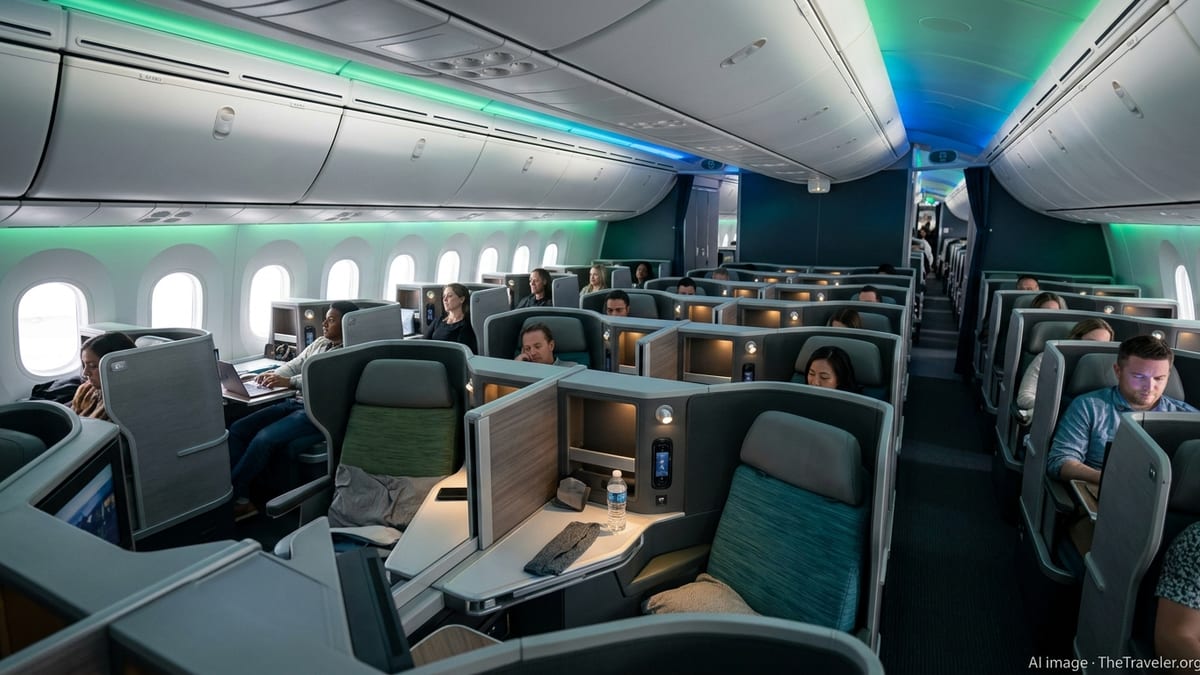
To differentiate its new long haul product, Alaska has introduced enhanced catering, multiple meal services, and upgraded premium cabins on these aircraft. According to published coverage and union commentary, those elevated elements have sharply increased the complexity of in flight service, adding time in the aisle and expanding the range of duties for crews already working some of the company’s longest segments.
Reports indicate that many of the 787 flights are currently operated by former Hawaiian Airlines flight attendants working under their existing contract, even as Alaska develops its own service routines. That arrangement has created an unusual overlay of legacy work rules and a new, more ambitious service concept, which union representatives argue was not designed with realistic staffing levels in mind.
Industry data and online discussions suggest that Alaska typically staffs its 787s with around 10 or 11 flight attendants depending on load, a level that can be similar to or higher than some competitors on comparable aircraft. Flight attendants contend, however, that the sheer volume and pacing of the new service pattern, rather than the raw number of crew, is driving the strain.
Union Calls to ‘Add Crew or Cut Service’
The Association of Flight Attendants, which represents both Alaska and Hawaiian cabin crews, has escalated its criticism of how the 787 service is being operated. According to union communications and traveler reports circulating in recent days, flight attendants describe the current model as unsustainable and are calling on the airline to either increase crew complements on long haul 787 flights or scale back the service design.
Union messaging emphasizes that crews are being asked to deliver a multi course, internationally competitive product in all cabins while also managing safety responsibilities, turbulence, and full passenger loads. Flight attendants argue that the timing between departure, meal preparation, service, and cabin checks leaves too little margin, particularly when unexpected operational issues arise.
Supporters of the union’s position say the dispute is not simply about workload preferences but about ensuring that service expectations align with what can be delivered safely and consistently over flights that can exceed eight or nine hours. They maintain that repeated efforts to “stretch” a fixed number of flight attendants across more elaborate service flows risk burnout and inconsistent experiences for travelers.
Public posts and union statements frame the demand succinctly: either staff the 787 operation at a level that reflects its long haul, high touch ambitions, or pare back the onboard service to what current headcounts can realistically support.
Passenger Experience Highlights Strain Onboard
Travelers on Alaska’s 787 routes have begun to share mixed reviews of the new long haul product, adding a customer perspective to the staffing debate. Publicly available feedback on social platforms and aviation forums describes some flights where meal services stretched across much of the cruise segment, with slow tray collection and limited follow up beverage rounds.
Some passengers recount instances in which hot meals arrived lukewarm, desserts melted, or second services felt rushed, attributing those issues to galley congestion and time pressure on crews. Others report that after an intense initial service, flight attendants were less visible in the cabin for long stretches, which they interpreted as a sign that staff were overwhelmed or occupied away from passenger view.
Not all accounts are negative. A number of travelers say that individual crews delivered attentive and friendly service even under tight timelines, with business class in particular receiving praise on some transpacific and transatlantic sectors. Those more positive reports often note, however, that the cabin appeared fully staffed and that the crew seemed to be working at full pace throughout the flight.
The divergence in passenger experience underscores one of the union’s core arguments: when service expectations press against the limits of existing staffing, results can vary widely from flight to flight depending on load, operational disruptions, and the composition of the crew.
Integration Growing Pains After Hawaiian Acquisition
The 787 staffing dispute is unfolding against the broader backdrop of Alaska’s ongoing integration of Hawaiian Airlines. Company filings and public briefings describe a multi year effort to harmonize fleets, operating certificates, and labor agreements while leveraging Hawaiian’s widebody expertise and long haul network.
For flight attendants, that process has meant combining workgroups with different pay scales, scheduling rules, and historical service cultures. The term of the current Hawaiian flight attendant agreement, which includes provisions for long haul and 787 flying, continues to apply while a joint contract is negotiated for the integrated carrier. That arrangement can limit management flexibility to quickly change staffing formulas or duty structures.
Union representatives have previously warned that integration missteps could spill into the passenger experience if new routes and products are launched faster than crew training and support infrastructure can keep pace. The 787 rollout, with its ambitious service design and reliance on mixed legacy crews, is now emerging as a test case for how well Alaska can align its growth plans with front line realities.
Industry analysts note that many mergers experience similar friction on long haul fleets, where aircraft size, galley layouts, and rest requirements all influence how many flight attendants are needed to deliver a promised product. The specific contours of Alaska’s dispute may be unique, but the tension between expansion and labor capacity is a familiar one in commercial aviation.
Potential Paths to De Escalation
While Alaska has not yet announced public changes to 787 staffing levels, observers point to several levers the airline could pull to address flight attendant concerns. One option would be to add one or more flight attendants on the longest segments, especially those featuring full multi course meal services in both premium and economy cabins.
Another possibility is to streamline the onboard offering, particularly on overnight flights where passengers may prioritize rest over elaborate dining. Trimming the number of service passes, simplifying menus, or reducing ancillary elements that add complexity in the aisle could ease workload without fundamentally altering the brand proposition.
Labor experts suggest that the ongoing contract and integration talks between Alaska, Hawaiian, and the Association of Flight Attendants will be central to any durable solution. Adjustments to duty day limits, rest provisions, and minimum crew counts on specific aircraft types can all be negotiated, though such changes often come alongside wage or productivity trade offs.
For travelers, the near term impact may manifest as subtle tweaks to meal pacing, cabin presence, and route assignments as the airline assesses performance on its newest long haul flights. How Alaska balances its ambition to compete with established global carriers against flight attendant warnings about sustainability on the 787 will likely shape both employee relations and passenger sentiment as its international strategy unfolds.