


More news on this day
American Airlines is preparing a major shift in its onboard experience, outlining plans to bring 4K seatback entertainment screens back to the majority of its narrowbody fleet in the next decade after years of favoring a bring-your-own-device strategy.
Get the latest news straight to your inbox!
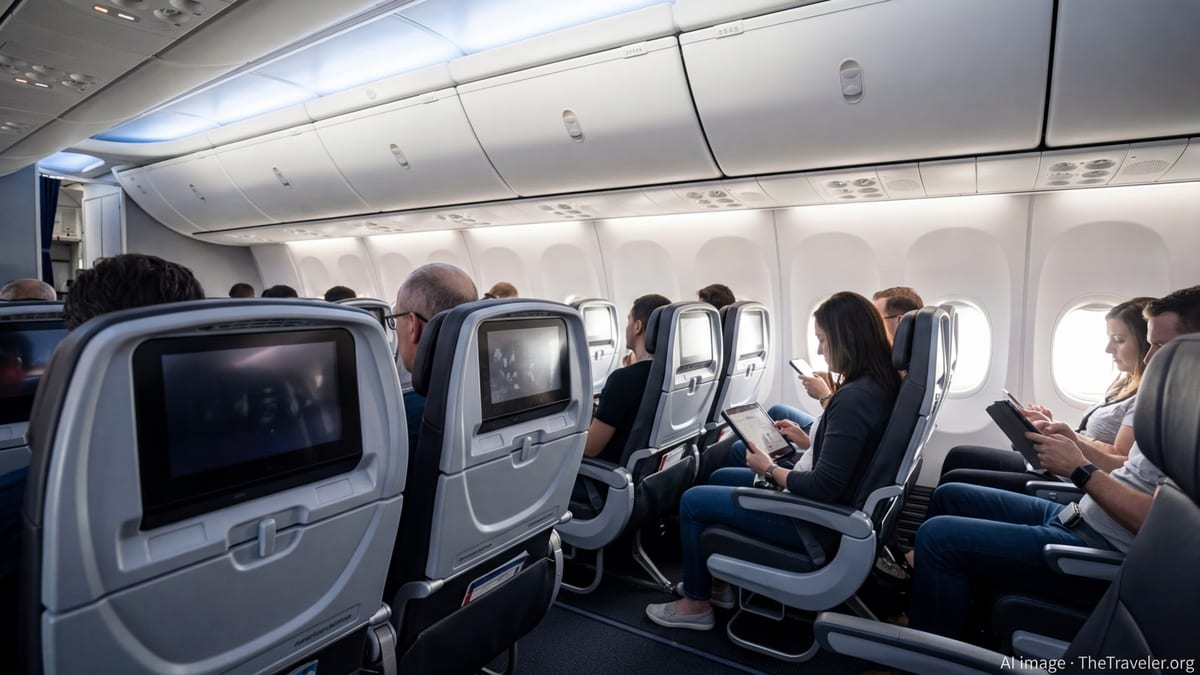
A Strategic Reversal in Inflight Entertainment
The move marks a notable change in direction for the carrier. Over the past several years, American removed many of its existing seatback screens from domestic aircraft and promoted streaming to passengers’ own phones, tablets or laptops. That approach placed the airline at odds with competitors such as Delta Air Lines and United Airlines, which continued to invest heavily in built-in screens across their mainline fleets.
According to recent company materials and industry reporting, American now plans to install new-generation 4K screens on future Airbus and Boeing single-aisle deliveries and on many retrofitted aircraft. The rollout will focus on narrowbody jets that operate the bulk of the airline’s domestic and short-haul international schedule, where the lack of seatback entertainment has become a frequent point of comparison with rival carriers.
The decision aligns American more closely with broader trends in inflight entertainment, where airlines are increasingly blending high-definition built-in screens with strong onboard connectivity. While streaming on personal devices is expected to remain available, the airline is positioning the new monitors as the centerpiece of an upgraded cabin experience that includes more premium seating and refreshed interiors.
Industry observers note that the pivot follows a period of customer feedback, social media criticism and competitive pressure. Publicly available commentary from airline executives in recent months hinted that the company was reconsidering its stance on inflight screens, and the latest plans now confirm that a significant investment is on the way.
What the New 4K Screens Will Offer
American’s next-generation system is being described in public documents and supplier announcements as a 4K platform with large-format screens, among the biggest planned on narrowbody aircraft in North America. The technology promises sharper images, richer colors and higher contrast than the older standard-definition monitors that once dominated cabins.
The screens are expected to integrate features that have been gradually appearing on the airline’s newest widebody jets, where 4K QLED displays and advanced inflight entertainment platforms are already in service on select Boeing 787-9 aircraft. Those long-haul cabins offer high-resolution viewing, faster processors and a modern interface designed to feel closer to a personal tablet than to traditional airline hardware.
On narrowbody aircraft, the new monitors are slated to come with Bluetooth audio connectivity, allowing passengers to pair their own wireless headphones instead of relying on wired sets. Company communications and partner information also point to USB-C power at every seat, with fast-charging capability so phones, tablets and laptops can stay powered throughout the flight.
American is also signaling plans for a more personalized content experience. The future system is expected to include tailored recommendations, expanded movie and television libraries, interactive maps with real-time flight data and destination information, and integration with high-speed onboard Wi-Fi. The goal is to create a platform that supports both traditional entertainment and connected services such as messaging and browsing.
When Travelers Will Actually See the New TVs
Despite the attention around the announcement, passengers should expect a long lead time before 4K seatback screens become a common sight on American’s domestic routes. Current plans indicate that installations on new Airbus and Boeing single-aisle deliveries will begin around 2028, with retrofits of existing aircraft following thereafter. Public information suggests completion is not expected until the early 2030s.
That means travelers flying American’s current narrowbody fleet in the next few years are unlikely to notice immediate changes. Most domestic Boeing 737 and Airbus A319 and A320 aircraft will continue to operate without built-in entertainment, relying instead on streaming over the airline’s inflight portal. Only select aircraft, such as certain premium-configured Airbus A321 variants and the newest widebodies, currently feature modern seatback systems.
The long timeline reflects the scale and complexity of cabin retrofits. Installing new wiring, screens, power supplies and related equipment typically requires aircraft to be pulled from service for extended maintenance visits. Airlines often coordinate these projects with other interior changes, such as new seats or galley modifications, to limit downtime and manage costs.
For American, the rollout of 4K screens appears closely tied to a broader interior refresh that will also expand first class and extra-legroom seating on many narrowbody jets. Industry coverage indicates that these cabin projects are scheduled to ramp up near the end of the decade, with the entertainment installation proceeding in parallel.
How American Compares With Delta and United
American’s decision to embrace 4K seatback TVs brings it closer to strategies long pursued by its two largest rivals. Delta has spent years standardizing seatback screens across its mainline fleet, promoting free onboard entertainment as a core part of its brand. United is in the midst of its own major retrofit initiative that adds larger screens, power and mood lighting across narrowbody aircraft as part of a multi-year cabin modernization plan.
Until now, American stood out among the big three U.S. carriers for the extent to which it removed screens from domestic jets. The airline argued that most customers preferred to use their own devices and that eliminating the hardware saved weight and maintenance costs. As competitors continued to market built-in screens as a differentiating feature, however, passengers increasingly highlighted the gap in online forums and customer surveys.
The planned 4K rollout suggests American now views high-quality seatback entertainment as a necessary part of competing for higher-yield travelers. Business customers and frequent flyers often compare cabin amenities across carriers, and the presence of modern screens, reliable Wi-Fi and convenient power outlets can influence booking decisions, particularly on longer domestic routes and transcontinental flights.
Analysts also point out that the new 4K systems could help American keep pace with international airlines that have invested heavily in next-generation inflight entertainment. Carriers in Europe, the Middle East and Asia increasingly treat 4K or near-4K monitors, Bluetooth connectivity and robust content libraries as standard on new or refurbished aircraft, raising expectations for global travelers.
What It Means for the Passenger Experience
For travelers, the return of seatback TVs on American is expected to change the onboard experience in several ways. Passengers who prefer not to hold a phone or tablet for hours will regain a hands-free viewing option, while families may find it easier to keep children entertained with dedicated screens at each seat. The airline’s plan to pair screens with high-speed connectivity also aims to reduce the trade-off between watching a movie and staying connected during a flight.
The addition of USB-C power at every seat is likely to be particularly noticeable. Many of American’s current narrowbody aircraft provide power only in certain rows or cabins, requiring travelers to plan ahead or carry external batteries. With future cabins designed around both 4K displays and device charging, the airline is positioning its narrowbody fleet for a more digitally oriented passenger base.
At the same time, the delayed timeline means that expectations will need to be tempered. Travelers booking flights over the next several years will continue to encounter a mix of cabin configurations across American’s network, with the new 4K TVs initially confined to a small subset of aircraft as deliveries and retrofits begin. Frequent flyers will likely track tail numbers and equipment types closely to understand where the upgraded experience is rolling out first.
As the project develops, American’s inflight entertainment strategy will be closely watched across the industry. The move toward 4K seatback screens, once considered an outdated luxury in an era of smartphones and tablets, is now being recast as an essential part of a competitive onboard product, signaling that the seatback TV still has a significant future at 35,000 feet.