


More news on this day
All 186 passengers aboard a Swiss-flagged river cruise ship that ran aground on the Danube near the Romanian stretch opposite Vidin, Bulgaria, have been safely evacuated, according to regional reports published on Tuesday.
Get the latest news straight to your inbox!
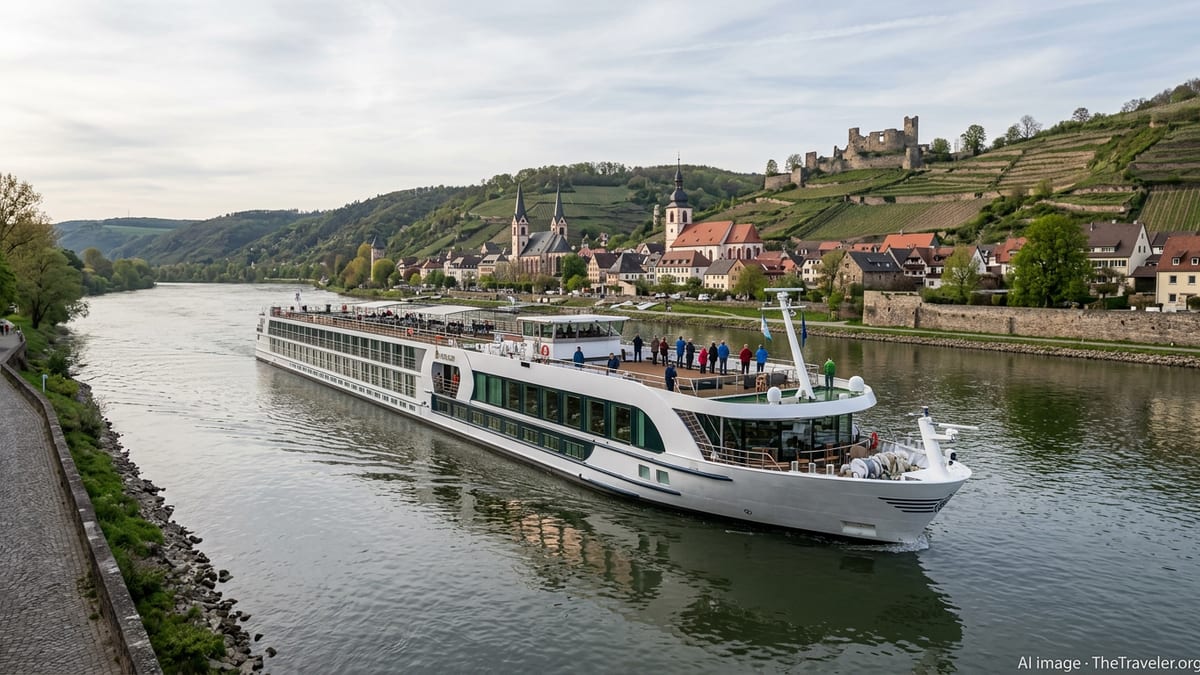
Cruise Ship Runs Aground on Low Danube Waters
The vessel, identified in local coverage as the Viking Ullur, was sailing under a Swiss flag along the Danube when it became stranded near the Romanian village of Gârla Mare, across the river from Vidin. Publicly available information indicates that the ship had departed Drobeta-Turnu Severin and was bound for the Bulgarian port city as part of a multi-day river cruise itinerary.
Initial reports from Romanian and Bulgarian outlets describe how the ship ground to a halt after encountering a shallow stretch of river, with water levels on this sector of the Danube reported to be significantly reduced. The grounding occurred late Monday local time, leaving the ship unable to maneuver further downstream toward its scheduled call in Vidin.
On board were 238 people, including 186 passengers from several European Union countries and 52 crew and service staff. Published accounts note that there were no immediate injuries at the time of the incident and that the vessel remained stable in the water while response plans were organized.
River traffic on this part of the Danube is described as constrained but not fully halted, as navigation authorities and the cruise operator coordinated the response and assessed options for refloating or relieving the grounded ship.
Coordinated Evacuation Brings Passengers Ashore
Following the stranding, regional media report that a coordinated evacuation of all 186 passengers was carried out using smaller craft and support vessels operating along the Romanian bank. According to published coverage, the transfer unfolded in stages, with priority given to older travelers and those with mobility needs.
Passengers were taken ashore at nearby docking points where buses had been arranged to move them onward. Publicly available information describes the evacuation as orderly, with travelers required to bring only essential personal items while luggage and non-critical belongings remained on board for later retrieval.
Reports indicate that the 52 crew members and technical staff stayed with the ship after the passenger evacuation, both to maintain basic services and to assist with subsequent efforts to lighten and refloat the vessel. Inspections of the hull and propulsion systems are expected to continue while authorities and the operator evaluate how best to free the ship from the riverbed.
Regional outlets note that emergency planners treated the episode as a precautionary evacuation rather than a life-threatening rescue, reflecting assessments that the ship was secure but that deteriorating river conditions could make remaining on board uncomfortable or logistically difficult.
No Injuries, but Itineraries Face Major Disruption
Information released through local and national news platforms consistently indicates that no injuries were reported among passengers or crew during either the initial grounding or the evacuation effort. Medical checks were made available on shore, with several accounts noting that travelers mainly showed signs of fatigue and heat-related discomfort rather than trauma.
Despite the absence of injuries, the incident has effectively brought the ongoing voyage to a halt. Passengers were expected to continue their journey to Vidin and other downstream cities as part of a classic lower Danube cruise program, but the grounding has forced wholesale revision of those plans. Travel industry commentary in the region suggests that guests will likely complete portions of the itinerary by road while the operator decides whether to substitute another vessel or terminate the cruise early.
Some reports highlight that low or high water levels periodically disrupt Danube cruising, leading operators to rely on contingency arrangements such as bus transfers, hotel stays on land, or ship swaps along unobstructed sections of the river. The Viking Ullur grounding is being viewed in that context as a serious operational setback rather than a maritime disaster, although it has left hundreds of holidaymakers facing unexpected changes and delays.
Questions remain about compensation and rebooking options for those affected, with travel forums and regional commentators anticipating that the company will outline its approach once the immediate recovery of the stranded vessel is complete.
Low Water Levels Put Focus on Danube Navigation
The episode has once again drawn attention to how sensitive Danube navigation can be to fluctuating water levels, particularly in summer. Recent Romanian coverage on inland waterways describes extended periods of low flow along certain stretches of the river, creating sandbanks and shallow sections that can challenge even experienced river pilots.
Specialists cited in transport and infrastructure reporting note that river cruise ships are designed with shallow drafts to cope with variations, but prolonged dry spells can still restrict safe channels, especially where dredging or river engineering works are limited. The grounding near Gârla Mare has been associated in multiple reports with these seasonal depth issues, rather than with mechanical failure.
Analysts following Danube transport trends indicate that operators sometimes adjust capacities, redistribute ships, or modify routes when forecasts signal particularly low water. However, the current incident shows that sudden changes in riverbed conditions can still outpace planning, leaving vessels unexpectedly constrained between ports.
Regional media commentary suggests that authorities along the lower Danube may face renewed pressure from shipping, tourism, and environmental stakeholders to balance river management, dredging, and ecological protections in ways that preserve both navigational safety and the river’s natural character.
Tourism Sector Weighs the Impact on River Cruises
For the river cruise industry, the evacuation of all 186 passengers from the stranded ship near Vidin arrives during a period of strong demand for Danube itineraries. Travel analysts observing the region note that bookings on river routes have rebounded in recent seasons, with many ships operating near full capacity along popular sections between Germany, Austria, Hungary, Romania, and Bulgaria.
While the grounding did not result in casualties, travel trade publications are already assessing how widely the disruption might reverberate across the sector. Some observers predict only a limited, short-term effect, arguing that most travelers view such events as rare and are reassured by the orderly evacuation and absence of injuries.
Others suggest that a series of weather-related interruptions on European rivers, from high water in some years to low water in others, could gradually shape traveler expectations and prompt more detailed pre-trip communication about contingencies. The current incident may encourage operators to highlight alternative transport plans, insurance options, and flexibility in routing when promoting Danube cruises.
For local communities around Vidin and along the Romanian bank, the priority now is managing the practical aftermath: ensuring the safe release and repair of the stranded ship, supporting affected visitors in completing their journeys, and maintaining confidence in one of the region’s most visible tourism products at the height of the summer season.