


More news on this day
On the eastern edge of the Peloponnese, a tiny fishing village framed by mountains and the Myrtoan Sea is emerging as one of Greece’s quietest answers to crowded island resorts, drawing visitors with crystal-clear beaches and an almost nostalgic pace of life.
Get the latest news straight to your inbox!
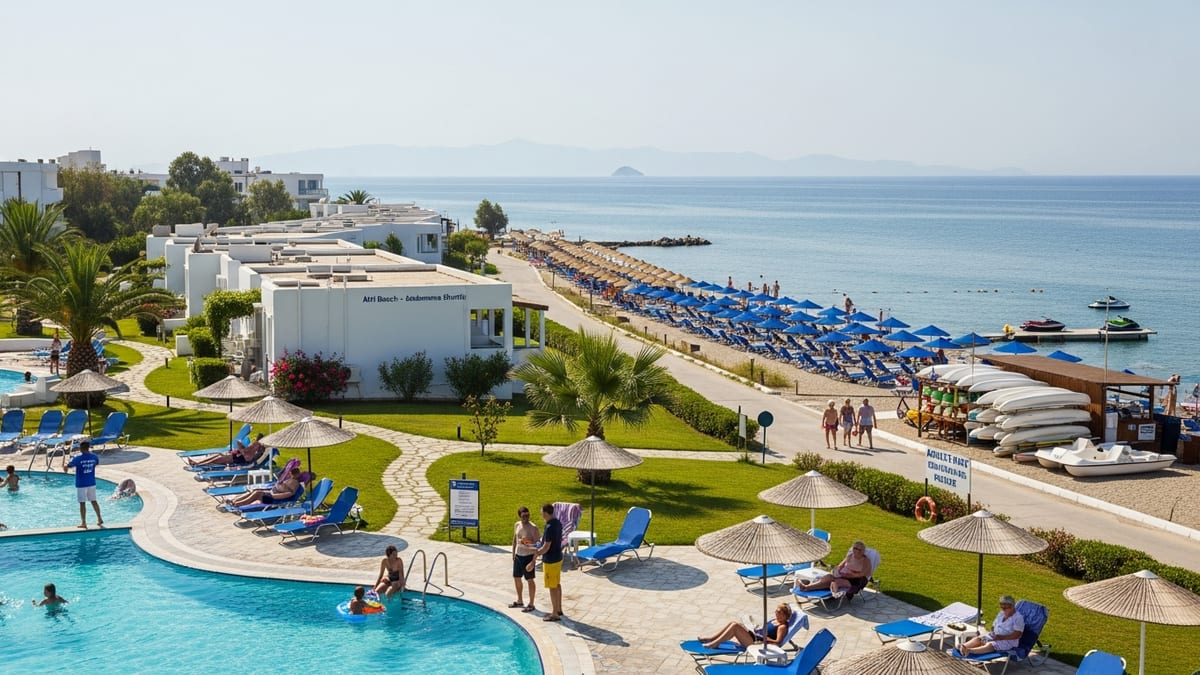
A Seaside Village That Stayed Off the Radar
Kyparissi, a coastal community in Laconia, sits tucked beneath the Parnon mountain range where steep slopes meet a deep-blue stretch of the Myrtoan Sea. Publicly available information from regional tourism bodies describes it as a settlement that remained difficult to reach for decades, which helped preserve its low-rise scale and traditional character even as other Greek destinations expanded around mass tourism.
Reports indicate that the village’s origins stretch back to antiquity, when the wider area was known by a different name and connected to ancient sanctuaries inland. Today, whitewashed houses and stone-built lanes cascade down to the waterfront in three small quarters, each with its own tiny harbor or beachfront, creating the feel of a Greek island village transplanted to the mainland coast.
Recent travel coverage portrays Kyparissi as “off the beaten path” even by Peloponnese standards, noting that it has only recently begun to appear in international guidebooks. The lack of large hotel blocks, beach clubs and nightlife venues appeals to visitors seeking a quieter alternative to better known island hotspots, while the core of the village continues to revolve around everyday life, fishing boats and small family-run guesthouses.
As interest in lesser-known coastal towns grows, Kyparissi is increasingly mentioned alongside other discreet Peloponnese villages, but remains relatively uncrowded outside the high summer weeks. For many visitors, its appeal lies in the sense that day-to-day routines still outweigh tourism, even as more travelers discover the area.
Crystal Waters and Pebble Beaches Shaped for Calm
Kyparissi’s beaches are central to its reputation as a serene escape. Regional travel guides highlight Megali Ammos, the main stretch of shoreline, and the nearby bay of Agia Kyriaki, both known for multi-colored pebbles and exceptionally clear, turquoise water. The beaches sit in sheltered coves backed by low vegetation and cliffs, creating natural wind protection and typically gentle waves.
Unlike long, organized resort beaches elsewhere in Greece, the shore around Kyparissi is broken into small curves and coves, with only modest facilities. Visitors usually find simple sunbeds and a handful of shaded spots rather than rows of beach bars, and the waterfront promenade is lined more with fishing skiffs than with loud music venues. Travel writers note that even in peak season, the soundscape tends to be waves and conversation, rather than amplified nightlife.
Environmentally, the area benefits from limited large-scale development and low-density housing, which helps keep the water quality high along the rocky seabed. Local guides frequently highlight snorkeling conditions, describing visibility that allows swimmers to see sea grass meadows and fish schools just offshore. The combination of pebbles and clear water gives the shoreline its characteristic luminous look in photographs circulating on travel platforms.
For families and travelers seeking calm, this setting offers a compromise between comfort and seclusion. Village amenities remain within walking distance, yet the absence of heavy traffic on the waterfront, combined with the small scale of the bays, contributes to a slower, more contained beach atmosphere.
Mountain Backdrop and Trails Above the Sea
The same geography that once kept Kyparissi remote now underpins its outdoor appeal. Parnon mountain rises directly behind the settlement, and a network of old stone paths and foot trails links the village quarters to chapels, viewpoints and neighboring hamlets. Hiking guides describe routes that climb from sea level to panoramic balconies in relatively short distances, offering wide views over the Myrtoan Sea and the jagged coastline.
Some paths follow historic routes toward the remains of ancient sites and rural terraces, demonstrating how the village has long balanced maritime and mountain life. Public information produced by local and regional organizations encourages visitors to combine swimming with gentle hikes, noting that many trails begin near the main squares or churches, making them accessible without a car.
Active travelers increasingly pair Kyparissi with nearby climbing areas on the same coast, since the limestone cliffs of eastern Laconia have become a recognized destination for rock climbers in recent years. Specialist guidebooks describe modern climbing sectors carved into the surrounding rock, bringing a niche yet growing stream of international visitors who tend to favor small, quiet bases like Kyparissi.
Despite this new attention, there are few signs of large sports complexes or intrusive infrastructure. Most services linked to hiking and climbing are still provided on a small scale, aligning with the broader character of the village and helping to limit visible impact on the seafront.
Slow Tourism and Small-Scale Stays
Accommodation in Kyparissi consists mainly of family-run guesthouses, small hotels and rooms to let, many of them clustered close to the water. Public listings and booking platforms point to a limited number of beds compared with larger Greek resorts, reinforcing the village’s position as a niche choice rather than a mass-market beach destination.
Travel coverage emphasizes that visitors typically stay for several nights or a week, using the village as a base rather than a short stop. Mornings often center on the beach or short coastal walks, while evenings revolve around waterfront tavernas serving seafood, local vegetables and olive oil from the wider Laconia and Peloponnese region. The lack of extensive nightlife options encourages early starts and quieter streets after dinner.
Regional tourism strategies increasingly promote such destinations as examples of “slow tourism,” where travelers spend longer in one place, rely more on local businesses and explore nearby landscapes on foot or by small boat. Kyparissi fits this profile, with visitors often arriving by car and remaining largely within the village’s compact footprint during their stay.
For the local economy, this pattern brings steady seasonal income without the sharp pressures associated with cruise ship calls or large resort complexes. Small enterprises can remain family-operated, and there is less demand for heavy seasonal staffing or rapid construction, factors that often transform other Mediterranean coastal communities.
Access Improving, But Seclusion Remains Part of the Appeal
Historically, reaching Kyparissi involved narrow, winding mountain roads that reinforced its reputation as an isolated outpost on the Peloponnese coast. In recent years, improvements to regional highways and connecting roads have shortened driving times from Athens and major Peloponnese hubs, according to publicly available infrastructure updates.
Despite better access, the final approaches still involve coastal and mountain routes that slow traffic and limit the volume of day trippers. Travel writers often note that this journey, while more comfortable than in previous decades, still acts as a natural filter, attracting visitors prepared to trade convenience for quiet.
Within the village, the compact layout further reduces car dependence. Most beaches, accommodation options and tavernas sit within a short walk of each other, and some visitors choose to leave vehicles parked for the duration of their stay. This contributes to relatively calm streets and a waterfront where pedestrians and fishing activity remain prominent.
As Greece prepares for another busy summer in 2026, destinations like Kyparissi illustrate how the Peloponnese is positioning itself as an alternative to heavily touristed islands. With its crystal beaches, mountain backdrop and restrained development, the village continues to attract travelers looking for a quieter corner of the country while still remaining firmly connected to the mainland.