


More news on this day
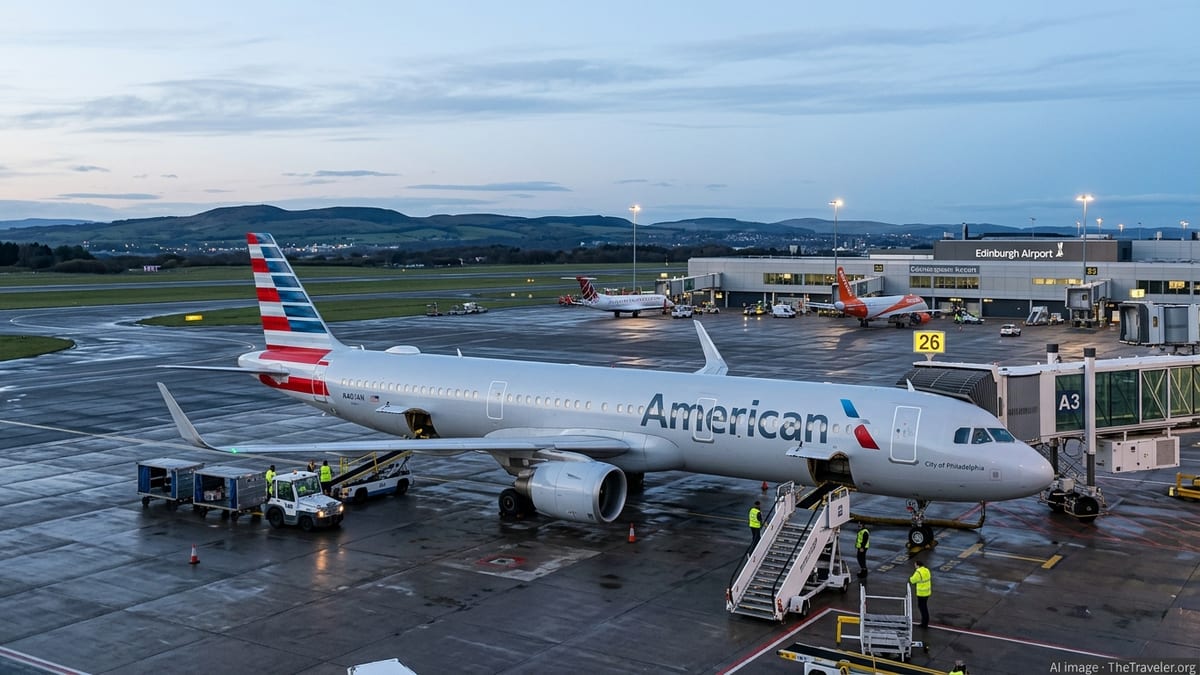
An American Airlines Airbus A321 operating as Flight AA2977 from Portland to Chicago diverted to Indianapolis International Airport, prompting an emergency landing and briefly disrupting travel plans for passengers on the busy transcontinental route.
Get the latest news straight to your inbox!
Unexpected Diversion on Portland to Chicago Route
Publicly available flight-tracking information indicates that American Airlines Flight AA2977, an Airbus A321 serving the Portland to Chicago route, deviated from its planned course and landed at Indianapolis International Airport instead of its scheduled arrival in Chicago. The diversion occurred partway through the journey across the Midwestern United States, with the aircraft rerouting toward Indianapolis and completing an emergency landing there.
Data from commercial flight-status platforms shows that the aircraft landed safely in Indianapolis, where the flight was listed as diverted rather than canceled. The Airbus A321, a narrow-body jet commonly used by American Airlines on domestic routes with strong business and leisure demand, remained on the ground while passengers and crew disembarked under the supervision of airport and airline personnel.
While specific technical or operational details behind the diversion had not been formally detailed in publicly posted airline statements at the time of writing, such unscheduled landings are typically linked to factors such as potential mechanical concerns, medical situations onboard, or evolving weather patterns along the original route. Available data emphasizes that the flight’s change of destination was managed in a controlled manner, with no immediate indications of injuries.
The route between Portland and Chicago is a key domestic corridor, and a diversion of a mainline jet such as an Airbus A321 can have downstream effects on airline schedules, connecting flights, and aircraft rotations for the rest of the travel day.
Emergency Landing and Airport Response in Indianapolis
Indianapolis International Airport serves as a regular diversion point for flights crossing the central United States, owing to its location, runway length, and facilities capable of handling large commercial aircraft. Reports based on flight-tracking timelines show that AA2977’s track shifted toward Indianapolis as the flight progressed east, with the jet descending and landing there in lieu of continuing to Chicago.
Standard procedures for a declared emergency landing typically involve coordination between the flight crew, air traffic control, and airport operations to ensure that a runway and support resources are available on arrival. Although not every diversion involves visible emergency equipment, it is common practice for fire and rescue teams to be placed on standby whenever a flight declares an in-flight issue or requests priority handling.
Local and national aviation data providers have not indicated any runway closure of extended duration at Indianapolis linked specifically to AA2977, suggesting that the landing and subsequent ground handling were contained within normal safety protocols. The airport continued to manage regular commercial traffic, while the diverted Airbus A321 remained parked for inspection and operational decisions.
Indianapolis has previously accommodated diversions for multiple domestic carriers, and its infrastructure is set up to process passengers whose journeys have been interrupted, whether they are continuing on replacement aircraft, being rebooked through other hubs, or awaiting ground transportation.
Impact on Passengers and Subsequent Travel Plans
The diversion of AA2977 from Portland to Chicago to an unscheduled stop in Indianapolis had immediate implications for passengers who were expecting to arrive at Chicago O’Hare for local stays or onward connections. According to general information on American Airlines’ handling of disrupted flights, travelers affected by diversions are typically rebooked on the next available services, with options that can include alternate routings or departures later in the day or on subsequent days, depending on seat availability and timing.
Publicly available guidance from the airline indicates that when flights are diverted or significantly delayed, customers are encouraged to use the airline’s mobile app, website tools, or airport kiosks to review updated itineraries, confirm rebooked segments, or request changes. Call centers and airport customer-service staff are also used to manage complex itineraries, especially for those with international connections.
Passengers onboard AA2977 would likely have experienced extended travel times and possible missed connections in Chicago, particularly for evening or tight-turn itineraries. In cases where a diversion results in an overnight stay away from a traveler’s home city, standard American Airlines policies outline conditions under which lodging, meal, or transportation assistance may be offered, with distinctions made between events viewed as within or outside the airline’s control.
For travelers arriving in Indianapolis unexpectedly, the airport’s role as a regional hub offers at least some connectivity to Midwestern and national destinations, although direct replacement service to Chicago is dependent on available seats across American Airlines and other carriers operating the short-haul sector.
Safety Context: Why Airlines Divert Flights
Aviation safety protocols prioritize precaution, and diversions like that experienced by AA2977 are a visible example of this risk-management approach in practice. Publicly available industry guidance notes that pilots may elect to divert for a range of reasons, including real or suspected mechanical anomalies, medical emergencies involving passengers or crew, airspace congestion, or deteriorating weather conditions ahead.
In many instances, a diversion is initiated before a situation escalates, allowing the flight crew to position the aircraft at an airport with suitable runways, technical support, and medical or emergency facilities. Aviation specialists often highlight that the majority of such events conclude routinely, with aircraft landing safely and passengers eventually continuing to their destinations after inspections, repairs, or crew changes.
Historical accounts of American Airlines flights and those of other major carriers show that diversions are relatively rare compared with the vast number of flights operated daily within the United States. When they do occur, however, they attract public attention, especially if emergency services are visible on the tarmac or if the incident disrupts operations at a busy hub.
In the case of AA2977, early indications from tracking and operational data point to a controlled response in which the crew and airport teams ensured that the aircraft was on the ground at a suitable facility as quickly and safely as possible.
What Travelers Can Do When Their Flight Diverts
Events such as the diversion of American Airlines Flight AA2977 serve as a reminder for travelers to be prepared for unexpected changes, even on routine domestic routes. Airline guidance for irregular operations generally recommends that passengers keep their contact details and mobile-app notifications up to date, so that rebooking options and gate changes can be communicated swiftly during disruptions.
Once a flight has landed at an alternate airport, it can take time for updated plans to be finalized, particularly if the aircraft requires inspection or if crews reach duty-time limits. Travelers are often advised to monitor their booking reference through the airline’s digital channels while waiting for instructions, rather than relying solely on departure boards or overhead announcements.
For those with tight connections, trip protection strategies such as allowing longer layovers, avoiding the final flight of the day where possible, and understanding basic airline policies on delays and diversions can reduce the risk of missed commitments. Travel insurance providers may also offer coverage for certain diversion-related expenses, subject to policy terms and documentation requirements.
American Airlines AA2977’s unscheduled stop in Indianapolis highlights the operational complexity behind even a single diverted flight, from cockpit decision-making and air traffic coordination to passenger care and network recovery. For travelers, it underscores how rapidly a standard cross-country journey can change and why staying informed and flexible remains a key part of modern air travel.