


More news on this day
Hundreds of passengers faced hours of disruption at London Stansted Airport after a power cut hit key terminal systems, triggering long queues, missed flights and confusion at the start of the UK half-term getaway.
Get the latest news straight to your inbox!
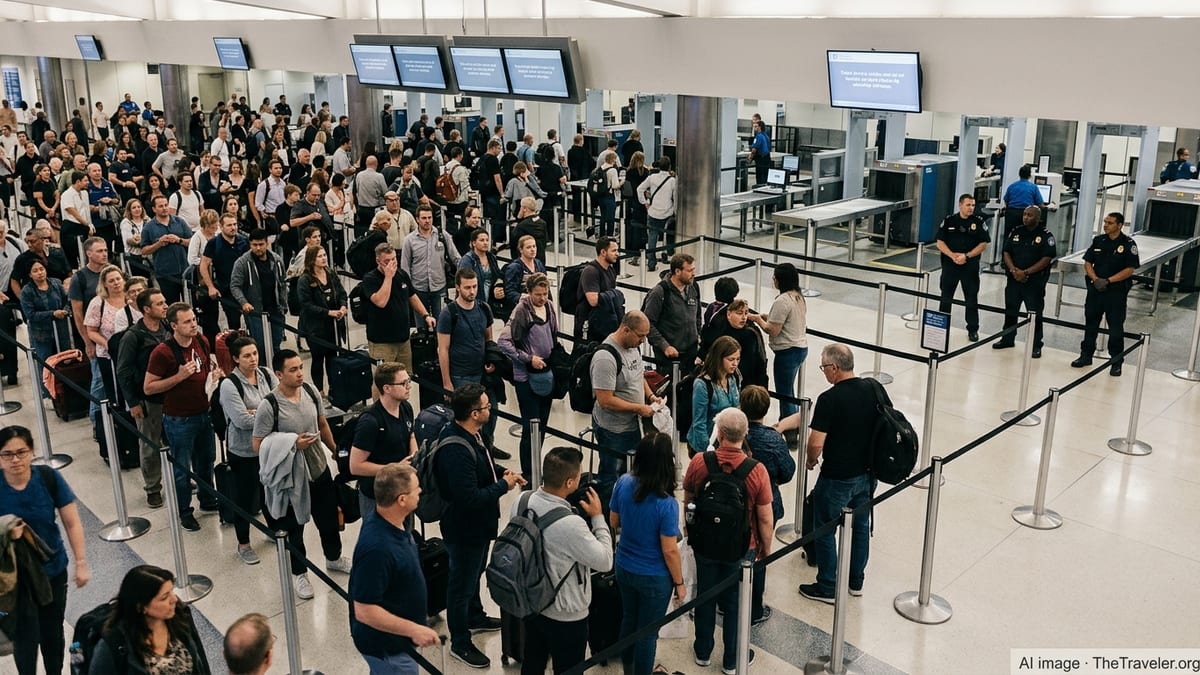
Power disruption hits security and baggage operations
Reports from passengers and local media indicate that a power interruption at Stansted on Sunday 25 October affected several core terminal functions, including security screening and baggage handling. While runway operations continued, the reduced capacity in the departures hall created bottlenecks as staff switched to manual checks.
Travellers described queues stretching through the departures area, with security scanners operating at reduced capacity or being supplemented by manual bag searches. Some accounts on social media platforms and community forums spoke of waits of more than an hour to clear security as staff worked through lines that continued to grow during the busy morning and early afternoon departures peak.
Check-in and baggage systems were also reported to be affected, limiting the airport’s ability to move luggage to aircraft. Several passengers recounted being warned that their checked bags might not travel on the same flight, or being instructed to collect luggage back from departures when it could not be processed in time.
The disruption came as Stansted, a major base for low-cost carriers serving more than 150 destinations, was handling heavy demand associated with school half-term holidays. Publicly available traffic data for October already shows elevated passenger volumes at the Essex airport, increasing the impact of any technical fault on those travelling.
Passengers report being ‘stranded’ amid queues and missed flights
Accounts shared online describe many travellers feeling effectively stranded inside the terminal as the power issue unfolded. Some passengers reported arriving several hours before departure but still failing to reach security in time, leading to missed flights and last-minute rebooking attempts.
Others reported being held in long, slow-moving lines for security and passport control, with limited information about when systems would be fully restored. Several posts referenced families with young children and holidaymakers for whom the trip marked the start of half-term breaks, intensifying frustration as travel plans unravelled.
In some cases, passengers said flights departed while they were still stuck in security queues, leaving them to negotiate directly with airlines at check-in desks or customer service points inside the terminal. Publicly available flight-tracking information for Sunday showed a number of delayed departures from Stansted, as ground operations tried to work around the baggage and security constraints.
Further anecdotal reports suggest that fast-track security lanes, which are usually sold as a time-saving option, offered limited advantage during the height of the disruption, with premium queues also backing up as overall capacity fell.
Recent pattern of operational strains at the airport
The latest power-related disruption adds to a run of operational challenges at Stansted highlighted in recent months. Separate published coverage in October has drawn attention to passengers stranded by rail breakdowns on routes serving the airport, as well as delays linked to wider UK air traffic control issues that have particularly affected London’s airports.
Industry bulletins and community reports have also documented earlier baggage system problems believed to be linked to power or IT issues, with travellers on those occasions describing similar scenes of long queues and missed flights. These incidents have unfolded against the backdrop of a major investment programme that includes upgrades to lighting, mechanical systems and baggage infrastructure at Stansted.
Passenger groups and local commentators have increasingly questioned whether staffing and terminal facilities have kept pace with rising traffic. Trade publications and airport data show that Stansted has been closing in on record annual passenger numbers, while also managing the constraints of a single-terminal layout that can quickly become congested when one part of the system fails.
Consumer advocates have pointed to a broader pattern across several UK airports, where localised outages or system failures can ripple quickly through tightly timed schedules, leaving travellers bearing the brunt in the form of overnight stays, extra transport costs and lost holiday time.
What affected passengers may be entitled to claim
Under established UK and European air passenger protections, travellers whose flights were delayed or cancelled may be entitled to assistance from their airline. Public guidance on these rules indicates that airlines must usually provide care such as meals and, when necessary, overnight accommodation during significant disruption, regardless of the underlying cause.
Whether passengers can receive additional financial compensation for delays or cancellations depends on the specific circumstances. Technical failures in airport systems and wider infrastructure problems are often classified as exceptional events beyond the airline’s direct control, which can limit compensation for missed departures, even when passengers arrived at the airport on time.
However, publicly available legal advice and consumer guidance suggest that travellers are encouraged to keep detailed records of boarding passes, receipts and any written communication from airlines when incidents such as power cuts occur. These documents can support claims for reimbursement of out-of-pocket expenses or help in escalating complaints to dispute resolution bodies if assistance provided at the airport proves inadequate.
Passengers affected by the latest Stansted disruption are already sharing experiences online, comparing how different carriers responded and what remedies were offered at the time. Such accounts often play a role in highlighting inconsistencies between airlines in their handling of large-scale operational failures.
Advice for travellers heading to Stansted in the coming days
While the power cut appears to have been resolved by Sunday evening, travel experts and aviation commentators generally advise building in additional time when heading to airports that have recently experienced serious disruption. For Stansted, that can mean arriving earlier than the standard airline guidance, particularly for early morning departures and during school holiday peaks.
Public information channels for the airport and airlines remain the primary source for live updates on queues, check-in opening times and any residual delays. Travellers are being encouraged by commentators to monitor these sources closely on the day of travel and to check their airline’s app or messaging services for gate changes or revised boarding times.
Travel insurance policies vary, but policy documents often outline what cover is available in cases of missed departures caused by airport infrastructure failures. Passengers planning trips through Stansted in the coming days may wish to review their cover and keep receipts for any additional costs they incur as a result of delays or re-routing.
The latest power cut has again highlighted how quickly operations at a major low-cost hub can become stretched when critical systems fail. For travellers, building in extra time, staying flexible about routings and keeping documentation organised remain the most practical ways to navigate an increasingly fragile peak-season travel environment at Stansted.