


More news on this day
Hundreds of passengers at London Stansted Airport faced long queues, missed flights and hours of uncertainty after a sudden power surge disrupted key systems and left parts of the terminal at a standstill, according to multiple reports and images shared from the scene.
Get the latest news straight to your inbox!
Power disruption hits security and baggage systems
Published coverage indicates that the disruption began after a power surge affected both the airport and the surrounding area, briefly knocking out or degrading several airport systems. Reports describe knock-on problems for security screening and baggage handling, which rely on electrically powered scanners, conveyor belts and IT networks.
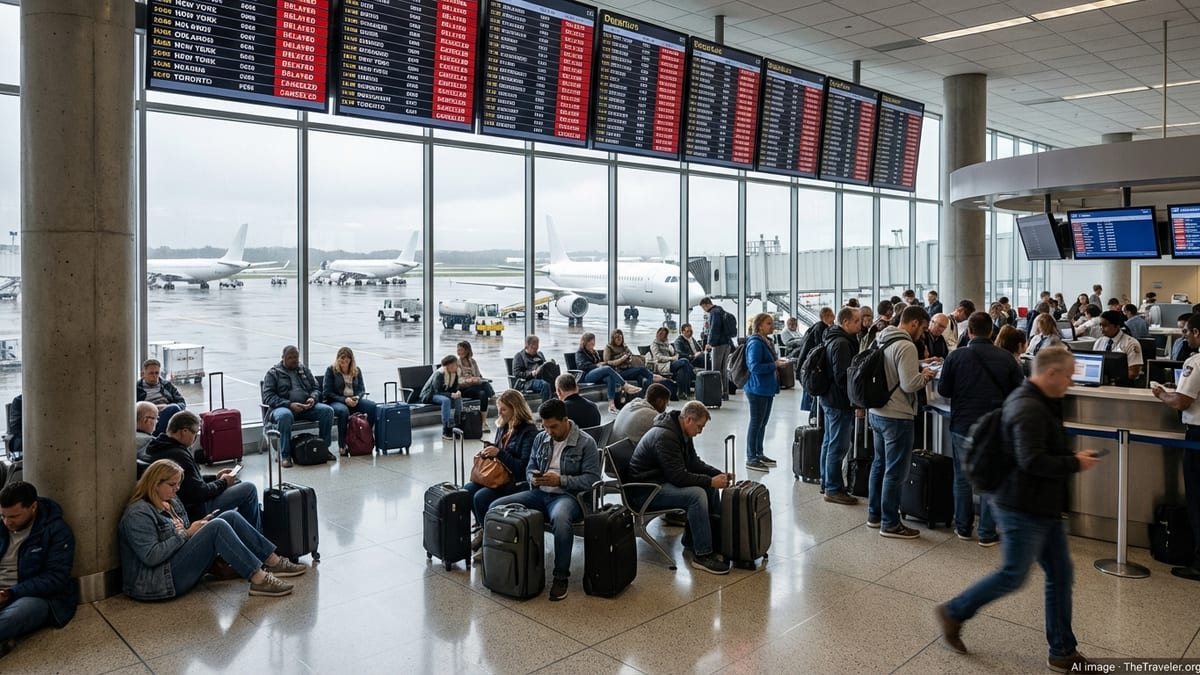
Stansted Airport, located in Essex and serving a large share of Europe-bound low-cost flights from London, experienced queues that stretched far back from security checkpoints. Images circulating on social media show large crowds tightly packed into departure halls, with passengers seated on the floor or standing in snaking lines as they waited for systems to come back online.
Publicly available information suggests that while the power surge itself was relatively short-lived, the impact on complex airport operations was far more prolonged. Once screening equipment and check-in desks were interrupted mid-process, staff had to reset machinery, clear backlogs and re-establish normal flows of passengers and luggage.
Several reports describe passengers being advised to remain in the terminal while airport teams worked through the queues, with some departures held and others leaving with empty or partially loaded seats because travellers could not clear security in time.
Passengers report hours-long queues and missed flights
Accounts collated from news outlets and social media suggest that some travellers waited up to two hours or more to pass through security. Photos taken near departure boards and security lanes appear to show hundreds of passengers queuing in tightly packed zigzags, with lines extending into check-in areas and public concourses.
Some travellers posting online stated that they missed scheduled departures despite arriving at the airport several hours in advance, citing the gridlock in the security area. Others described being held in queues where movement was minimal for long stretches of time as staff worked to bring systems back into operation.
Based on published reports, baggage handling was also affected, leading to delays in both checked luggage drop-off and baggage delivery for arriving flights. This created a double bind for some travellers who were already through security but could not board as normal while ground teams resolved luggage backlogs and safety checks.
While flight schedules began to recover later in the day, the earlier disruption meant that many passengers were left to rebook itineraries, seek overnight accommodation or rearrange onward rail and coach connections, adding further cost and inconvenience to their journeys.
Ripple effects on airlines and wider transport links
London Stansted is a key base for several low-cost carriers, and publicly available coverage indicates that airlines operating from the airport faced a wave of delays and operational challenges as a result of the power surge. Turnaround times were extended as crews waited for passengers stuck in queues, while aircraft already at gates were sometimes held to accommodate those still trying to clear security.
Some reports suggest that airlines advised travellers to arrive earlier than usual for later departures, even after systems had been largely restored, in anticipation of residual congestion. This contributed to continued crowding in public areas as new passengers arrived before the previous backlog had fully cleared.
The disruption at the airport coincided with broader power and transport issues across parts of the East of England, where recent severe weather has affected rail lines and electricity networks. Separate coverage of regional travel conditions describes fallen trees and damaged overhead lines on routes serving Stansted, including the key rail link to London Liverpool Street, compounding difficulties for those trying to reach or leave the airport.
For travellers with tight schedules, the combination of airport system failures and rail disruption increased the risk of missed connections. Some passengers reported turning to taxis, ride-hailing services or long-distance coaches when rail alternatives were unavailable or severely delayed.
Airport response and advice for affected travelers
Statements cited in news reports indicate that the airport acknowledged the power surge and its impact on operations, with assurances that teams were working to restore services as quickly as possible. Public messaging urged passengers to allow extra time for security and to check the status of their flights before travelling to the airport.
Published guidance from airlines and consumer advice organisations generally recommends that passengers impacted by such disruption keep detailed records of boarding passes, receipts and any written communication regarding delays or cancellations. This documentation can be important when seeking refunds, rebooking assistance or, where applicable, compensation under relevant air passenger regulations.
Travelers whose flights went ahead without them due to airport-side delays are often directed to contact their airline to explore rebooking options. However, compensation policies may differ depending on whether the disruption is judged to be within the airline’s control or the result of external infrastructure problems, such as power grid issues.
In this case, available information points to an external power event affecting multiple systems at once, rather than an isolated airline IT problem. That distinction is likely to shape the remedies available to travellers, particularly those who incurred additional accommodation or transport costs while stranded.
What this means for future trips through Stansted
The latest incident highlights how dependent modern airports are on stable power supplies and resilient IT infrastructure. A short power surge can rapidly cascade into hours of disruption when security, check-in and baggage systems are all interrupted at the same time.
For future journeys through Stansted and other busy hubs, travel experts often suggest allowing more than the minimum recommended time for check-in and security, particularly during peak holiday seasons or periods of unsettled weather. Building an additional buffer into itineraries can make a crucial difference if unexpected disruption occurs.
Passengers with onward connections by rail or coach may wish to consider flexible tickets or travel insurance that explicitly covers missed connections caused by airport disruption. While such measures cannot eliminate the inconvenience of a sudden power failure, they can reduce the financial impact and provide more options when schedules unravel.
As investigations into the precise cause and scope of the Stansted power surge continue, many travellers will be hoping that lessons from this episode lead to stronger backup systems and clearer communication the next time the lights flicker at one of the United Kingdom’s key international gateways.