


More news on this day
Multiple flights were cancelled and rare “do not travel” warnings were issued across parts of the United Kingdom and Ireland on October 25 as Storm Boelo brought damaging winds, flooding and widespread transport disruption.
Get the latest news straight to your inbox!
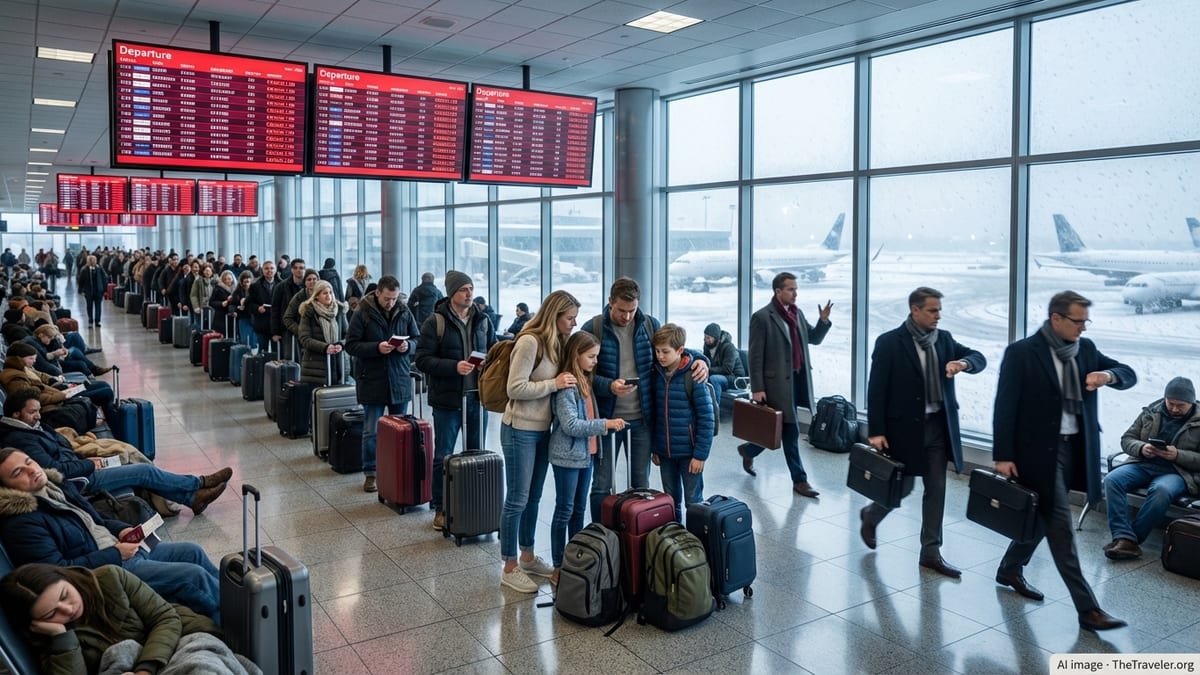
Storm Boelo batters transport networks
Publicly available weather and transport reports indicate that Storm Boelo moved across Ireland, Northern Ireland, Scotland and northern England over the weekend, combining heavy rain with wind gusts above 80 miles per hour in exposed coastal areas. The severe conditions led to fallen trees, power cuts and disruption on key road and rail corridors.
In Greater Manchester, regional coverage describes dozens of trees brought down across suburbs including Cheadle, Gatley, Heaton Moor, Burnage, Wythenshawe and Moston, with debris blocking local roads and sections of the A627 motorway near Oldham. Images published by local outlets show damage to vehicles and at least one residential property in Stretford after trees fell in high winds.
Scotland’s environment agencies and flood-monitoring services issued numerous flood warnings and lower-level alerts as Boelo’s rain bands crossed the country. According to these public bulletins, rivers in several catchments approached or exceeded alert thresholds, particularly in western and central areas already saturated from previous rainfall.
Electricity network operators reported thousands of customers without power at various points through Sunday as winds brought down lines and damaged infrastructure. Restoration efforts continued into the evening, with some rural communities warned that outages could last overnight while conditions remained hazardous for repair crews.
Flights cancelled and airports under strain
Air travel across the British Isles felt the impact of Storm Boelo, with airlines cancelling or diverting flights at several airports. At Dublin Airport, airport-status updates and local news coverage show that by late afternoon on Saturday at least nine departing and ten arriving services had been cancelled due to weather, with further knock-on delays across the schedule.
In the UK, disruption was reported on routes linking affected regions with major hubs such as London, Amsterdam and European capitals, as airlines adjusted operations in response to crosswinds and low-visibility conditions. Aviation analytics and live boards indicated that carriers proactively trimmed schedules to avoid last-minute diversions and to protect aircraft positioning for the coming week.
National air-navigation data and airport advisories reiterate that flight cancellations are taken at airline level in consultation with local safety rules. While runways remained technically open at most large airports, strong crosswinds and wind shear around approach paths appear to have prompted crews to delay or cancel individual services where safety margins were reduced.
Travel-compensation specialists tracking Sunday’s operations reported a spike in weather-related cancellations and delays around the Irish Sea and North Sea corridors. Passengers on affected flights were generally offered rebooking on later services, though availability was limited on some intra-European routes, creating longer waits for travelers trying to return home at the end of the school half-term period.
‘Do not travel’ warnings hit rail and road links
The most dramatic language appeared on the rail network, where several operators issued “do not travel” alerts for parts of the day as conditions deteriorated. According to service updates quoted in UK media reports, intercity operator LNER urged passengers to avoid attempting journeys on impacted sections of the East Coast Main Line because high winds, flooding and fallen trees were expected to close lines and make rail replacement services impossible.
Real-time rail information platforms showed widespread speed restrictions across Scotland and northern England, significantly extending journey times on services that continued to run. On some coastal and rural lines, trains were suspended entirely for safety inspections after reports of debris on the tracks and localized flooding around cuttings and level crossings.
Road travel also became hazardous in multiple regions. Police and traffic agencies warned of blocked routes where trees and branches had fallen across carriageways, with local authorities deploying crews to clear priority corridors and assess structural damage. In hilly and exposed areas, high-sided vehicles were advised to avoid bridges and elevated sections because of the risk of overturning in gusts.
Motoring organizations reported congestion around diversion routes and at key junctions where traffic was funneled off closed roads. Motorists were urged to reconsider nonessential journeys, check local road reports and be prepared for sudden closures or standing water, particularly after dark.
Knock-on impacts across Europe and beyond
While the most intense disruption on October 25 was centered on the UK and Ireland, Storm Boelo developed against a broader backdrop of unsettled weather and geopolitical tension that has been affecting global aviation for months. Earlier in the year, conflict-related advisories led some governments to issue “do not travel” guidance for parts of the Middle East, prompting large-scale rerouting and cancellation of flights through key hubs.
Industry tracking sites note that on October 25 hundreds of flights were delayed or cancelled at airports far from Boelo’s core, including in Russia and parts of continental Europe, due to a combination of weather, airspace restrictions and ongoing schedule adjustments. These overlapping pressures have reduced the resilience of airline networks, meaning localized storms can have wider knock-on effects as aircraft and crews are left out of position.
Travel-intelligence platforms also highlight other regional weather threats unfolding at the same time, including heavy rain and strong winds linked to a weakening tropical system near southern Japan, where authorities warned of possible flight disruption in Kyushu, and winter storms in western Alaska that recently brought power outages and flight cancellations. Together, these events underline how quickly aviation operations can be affected across multiple regions when severe weather patterns align.
Analysts point out that although airlines have improved forecasting tools and now cancel flights earlier to reduce tarmac delays, this approach can concentrate disruption into short windows as carriers temporarily scale back services in affected corridors, before attempting to recover schedules once conditions ease.
What travelers need to know right now
For passengers holding tickets over the coming days, publicly available airline notices suggest that more disruption remains possible while Storm Boelo’s remnants clear and rail and road operators complete safety checks. Some carriers have introduced flexible rebooking policies for journeys touching affected airports, allowing date changes without standard penalties, though terms vary by airline and fare type.
Government travel advisories and safety agencies continue to emphasize that “do not travel” warnings, whether issued for weather or security reasons, carry significant weight. In the context of Sunday’s rail alerts, the message was that services could not be guaranteed and that alternative transport might not be available if lines were blocked, leaving travelers stranded in exposed locations.
Experts in consumer travel rights note that passengers whose flights are cancelled for weather-related safety reasons are generally entitled to a refund or rebooking, but may not be eligible for additional financial compensation under European or UK regulations if the disruption is classed as an extraordinary circumstance. Travelers are encouraged to retain boarding passes, booking confirmations and any written communication from airlines as evidence when seeking refunds.
With conditions still unsettled in parts of the British Isles and other regions facing their own storms and advisories, the most consistent guidance from airports, rail operators and travel insurers is to monitor live updates closely, allow extra time for transfers and be prepared to adjust plans at short notice if further cancellations or “do not travel” warnings are announced.