


More news on this day
A sudden power surge at London Stansted Airport on Sunday, 25 October, triggered hours of disruption to security and baggage systems, leaving hundreds of passengers stranded in terminals, facing lengthy queues, missed flights and widespread uncertainty about their travel plans.
Get the latest news straight to your inbox!
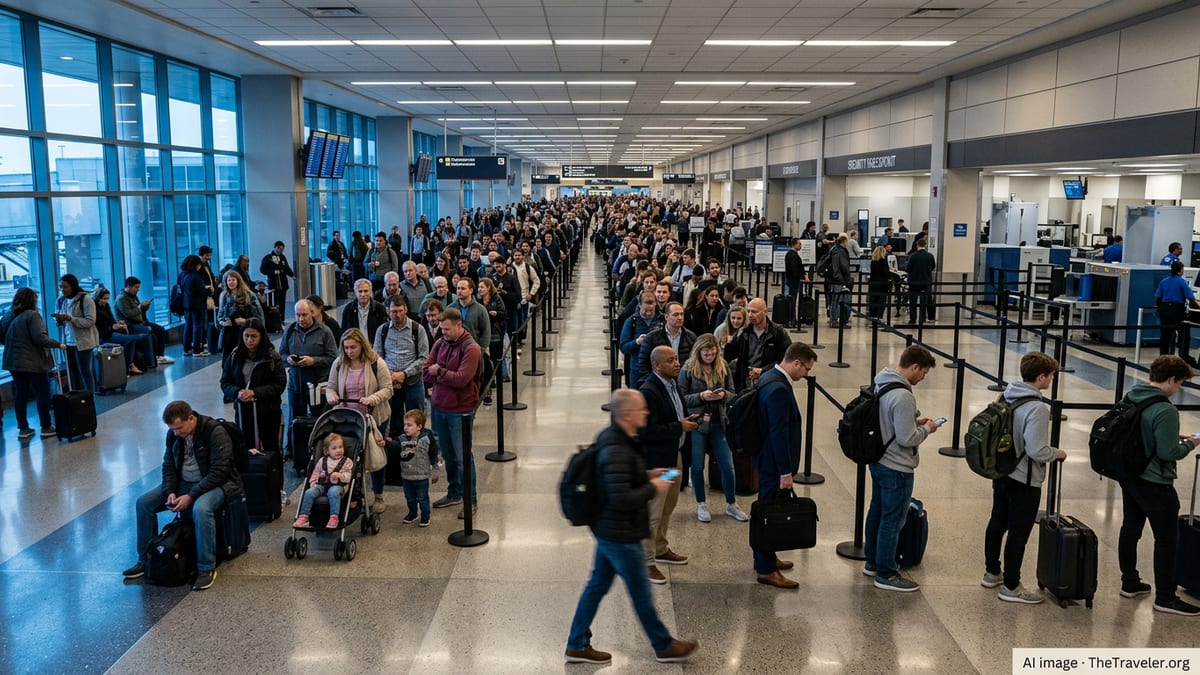
Power Disruption Halts Key Airport Systems
According to published coverage from UK media, the disruption began on Sunday afternoon after a power surge affected several of Stansted’s core operational systems. Reports indicate that security screening equipment and automated baggage belts were among the areas hit, sharply slowing the flow of departing passengers through the airport.
Publicly available information shows that the incident did not shut the airport entirely, but it significantly reduced capacity. Some airlines were able to continue operating with manual workarounds, while others experienced extended delays, gate changes and, in some cases, cancellations.
Airport statements cited in news reports described the disruption as temporary and linked directly to the single power event, rather than to wider infrastructure damage. However, the need to safely power down and then reboot affected systems prolonged the impact well beyond the initial surge.
Live flight tracking and airport information services on Sunday evening showed clusters of delayed departures from Stansted and a smaller number of cancellations, indicating knock-on effects that continued into the late hours.
Scenes of Queues, Confusion and ‘Stranded’ Travelers
Passengers posting on social media and travel forums throughout Sunday described queues stretching across the departures hall as security lines slowed to a crawl. Some reports referred to waits of around two hours for security checks, with additional delays at check in as baggage systems struggled to cope.
Several travelers reported being held in crowded gate areas for extended periods with limited information about revised departure times. Others said they were asked to return to the main terminal after boarding was paused or flights were re-timed, adding to the sense of confusion.
Accounts shared online described families with young children sitting on terminal floors amid what some called “total systemic collapse” of normal processes, particularly around luggage drop and baggage loading. At least some passengers who missed connections or whose flights were ultimately cancelled reported being stuck at the airport while they tried to secure new arrangements.
Although the total number of affected passengers has not been formally quantified, publicly available reporting suggests that hundreds of people experienced severe disruption over the course of the afternoon and evening.
Impact on Flights, Airlines and Baggage Handling
Data from live departure boards and independent flight-tracking platforms on 25 October indicated a spike in delayed services from Stansted, with a smaller group of cancellations emerging as airlines adjusted schedules in response to the reduced throughput at security and the baggage system issues.
Low cost carriers, which operate a high volume of short haul flights from Stansted, appeared particularly exposed to cascading delays as aircraft and crews fell out of position. Some passengers reported that even once flights were able to depart, bags could not immediately be loaded for all services, creating further complications.
Travel discussion threads and news summaries noted that baggage belts were among the systems most affected by the power surge, slowing the movement of luggage from check in to aircraft. In some cases, luggage was reportedly returned to departure halls for collection after flights were cancelled, forcing travelers to re-enter crowded public areas to retrieve their bags.
While the majority of scheduled flights ultimately operated, the disruption created a backlog that was expected to take several hours to clear, with knock-on effects for evening and potentially early Monday departures.
Advice for Affected and Upcoming Travelers
Consumer information from travel bodies and airline guidance shared publicly on Sunday emphasized that passengers whose flights are cancelled are generally entitled to a refund or rebooking, depending on the airline’s policy and applicable regulations. For UK and EU carriers, or flights departing from the United Kingdom, compensation rules may apply in some circumstances, though power supply issues can be treated as outside airline control.
Travel rights experts quoted in prior disruption cases highlight the importance of keeping receipts for any additional accommodation, meals or replacement transport required as a result of severe delays or cancellations. Passengers are typically advised to submit claims directly to their airline first, and then to travel insurance providers where relevant.
For those scheduled to travel from Stansted in the hours after the incident, publicly available advice has focused on checking flight status frequently and arriving earlier than usual in case residual queues persist at security or check in. Airlines have also encouraged passengers to use online check in and to travel with cabin baggage only where possible to reduce pressure on baggage systems.
Travelers with tight connections or onward ground transport booked on the same day have been urged to allow additional buffer time, as even modest residual delays could cause missed trains, buses or regional flights.
Power Problems and a Wider Pattern of UK Travel Disruption
The Stansted incident comes in a year already marked by several high profile technical and power-related disruptions across UK transport, including recent air traffic control system issues that caused widespread flight cancellations and delays at multiple airports. While the causes differ, the cumulative effect for travelers has been a perception of increasing fragility in the systems that underpin day to day operations.
Industry commentary in the wake of those earlier disruptions has raised questions about the resilience of critical infrastructure, investment in backup power and redundancy, and the speed with which complex airport systems can be safely rebooted after a failure. The situation at Stansted is likely to renew scrutiny of those issues, especially around security and baggage, which are highly sensitive to even short interruptions.
For travelers, the practical lesson from Sunday’s events is that even routine weekend departures can be derailed by sudden local technical issues, with limited warning. Flexible tickets, comprehensive travel insurance and conservative connection times remain some of the few tools available to mitigate the impact when such failures occur.
As of late Sunday evening, publicly available airport updates indicated that most systems at Stansted were operating again, but with a warning of continuing residual delays. Passengers planning to use the airport over the next 24 hours are being encouraged, through airline and travel advisories, to monitor their journeys closely and be prepared for timetable changes at short notice.