


More news on this day
Hundreds of passengers at London Stansted Airport faced hours of disruption on Sunday, October 25, after a power surge shut down key terminal systems, triggering long queues, missed flights and confusion at the start of a busy travel day.
Get the latest news straight to your inbox!
Power Surge Hits Security and Baggage Systems
Publicly available information indicates that the disruption began after a power surge affected the airport and parts of the surrounding area on Sunday afternoon. The incident temporarily took offline core systems used for security screening, baggage handling and other terminal operations, creating immediate bottlenecks throughout the building.
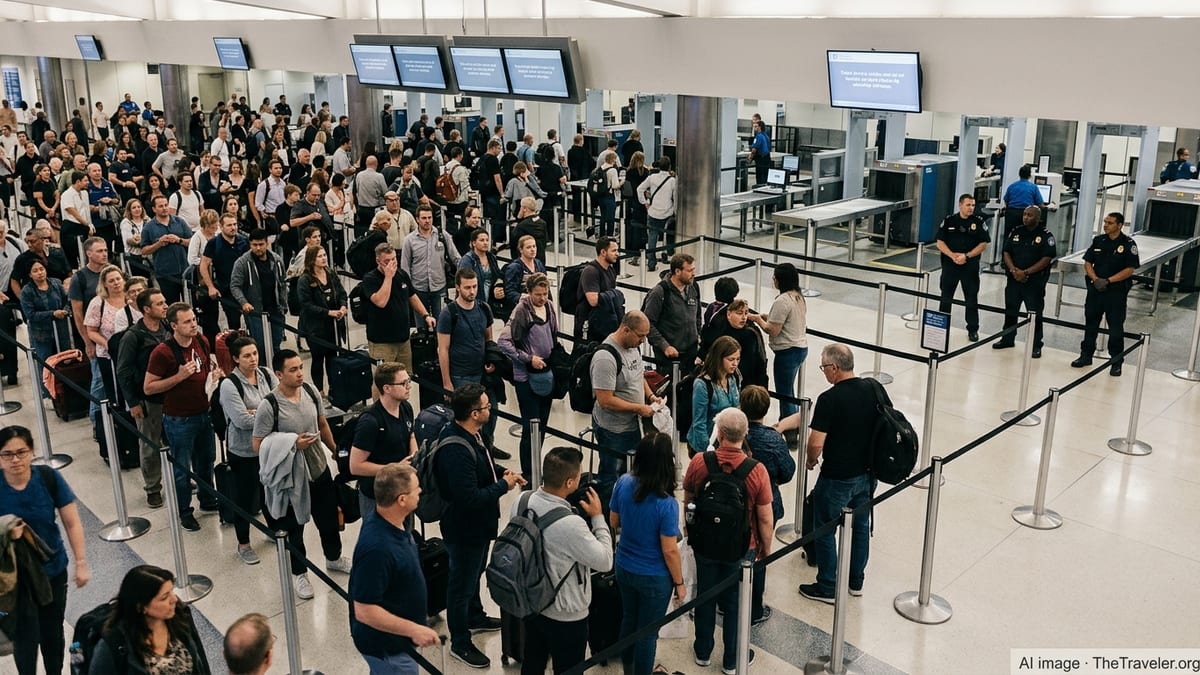
Images and descriptions shared on social media and in local media coverage show queues stretching across the departures hall, with lines reported at more than two hours for passengers trying to clear security. Some travellers reported being held in place with little movement as staff tried to manage the backlog manually while waiting for systems to restart.
Coverage from UK news outlets states that hundreds of flights were delayed, with a smaller number cancelled entirely as knock-on effects spread through the day’s schedule. Flights already on the ground reportedly experienced extended turnaround times, while some inbound services faced delays as aircraft waited for stands and ground handling capacity to become available.
By Sunday evening, publicly available statements from the airport indicated that systems had been restored and operations were resuming, but residual disruption persisted as airlines worked through the queues of waiting passengers and rebalanced aircraft and crew.
Passengers Report Feeling ‘Stranded’ in Terminal Queues
Accounts collated from social media posts and subsequent news reports describe passengers arriving at Stansted to find the departures area overwhelmed, with queues for security snaking around check in zones and little clarity on how long the wait would last. Several travellers described feeling effectively stranded inside the terminal: unable to reach the departure gates, but also reluctant to leave for fear of missing any potential boarding call.
Some passengers reported waiting more than two hours just to clear the first security checks, with further lines at subsequent control points. This created particular difficulty for families travelling with children and for older passengers, many of whom had expected a typical off peak transit time through the airport.
Others described missing flights despite having arrived at the airport well in advance of departure, as the power related outage slowed screening and baggage processing to a crawl. Publicly available coverage notes that passengers affected in this way now face the task of seeking refunds, rebooking options or, in some cases, alternative transport at short notice.
Comments shared online also highlight the strain on basic amenities when the terminal became crowded for hours at a time, with seating areas full and long lines forming at food and beverage outlets as travellers waited for clarity on revised departure times.
Stansted Confirms Systems Restored but Delays Persist
According to statements cited in UK media reports, London Stansted said that all of its core systems were back in service by Sunday evening and that teams were working to support passengers as operations recovered. The airport publicly acknowledged the disruption and issued apologies to those whose journeys were affected.
Despite the restoration of power and IT systems, the scale of the backlog meant that disruption did not end immediately. Aircraft and crew were out of position, and boarding times were pushed back while passengers still in lengthy queues tried to reach the gates. In some cases, departures left significantly later than scheduled as airlines attempted to accommodate as many ticketed passengers as possible.
The incident coincided with already elevated traffic at Stansted, which serves as a major base for low cost carriers providing short haul links across Europe. At this time of year, half term holiday travel and weekend city breaks can combine to produce some of the airport’s busier days, amplifying the impact of any sudden technical fault or outage on the overall operation.
While there were no reports in public coverage of safety issues relating to aircraft in the air, the event underlined how dependent modern airports are on uninterrupted power supplies and smoothly functioning digital systems for passenger processing on the ground.
Knock On Effects for Airlines and onward Travel
The power cut at Stansted had immediate consequences for airlines based at the Essex hub and for travellers with onward connections, hotel bookings or time sensitive plans at their destination. Even where flights eventually departed, long delays created missed train connections, lost prepaid accommodation nights and disrupted itineraries across Europe and beyond.
Airlines operating from Stansted, including major low cost carriers, faced the logistical challenge of rebooking stranded customers while at the same time trying to maintain a workable schedule for aircraft and crew. Publicly available reporting suggests that some passengers were offered later services where seats were available, while others sought refunds and made their own arrangements.
For travellers with separate onward tickets or non refundable accommodation, the financial impact may be significant. Under current UK and EU air passenger regulations, compensation is generally linked to whether the disruption is considered within an airline’s control. In situations where an airport wide power failure affects multiple carriers, the question of eligibility can be complex, and passengers are often advised in public guidance materials to retain documentation of boarding passes, receipts and any written communication relating to delays or cancellations.
The disruption also rippled out to ground transport. Reports indicate that queues for airport buses and taxis grew as some passengers abandoned plans to fly altogether, while others arriving on delayed flights had to adjust rail and coach bookings from Stansted into London and other parts of the UK.
What Travellers Should Know for Upcoming Flights
With systems restored, there is no indication in publicly available information of ongoing technical problems at Stansted beyond the immediate backlog caused by Sunday’s outage. Even so, the incident serves as a reminder that at busy single runway airports, relatively short interruptions can have an outsized effect on passenger experience for many hours.
Travel industry coverage and consumer advice sources commonly recommend arriving earlier than the minimum suggested check in time when severe disruption has recently occurred at a departure airport. For Stansted, that may mean allowing additional time beyond the usual airline guidance over the next 24 hours, especially for early morning departures when the operation works to reset after the previous day’s events.
Passengers planning to travel through Stansted in the coming days are being encouraged, in publicly available guidance, to monitor airline apps and airport departure boards closely before setting off, and to ensure they have contact details for their carrier in case schedules change at short notice. Flexible tickets, travel insurance that covers missed connections and an awareness of passenger rights can all make a difference when major operational disruptions occur.
For now, the power cut at London Stansted stands as another high profile example of how quickly an otherwise ordinary travel day can unravel when a critical piece of airport infrastructure fails, and how long it can take for the effects to work their way out of an interconnected aviation network.