


More news on this day
American Airlines flight AAL2080 from Charlotte to Chicago was diverted to Detroit Metropolitan Wayne County Airport on July 5 as severe weather and mounting holiday congestion around Chicago O’Hare forced air traffic managers to reroute inbound traffic, adding another disruption to an already strained Independence Day travel period.
Get the latest news straight to your inbox!
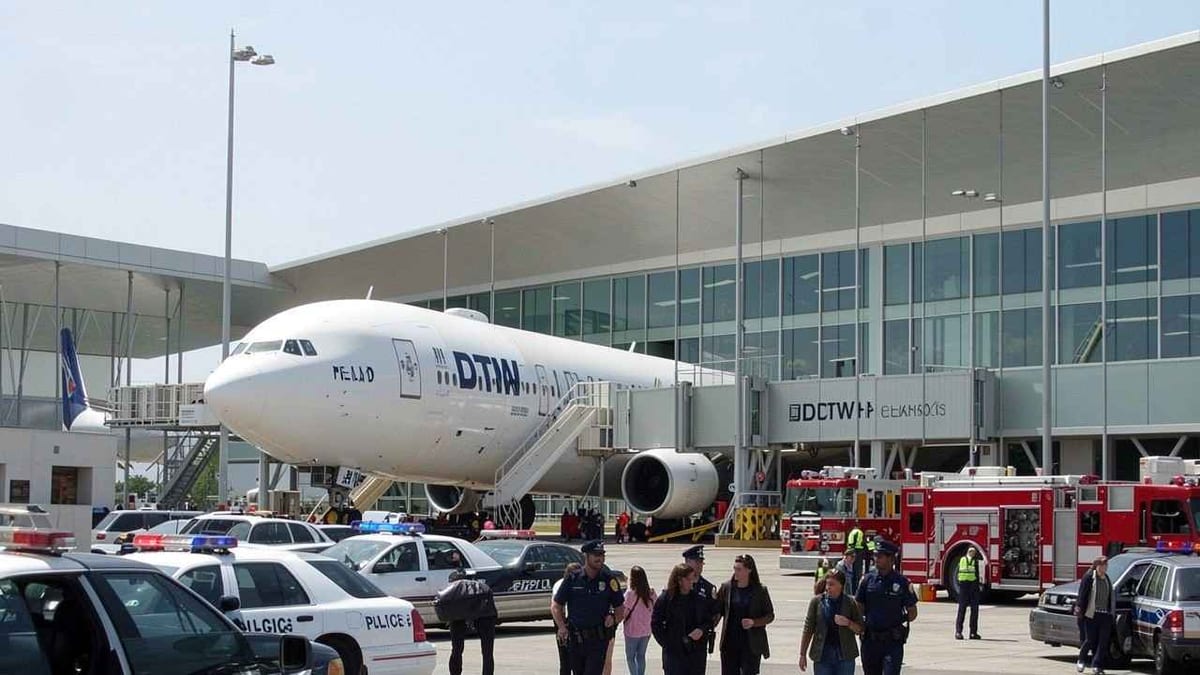
Route Change for Charlotte to Chicago Service
Publicly available flight-tracking information shows that AAL2080, operated by a Boeing 737-800 on the Charlotte Douglas to Chicago O’Hare corridor, departed North Carolina on Saturday with O’Hare as its planned destination before being redirected midroute to Detroit. Data reviewed after the diversion indicates that the aircraft followed a typical northwesterly track toward the Great Lakes region before altering course as traffic management initiatives intensified around Chicago.
Reports indicate that the diversion unfolded as part of a broader series of irregular operations affecting flights into O’Hare. The airport has been coping with repeated waves of disruption tied to fast-changing storm systems and airspace restrictions during one of its busiest summer holiday peaks. AAL2080 ultimately landed in Detroit, where passengers disembarked and awaited updated onward arrangements to Chicago or alternative destinations.
According to published aviation coverage, the flight experienced what was described as an “unexpected routing shift” rather than an onboard technical or medical emergency, underscoring that the primary drivers were operational conditions in the Chicago region rather than any issue with the aircraft itself. Airline dispatch teams were reported to be actively managing the revised routing and turn‑around planning from Detroit to minimize knock‑on delays.
As of Saturday afternoon, online flight-status tools reflected AAL2080 as diverted, with subsequent segments and aircraft rotations adjusted as part of American Airlines’ network recovery plan for the holiday weekend.
Severe Weather and Traffic Limits at Chicago O’Hare
The diversion of AAL2080 came as Chicago O’Hare grappled with fresh rounds of thunderstorms and federal flow restrictions that sharply curtailed arrival capacity. Industry-focused coverage of the July 4 holiday period describes how convective weather in the upper Midwest, including storm cells near Chicago, triggered a mix of ground stops, reduced arrival rates and extended airborne holding for inbound flights.
Guidance from the Federal Aviation Administration notes that severe weather remains the single largest cause of flight delays in the United States, with thunderstorms, low visibility and lightning often forcing controllers to space aircraft farther apart and reroute them around storm systems. In practice, that can quickly reduce the number of flights that large hubs such as O’Hare can safely handle at any one time, especially when storms intersect the main arrival and departure corridors.
Travel analysis from recent days highlights that O’Hare has been at the center of widespread national gridlock, with hundreds of delays and cancellations rippling through airline networks as storms moved across the region. For American Airlines and other carriers that rely heavily on Chicago as a connecting hub, each new round of weather‑driven capacity cuts complicates the already complex puzzle of aircraft positioning, crew scheduling and passenger rebooking.
In this context, diversions such as that of AAL2080 to Detroit are one of the tools used by air traffic controllers and airline operations centers to keep the system stable. By moving inbound aircraft away from holding patterns near a saturated hub, controllers free up airspace and reduce congestion while airlines gain additional time on the ground at alternate airports to reset flight plans.
Holiday Air Traffic Gridlock Intensifies
The Independence Day travel period has been described in aviation and travel reports as one of the busiest of the year, with passenger volumes rivaling or exceeding pre‑pandemic peaks. Schedules for the July 4 window are typically built months in advance to accommodate surging demand on domestic routes, particularly into major connecting hubs such as Chicago, Atlanta and Dallas.
Coverage on TheTraveler.org and other outlets in recent days points to a combination of record passenger loads, tight aircraft utilization and limited spare capacity across fleets. When severe weather intersects with this high-demand environment, even a brief reduction in arrival or departure rates at a major hub can cause rapid backlogs, resulting in aircraft waiting for gates, missed connections and rolling delays that stretch late into the night.
In the case of AAL2080, the diversion to Detroit appears to reflect this broader gridlock rather than a standalone anomaly. Similar reroutings have been reported across multiple carriers operating into O’Hare during the same weather system, with some flights diverting to nearby airports in Michigan, Ohio and Wisconsin before resuming their journeys once conditions improved or arrival slots opened.
Observers note that such operational decisions, while frustrating for travelers, are a predictable feature of a strained system operating near its capacity limits. During peak periods, airlines and air traffic controllers often face trade‑offs between holding flights in the air, delaying departures at origin airports or diverting aircraft to alternates where they can refuel and wait safely on the ground.
How Diversions Fit Into Airline Operations
Aviation briefing materials and American Airlines’ own public guidance on irregular operations explain that diversions are a standard safety and traffic‑management measure when en route conditions change. In situations involving weather, flow restrictions, or temporary airport closures, pilots coordinate with dispatch and air traffic control to identify the nearest suitable airport that can safely accept the aircraft, taking into account runway length, available services and prevailing conditions.
Once a diversion is initiated, airline operations centers typically rework aircraft routings, crew duty times and passenger itineraries. For a mainline jet such as the Boeing 737-800 operating AAL2080, this can involve coordinating with ground handlers at the diversion airport, arranging gate space, and determining whether the aircraft will continue onward to its original destination or enter a new rotation from the alternate field.
Publicly available customer information from American Airlines notes that when diversions and severe weather events occur, travelers are encouraged to monitor their reservations through airline apps and flight‑status tools. During major disruption events, airlines may publish travel alerts and flexible rebooking policies that allow customers to adjust their plans without change fees on affected dates and routes.
Operational case studies on previous weather events at O’Hare illustrate how a single line of storms can force multiple aircraft, sometimes across several airlines, to divert simultaneously to alternates like Detroit. These diversions can, in turn, temporarily increase congestion at the receiving airports, which must absorb additional traffic, gate usage and passenger volumes on short notice.
What the Diversion Means for Travelers
For passengers aboard AAL2080, the diversion to Detroit meant an unplanned stopover on what is ordinarily a short domestic hop between Charlotte and Chicago. Travel commentary suggests that in similar situations, customers may face extended ground time while crews await updated operating plans, new departure slots, or connecting flight options once the original destination reopens to regular traffic.
Consumer advocates emphasize that weather‑related disruptions, including diversions, are generally classified as outside an airline’s control under prevailing U.S. rules. As a result, while carriers may offer meal vouchers or hotel accommodation in some cases, there is typically no regulatory requirement to provide compensation when delays are directly linked to severe weather or airspace restrictions.
At the same time, recent holiday travel coverage underscores the importance of proactive planning by passengers traveling during peak periods. Recommendations commonly include booking earlier flights in the day, allowing longer connection windows at busy hubs, keeping airline mobile apps updated for real-time alerts, and having backup routing options in mind in case original itineraries are disrupted by storms or traffic caps.
As American Airlines and other carriers work to stabilize schedules following the latest round of storms over Chicago, additional delays, re‑timed flights and possible downstream diversions remain a possibility through the remainder of the holiday weekend. Travelers planning to pass through O’Hare are being urged, through publicly available advisories and media reports, to check their flight status frequently and prepare for potential changes similar to those experienced by passengers on AAL2080.