


More news on this day
American Airlines has operated an emergency relief flight from Miami to Caracas, delivering thousands of pounds of humanitarian supplies to earthquake hit Venezuela as the country struggles with damaged infrastructure and disrupted air links.
Get the latest news straight to your inbox!
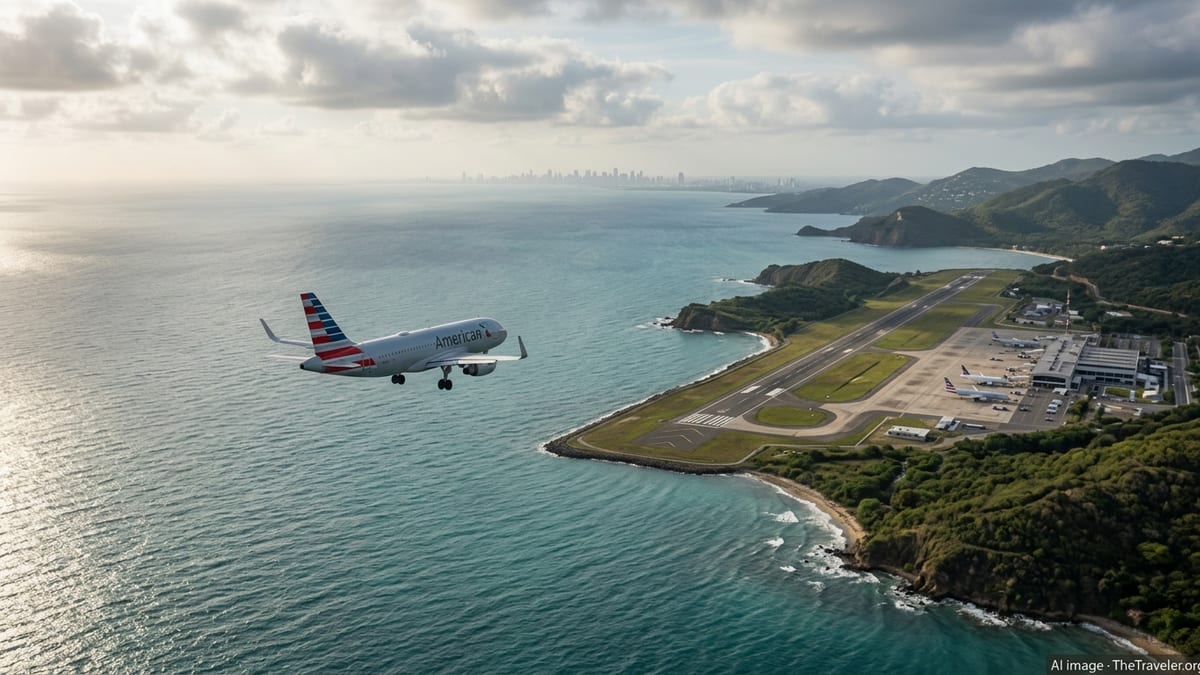
Quake Shutters Airport as Airline Sends Dedicated Relief Mission
Reports indicate that the special American Airlines service departed Miami International Airport in recent days bound for Caracas, carrying pallets of food, drinking water, medical equipment and other basic necessities. Aviation industry coverage notes that the aircraft transported more than 9,000 pounds of boxed and palletized aid destined for distribution in the capital and surrounding coastal areas affected by the June 24 earthquakes.
According to publicly available operational information, the relief trip was arranged outside the carrier’s regular passenger schedule, with coordination focused on aligning arrival times with available slots at the Caracas area airports that remain capable of handling larger jets. The dedicated flight is described in industry reports as part of a broader surge of airlift into northern Venezuela that includes cargo charters, government aircraft and flights arranged by international organizations.
The airline’s intervention follows twin earthquakes that struck central and northern Venezuela in late June, causing extensive structural damage, power cuts and landslides across Caracas, La Guaira and neighboring states. Regional situation updates compiled by health and disaster agencies describe widespread impact on hospitals, housing and transport corridors, sharply increasing the need for outside relief and rapid logistics support.
While the focus of the Miami–Caracas mission was humanitarian cargo rather than passenger travel, its operation highlights the importance of commercial airlines in bridging the gap between traditional disaster aid channels and communities in need, particularly when primary airports are operating under emergency constraints.
Damaged Caracas Gateway Forces Rerouting of International Traffic
The emergency flight took place against a backdrop of significant disruption at Simón Bolívar International Airport, the main gateway serving Caracas. Regional newspaper coverage reports that the airport’s terminal facilities and at least one runway sustained notable damage in the earthquakes, with visible surface cracks and localized structural issues. As a result, authorities have restricted commercial operations while prioritizing emergency and relief movements.
With capacity at the primary airport constrained, much of the international and domestic traffic has been temporarily diverted to secondary facilities, including an airport near Valencia located roughly two hours by road from Caracas. Accounts from passengers and local media describe long queues, baggage delays and heavily congested terminals there as airlines and travelers adjust to the altered network.
Within this environment, the American Airlines relief flight was coordinated to fit within limited available slots and safety protocols governing large aircraft movements into the affected region. Aviation analysts note that the use of familiar wide and narrow body aircraft types, supported by crews already experienced on the Miami–Caracas sector, can reduce operational risk when operating into partially degraded infrastructure.
Publicly available information about the wider relief operation indicates that the United States and regional partners have been channeling both search and rescue resources and medical supplies into northern Venezuela, relying heavily on air bridges while road access remains inconsistent in some areas. This has placed additional pressure on airfields that are still fully or partially functional.
From Route Resumption to Humanitarian Airlift
The emergency flight also underscores how quickly a newly restored commercial route has been repurposed for crisis response. Earlier this year, American Airlines resumed nonstop passenger services between Miami and Caracas after a seven year suspension in direct flights between the United States and Venezuela. Transportation and business media described the route relaunch in late April as a milestone in reconnecting the two countries’ aviation networks.
In May, aviation industry reports indicated that the carrier ramped up to two daily flights between Miami and Caracas, using narrow body aircraft to offer up to fourteen weekly frequencies. That expansion was framed as part of a broader strategy to strengthen the airline’s Latin American network, with Miami serving as a key hub linking the region to the United States.
The June earthquakes dramatically altered that trajectory. According to airline statements summarized in trade publications, American suspended its regular Caracas passenger schedule through at least early July as assessments of runway and terminal conditions continued. The relief mission operated separately from the paused commercial program, highlighting the carrier’s flexibility in reallocating aircraft capacity from revenue services to humanitarian operations.
The shift from routine passenger flights to urgent airlift illustrates how major airlines can pivot network assets when disasters occur along established routes, leveraging existing regulatory approvals, crew qualifications and ground handling relationships to move aid quickly.
Corporate Relief Efforts and Partnership With Aid Organizations
The Miami–Caracas cargo mission forms one element of a broader relief initiative that the airline announced following the Venezuelan earthquakes. A corporate news release circulated last week outlined a campaign to raise funds for disaster response, including support for international humanitarian organizations operating in Caracas, La Guaira and other heavily affected areas.
Publicly available materials describe a program in which airline customers and employees can contribute to relief efforts through donations earmarked for earthquake response. The carrier has emphasized that funds will be directed toward providing shelter supplies, emergency health assistance, hygiene items and other basic goods for displaced residents and communities whose homes and services have been damaged or destroyed.
Industry coverage highlights that the airline’s cargo capabilities play a central role in these efforts, allowing donated goods to be consolidated at warehouses in South Florida and loaded onto flights bound for Venezuela. In addition to the large dedicated relief rotation, smaller consignments are expected to move on subsequent flights as commercial operations gradually resume, subject to airport conditions and regulatory clearances.
Observers of corporate social responsibility in aviation note that large carriers frequently activate similar programs after major disasters, combining fundraising campaigns with in kind cargo support and, when feasible, the transport of volunteer personnel. The Venezuelan initiative follows that pattern, adapted to the specific constraints imposed by damaged airport infrastructure and evolving security and political conditions.
Outlook for Restoring Regular Connectivity
Looking ahead, questions remain about how quickly Venezuela’s main international gateway can return to routine operations. Regional reporting suggests that while one runway at Simón Bolívar International has already been partially rehabilitated for controlled arrivals of relief and official flights, full commercial capacity is likely to require more extensive inspections and repairs.
American Airlines has indicated in previous scheduling notices that it intends to resume regular Miami–Caracas passenger service once local authorities confirm that runway and terminal conditions meet safety and operational standards. Prior to the earthquakes, the airline had also announced plans to restart service to Maracaibo in mid July, though industry observers now expect those timelines to be reassessed in light of infrastructure damage and ongoing humanitarian needs.
Travel analysts point out that the rapid organization of the emergency relief flight demonstrates both demand and capability for continued air connectivity between South Florida and Venezuela, particularly for communities with close family and economic ties on both sides of the Caribbean. However, they also note that passenger demand could be tempered in the short term by concerns over aftershocks, road access and the reliability of basic services in the capital region.
For now, the Miami–Caracas relief mission stands as a high profile example of how a newly reactivated transnational air link is being used to move aid rather than tourists, offering a lifeline to earthquake impacted communities while underlining the critical role of commercial aviation in disaster response.