


More news on this day
Air travelers across several regions are facing another round of disrupted journeys as severe weather systems, a Pacific typhoon and isolated aircraft technical problems trigger fresh waves of flight cancellations and delays at the height of the July travel peak.
Get the latest news straight to your inbox!
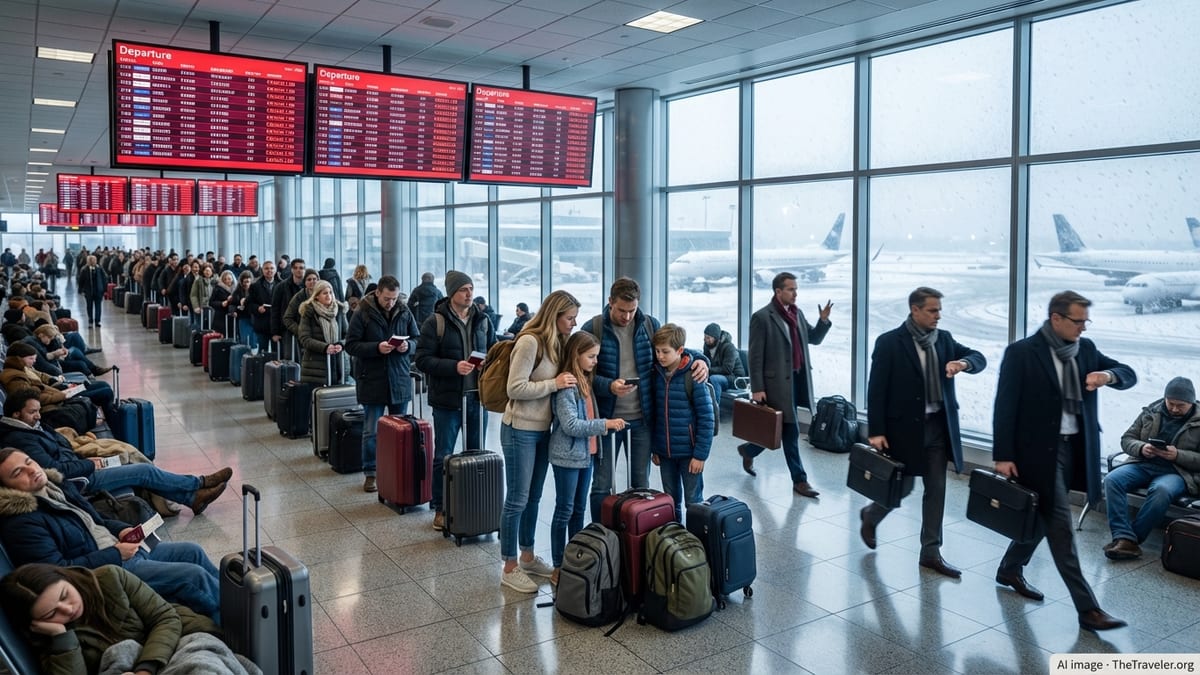
Storms Snarl Operations at Major U.S. Airports
New thunderstorms sweeping across parts of the United States over the July 4 weekend have heavily disrupted operations at some of the country’s busiest hubs. Published coverage from Chicago indicates that O’Hare International Airport experienced hundreds of cancellations and widespread delays on July 4 as strong storms moved through northern Illinois, with average delays reported at more than an hour for both arrivals and departures.
Real time tracking data and airport statistics compiled over the same period show that the latest disruption comes on top of an already strained summer for U.S. air travel, marked by repeated rounds of weather-related constraints and crew reassignments. A recent analysis highlighted more than 320 cancellations and thousands of delays nationwide on July 4 alone, with impacts concentrated in states such as Texas, Illinois, Massachusetts, Missouri and Virginia.
Industry observers note that weather remains the primary trigger behind the bulk of cancellations during the summer, especially when storm systems sit over key hubs and choke already busy airspace. However, once schedules begin to unravel, secondary factors such as crew duty-time limits, aircraft being out of position and congestion on the ramp can amplify the disruption well beyond the initial thunderstorm window.
Federal aviation data for early July continues to flag intermittent traffic management initiatives and ground delay programs around core hubs as storms redevelop, suggesting that passengers traveling through affected airports should remain prepared for rolling knock-on effects throughout the holiday period.
Typhoon Bavi Forces Cancellations Around Guam
In the western Pacific, Typhoon Bavi has triggered significant schedule changes at Guam’s Antonio B. Won Pat International Airport. Travel advisories and local coverage indicate that multiple airlines have canceled or adjusted flights to, from and through Guam as the system brings strong winds, heavy rain and challenging conditions to the region in early July.
Reports describe a pattern of rolling cancellations, diversions and schedule revisions as carriers respond to updated storm forecasts and airport operational limits. Passengers with itineraries touching Guam through July are being urged in public guidance to monitor airline alerts closely and avoid assuming that a flight is operating until it is explicitly confirmed.
Travel guidance circulating in the region notes that when flights are canceled before departure, baggage is typically pulled from aircraft and routed back to the arrivals area, though the timing can vary depending on the carrier and the load on ground operations. Travelers are being advised to build in extra time for reclaiming checked bags and rechecking when rebooked on new services.
The situation around Guam illustrates how tropical systems can quickly upend flight schedules across a wide radius, as carriers must reposition aircraft, adapt crew rosters and sometimes pause operations entirely until wind, rain and visibility levels return within safety margins.
Brussels and Mumbai Face Weather-Related Disruptions
In Europe, operational data from Brussels Airport on July 5 points to a fresh bout of disruption as the summer peak intensifies. Reporting compiled by aviation-focused outlets indicates that Brussels Airlines and Qatar Airways canceled several flights and registered dozens of delays, affecting both European and long haul routes including services to Copenhagen, Edinburgh, Antalya, Palma de Mallorca and Las Palmas.
While the absolute number of cancellations at Brussels remains modest compared with large scale U.S. storm events, analysts highlight that even a small cluster of withdrawn flights can ripple across networks during peak season, especially when aircraft are tightly scheduled and spare capacity is limited.
Further east, India’s monsoon season is once again straining airport operations. Local aviation coverage from Mumbai on July 5 describes heavy monsoon rains disrupting services at Chhatrapati Shivaji Maharaj International Airport, forcing the diversion of several inbound flights and prompting multiple go-around attempts as pilots encountered poor visibility and unstable approach conditions.
Operational summaries from Mumbai underscore how quickly runway capacity can drop when rainfall intensifies and visibility deteriorates. Even when few flights are outright canceled, repeated diversions and aborted landings consume fuel, crew duty hours and layover slots, which can in turn lead airlines to consolidate or cancel later rotations to restore balance to their schedules.
Technical Issues Add to the Summer Airline Strain
Alongside weather-related upheaval, isolated technical problems are also contributing to cancellations on certain long haul routes. Recent aviation reporting details how a United Airlines Boeing 787-9 Dreamliner was grounded again in early July after maintenance concerns re-emerged just days after the aircraft had returned from extended repair work.
Publicly available flight tracking and fleet records show that the renewed grounding led to the cancellation of at least one transatlantic service between London Heathrow and San Francisco on July 3. For affected passengers, the disruption has been particularly acute on routes where widebody fleets are already tightly utilized and spare aircraft are limited.
A review of incident timelines for the same aircraft highlights a pattern of recurring technical snags in recent months, including diversions and previous cancellations linked to maintenance checks. While airlines emphasize that conservative decisions on airworthiness are central to safety, the operational consequences can be significant when issues arise on high demand, long haul sectors with limited alternative options.
Industry analysts suggest that, taken together with weather-related constraints and ongoing staffing pressures in certain markets, these individual technical incidents form part of a broader tapestry of strain on global airline operations during the northern summer season.
What Travelers Can Expect in the Coming Days
Passenger-rights organizations and travel advisories examining recent disruption patterns emphasize that most of the current waves of cancellations are linked directly to weather systems or safety-driven operational decisions. In such cases, entitlement to financial compensation is often limited, particularly under regimes that distinguish between airline-controlled factors and external causes such as storms or typhoons.
Nonetheless, guidance across multiple consumer resources stresses that travelers are usually entitled to refunds when flights are canceled and they choose not to travel, or to rebooking at the earliest available opportunity when they still want to complete the journey. Some carriers are also offering flexible change policies or fee waivers around storms and tropical systems, allowing passengers to shift travel dates away from the most heavily affected periods.
Travel planners recommend that passengers build additional buffer time into itineraries passing through weather-prone hubs, especially when making international connections or aligning flights with cruises, tours or major events. Monitoring airline apps and airport status pages in the 24 hours before departure is increasingly seen as essential, given how quickly thunderstorms or tropical systems can force last-minute route adjustments.
With meteorologists forecasting continued storminess across parts of North America and ongoing monsoon activity in South Asia in the near term, aviation observers expect that localized clusters of cancellations and delays are likely to persist through the coming days, even if they fall short of the most severe disruption episodes seen earlier in the year.