


More news on this day
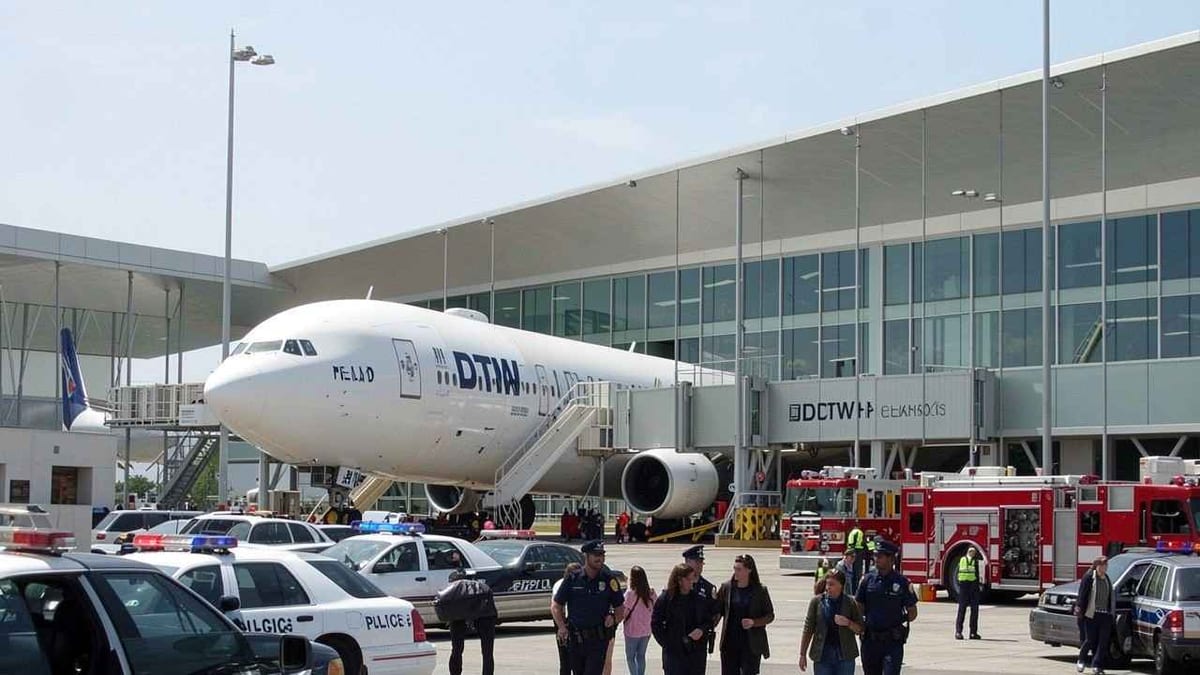
American Airlines flight AAL555, an Airbus A320-232 service from Pittsburgh to Chicago, diverted back to Pittsburgh International Airport after departure, with tracking data showing a mid-route turn and safe return to the origin airport.
Get the latest news straight to your inbox!
What Tracking Data Shows About AAL555
Publicly available flight-tracking information for American Airlines service AAL555 between Pittsburgh International Airport and Chicago O’Hare indicates that the flight departed as scheduled before reversing course and returning to Pittsburgh instead of completing the usual westbound leg to Chicago. The aircraft involved is listed as an Airbus A320-232, part of American’s narrowbody fleet commonly used on high-frequency domestic routes.
Data compiled by independent flight-tracking platforms for mid-June operations on this route show a pattern of regular, uneventful flights between the two cities, with AAL555 typically operating as a same-aircraft turn between Chicago and Pittsburgh. In the latest case, the plotted track shows the aircraft climbing away from Pittsburgh, leveling off, and then executing a turn that brought it back toward its departure airport rather than continuing toward O’Hare.
The flight ultimately returned to Pittsburgh, where the aircraft landed and the diversion phase of the operation ended. There were no immediate indications from publicly accessible sources of any irregularities during the landing itself, and the aircraft’s track suggests a controlled descent and normal arrival back at Pittsburgh International.
Reason For The Diversion Remains Unclear
As of the latest updates available from flight-tracking records and general news coverage, no detailed explanation has been published for why AAL555 diverted back to Pittsburgh instead of continuing to Chicago. Diversions of this type can occur for a range of operational or safety-related reasons, including technical issues on board, medical situations involving passengers or crew, or external operational constraints such as airspace flow programs or staffing challenges at the destination.
In the absence of a specific, publicly documented cause, the incident is being recorded primarily as a route irregularity: a scheduled point-to-point domestic flight that did not complete its intended sector and instead returned to its origin airport. Aviation observers note that a return to departure airport is often chosen when crews determine that resolving an issue is more straightforward at the station where maintenance support, staffing and infrastructure are already in place, especially on short-haul routes such as Pittsburgh to Chicago.
Available records do not indicate that the diversion involved emergency maneuvers, rapid descents or unusual holding patterns, features that sometimes appear in tracking data when an in-flight emergency is declared. Instead, the profile more closely resembles a precautionary or operational return, consistent with many modern airline diversions where crews prioritize a conservative, safety-first approach.
Impact On Passengers And Schedule
A diversion back to the origin airport typically disrupts both the affected flight and subsequent rotations scheduled for the same aircraft and crew. While specific details for the passengers booked on AAL555 have not been released through public channels, industry practice suggests that customers would have faced missed connections at Chicago O’Hare or delays in reaching their final destinations, particularly for those booked on onward domestic or international services.
American Airlines’ customer service plan outlines how the carrier generally responds when flights are diverted, including efforts to rebook travelers on later services and, when necessary, provide assistance with overnight accommodations and meals in certain circumstances. The precise level of support varies depending on the underlying cause and the length of any resulting delay, but recent diversions on other American-operated services have typically led to same-day or next-day re-accommodation for most affected passengers when capacity allows.
Because the AAL555 routing links two major hubs of the U.S. domestic network, there are multiple daily alternatives on American and competing carriers between Pittsburgh and Chicago. This dense schedule can help limit the overall disruption, with many travelers able to be moved to later departures the same day. Nonetheless, a mid-route return such as this often results in missed appointments, rebooked hotel stays and broader knock-on effects for travelers who had built tightly timed itineraries around the original schedule.
Diversions In Context On U.S. Domestic Routes
Flight diversions have drawn heightened attention in recent months as several high-profile U.S. domestic flights across multiple airlines have been rerouted due to mechanical concerns, disruptive passenger behavior or security alerts. In most cases, tracking data and subsequent reporting show aircraft landing safely at alternate airports or returning to their point of departure, after which airlines reposition planes and crews to restore normal schedules.
For large carriers such as American, diversions are built into contingency planning and are treated as part of routine operational risk management. Internal procedures address how crews make decisions to continue or return, and how airport teams coordinate the handling of customers, baggage and follow-on flights once an aircraft arrives at an unexpected station or back at its origin. Industry observers note that although diversions are disruptive, they are often a sign that conservative safety protocols and decision-making are being applied in real time.
The AAL555 diversion underscores how even short, frequently flown segments like Pittsburgh to Chicago are subject to these operational realities. The route is typically covered by Airbus narrowbody aircraft with sufficient redundancy and maintenance support, yet individual flights can still encounter circumstances that prompt a crew to request a return. By comparison with long-haul operations, shorter domestic sectors afford more options for returning to base or diverting to nearby major airports, which may have contributed to the decision to bring AAL555 back to Pittsburgh.
What Travelers Can Expect After A Diversion
For travelers, an unplanned return such as the one involving AAL555 is generally managed through a combination of airport assistance and digital tools. Airlines encourage passengers to monitor their booking status via mobile apps and airport display boards, as rebooking options and gate assignments are updated. Customers may be shifted to later flights on the same route, rerouted via other hubs, or in some cases offered options to rebook travel on different dates, depending on seat availability and personal preferences.
Special attention is typically given to travelers with tight connections, families with children, and those requiring mobility assistance, since a diversion can quickly complicate onward travel plans. In situations where the aircraft returns to its origin, baggage handling can be somewhat simpler compared with a diversion to a third airport, as ground crews remain positioned at the original station. However, checked bags might still remain onboard until security and maintenance checks on the aircraft are completed, extending wait times for some passengers.
For upcoming dates on the Pittsburgh to Chicago pairing, flight listings continue to show American-operated services between the two cities, indicating that the airline intends to maintain regular connectivity on the route. Travelers booked on future AAL555 departures are being advised, in general industry guidance, to keep an eye on real-time flight status tools on the day of departure, particularly during periods of unsettled weather or heavy traffic, when the likelihood of delays or further operational adjustments is typically elevated.