


More news on this day
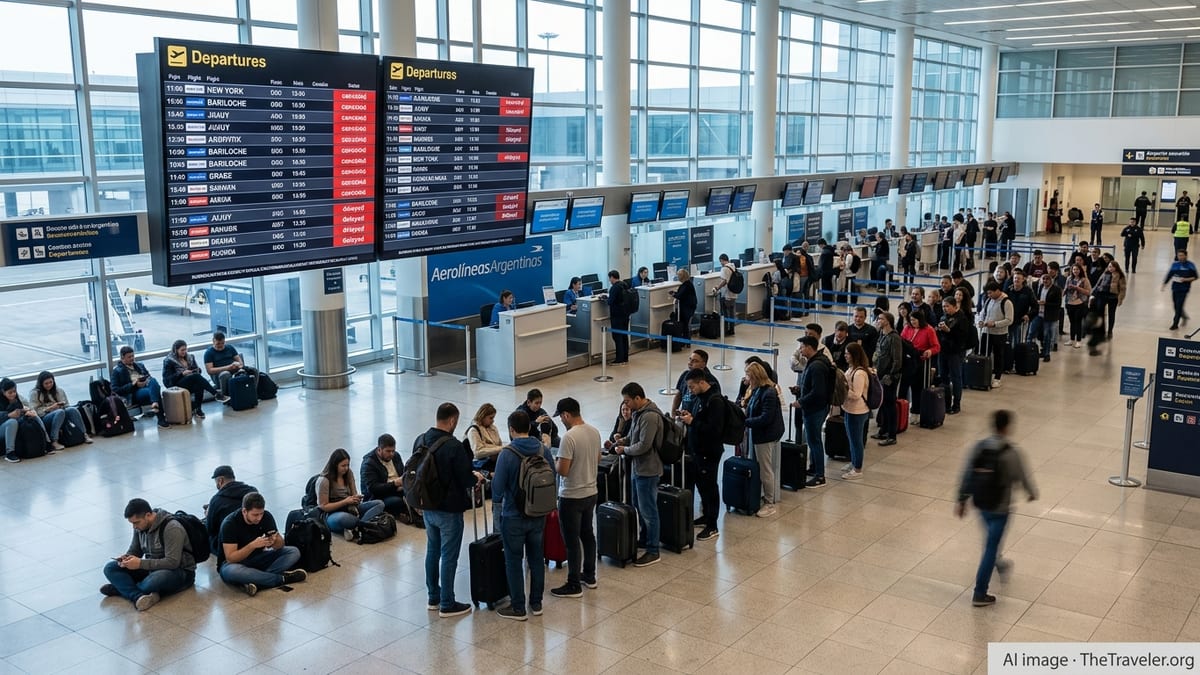
Early June brought another difficult travel day at Buenos Aires’ Aeroparque Jorge Newbery, where at least 44 delayed flights and three cancellations disrupted operations for Aerolíneas Argentinas and several low cost carriers, according to real time tracking data and local media coverage.
Get the latest news straight to your inbox!
Heavy June Traffic Meets Weather and Capacity Strains
The disruptions unfolded at the height of the busy southern winter travel build up, when Aeroparque, located just a few kilometers from downtown Buenos Aires, typically handles dense banks of domestic and regional services. Publicly available data show Aerolíneas Argentinas, Flybondi and JetSmart Argentina using the airport as a key hub, concentrating departures in the morning and late afternoon peaks.
Operational pressure has been heightened this year by a combination of strong demand and lingering structural constraints. Published coverage notes that Aeroparque already faces a compressed operating environment, with most movements funnelled onto a single runway that also requires extended maintenance in 2026. In this context, even short periods of low visibility or minor staffing issues can trigger knock-on delays across multiple banks of flights.
On the day of the disruption, flight tracking boards for Aeroparque showed a long list of services running behind schedule, including short haul domestic routes such as Buenos Aires to Córdoba, Mendoza and Neuquén, as well as links to regional destinations. While most flights eventually departed, the cumulative effect for passengers was visible in lengthier queues at check in and security, and aircraft waiting for departure slots.
According to the same flight data, three services were ultimately cancelled, affecting both the national flag carrier and at least one budget airline. These cancellations compounded the delays as airlines sought to rebook passengers on already busy alternative services later in the day or on subsequent dates.
Flag Carrier Aerolíneas Argentinas Hit Alongside Low Cost Rivals
Aerolíneas Argentinas, which maintains a major hub at Aeroparque, featured prominently among the affected carriers. Schedules show that the airline operates a dense domestic network from the city center airport, with frequent flights to key provincial capitals and tourist gateways. When morning services ran late, rotations for later segments were also pushed back, generating a wave of secondary delays.
Budget carriers that share Aeroparque as a base, notably Flybondi and JetSmart Argentina, also experienced disruption. Publicly available statistics and recent consumer reports have highlighted a pattern of tight scheduling and lean fleets at some low cost operators, leaving limited flexibility when a single aircraft or crew is out of position. On the disrupted June day, this translated into extended waits for travelers on point to point routes that rely on only one or two daily frequencies.
Reports indicate that some passengers heading to Patagonia and northwest Argentina were particularly exposed, given the longer stage lengths and fewer backup options on those routes. When cancellations occurred, travelers often faced the choice of rebooking for the following day or rerouting through alternative airports such as Ezeiza, at additional expense and travel time.
For Aerolíneas Argentinas, the pattern echoed broader regional challenges around punctuality and resilience. While the airline remains a dominant player in the Argentine market, high utilization of aircraft and heavy dependence on Aeroparque for domestic feed can amplify the impact of any local disruption at the city airport.
Weather, Fog and an Airport Preparing for a Major Runway Shutdown
Early winter in Buenos Aires is frequently associated with pockets of dense river fog and low clouds along the Rio de la Plata, and Aeroparque’s coastal location leaves it especially vulnerable. Meteorological records for the airport highlight a significant share of operations affected by reduced visibility events in June in past years, and recent technical studies point to recurring fog episodes that can force spacing out arrivals and departures.
In the June 2026 incident, publicly available weather reports pointed to marginal conditions around the morning peak, with low ceilings and intermittent visibility reductions that constrained traffic flows. Under such conditions, air traffic managers typically apply greater separation between aircraft on approach and departure, reducing capacity and lengthening waiting times both in the air and on the ground.
The latest delays also unfolded against the backdrop of a planned 55 hour closure of Aeroparque’s runway later in August 2026 for maintenance. Local media have reported that more than 900 flights are expected to be rescheduled or relocated during that shutdown. Airlines are already working with constrained availability for the winter and late winter period, and the June disruption offered a preview of how sensitive the network can be to any capacity shock.
Aviation observers note that the interplay of weather, infrastructure works and strong seasonal demand is likely to remain a defining feature of Aeroparque’s operations this year. The airport’s central location and popularity with both business and leisure travelers ensure that carriers are reluctant to reduce schedules, even as they factor in higher operational risk during fog prone weeks.
Passenger Impact: Missed Connections, Long Queues and Limited Legal Protections
For travelers, the immediate impact of the 44 delays and three cancellations was measured in missed connections, longer wait times and added costs. Social media posts and traveler forums referenced early morning queues stretching across the check in hall, with some customers spending several hours at the airport as departure times were repeatedly revised.
Because Aeroparque primarily serves domestic and short haul regional routes, many affected passengers were connecting to onward flights via other Argentine airports or planning tight ground connections at their destinations. When flights departed late, these onward plans were often disrupted, forcing last minute hotel bookings or expensive same day ticket purchases on alternative airlines.
Consumer advocacy groups have repeatedly pointed to gaps in Argentina’s compensation framework for flight disruptions, particularly on domestic services. While companies such as Aerolíneas Argentinas and the low cost carriers typically offer rebooking or vouchers in the event of significant delays and cancellations, travelers often report limited transparency around their rights and uneven application of policies across different carriers and ticket types.
The June incident brought renewed attention to these issues, with some passengers documenting their efforts to secure meal vouchers or lodging assistance following cancellations. In many cases, travelers reported having to absorb additional costs themselves, a recurring theme in recent public discussions of the country’s fast growing but still maturing low cost aviation market.
What June’s Disruptions Signal for Winter Travel Through Buenos Aires
The latest problems at Aeroparque are being interpreted by industry watchers as an early warning for the broader winter season. With the airport already preparing for a significant runway closure in August and airlines scheduling aggressive capacity to meet pent up demand for domestic tourism, the margin for error appears slim.
Analysts note that Aerolíneas Argentinas faces the dual task of maintaining reliable domestic connectivity while navigating infrastructure constraints and competition from agile low cost rivals. Budget carriers, for their part, are under pressure to demonstrate that ultra low fares can be delivered without chronic delays and cancellations that erode customer confidence.
For travelers planning trips through Buenos Aires in the coming months, the June episode underscores the value of building additional time into connections, particularly when linking domestic flights at Aeroparque with international services from Ezeiza or vice versa. Travel planners are also recommending flexible tickets where possible and close monitoring of flight status in the days leading up to departure.
As Aeroparque moves into the core of the winter travel window, the performance of Aerolíneas Argentinas and its low cost competitors on punctuality and disruption management will be closely watched by both local passengers and international visitors who rely on the city airport as a gateway to the rest of Argentina.