


More news on this day
An American Airlines flight from Dallas Fort Worth to Newark Liberty International made an unscheduled diversion to Baltimore/Washington International Thurgood Marshall Airport after a disturbance in the first-class cabin escalated to the point that crew members and fellow travelers restrained a passenger with tape and zip ties.
Get the latest news straight to your inbox!
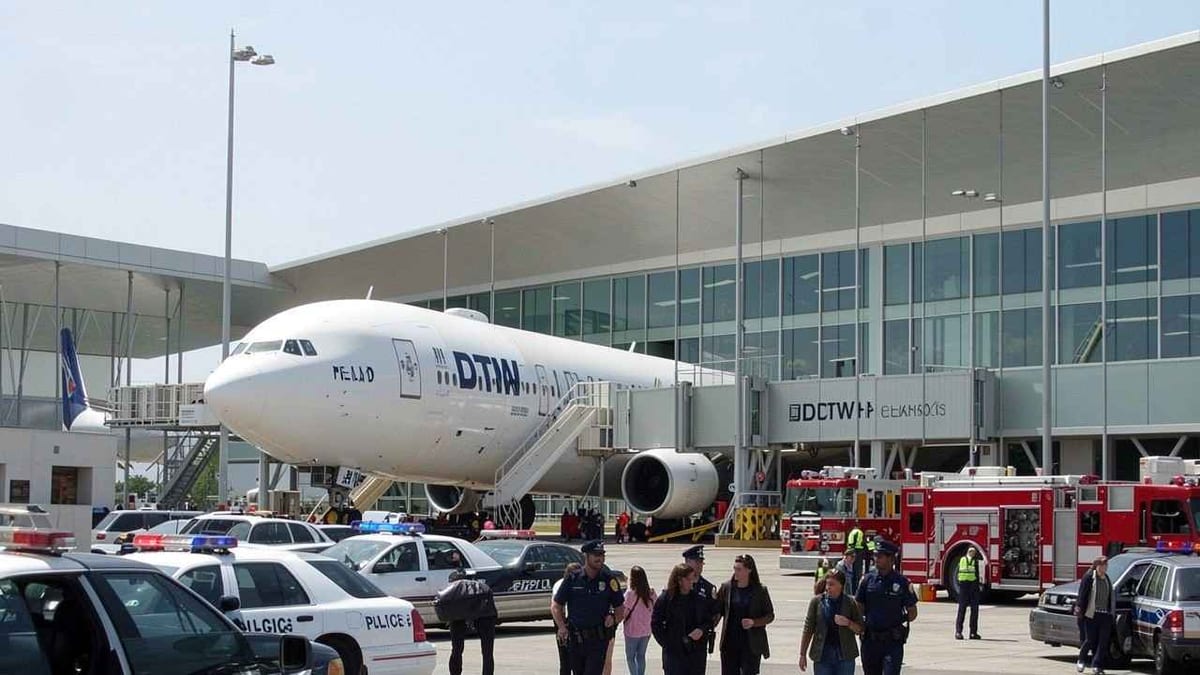
Dallas–Newark Service Forced to Land in Baltimore
Publicly available flight data and local news coverage indicate that American Airlines Flight 618, operating on September 3, 2026, from Dallas Fort Worth International Airport to Newark Liberty International Airport, diverted to Baltimore/Washington International Thurgood Marshall Airport late Thursday night following a serious in-flight disturbance involving a first-class passenger.
The Airbus narrowbody jet was cruising toward the New York area when the incident unfolded in the forward cabin. According to multiple media reports, the crew reported a passenger disturbance to air traffic control, and the flight changed course toward Baltimore, where law enforcement officers were waiting at the gate.
Tracking information cited in aviation and local outlets shows the aircraft landed safely at BWI around 10:15 p.m. local time, several hours after its departure from Dallas. The diversion added an unplanned stop for travelers headed to Newark but allowed the airline to remove the disruptive individual and continue the journey with a new flight plan.
American Airlines issued a brief public statement to several outlets following the event, noting that Flight 618 diverted due to a disruptive customer and emphasizing that the carrier’s primary focus in such circumstances is the safety of passengers and crew.
Reports Describe Violent Outburst in First Class
Descriptions of the episode from news reports and social media posts paint a picture of a disturbance that escalated well beyond verbal confrontation. Aviation-focused and local Baltimore coverage report that the first-class passenger allegedly shouted abusive language, including slurs, and became physically aggressive toward nearby travelers.
Some outlets citing law enforcement summaries state that the man punched fellow passengers and, in at least one account, bit a retired law enforcement officer who assisted in subduing him. Additional reports from aviation news sites indicate that the individual left his seat repeatedly, ignored directions from cabin crew, and continued the outburst despite attempts to calm the situation.
Images and short video clips that circulated online in the hours after the diversion appear to show the man restrained in his first-class seat with tape across his torso and around the seatback, while his hands are secured with what look like plastic restraints. Several passengers can be seen standing in the aisle during the restraint, suggesting that bystanders helped flight attendants bring the situation under control.
Maryland Transportation Authority police and federal investigators have not yet released a full public narrative of events, but media organizations that reviewed initial statements report that the passenger was taken into custody on arrival in Baltimore and could face federal charges related to interference with a flight crew and assault.
Passenger Restraint Highlights In-Flight Safety Protocols
The use of tape and plastic restraints on Flight 618 has renewed attention on how airlines manage aggressive behavior at altitude. Industry guidance and training materials, as summarized in aviation safety literature, allow cabin crew to use approved restraint devices when a traveler poses a clear threat to others or to the safe operation of the aircraft.
Recent coverage of the incident notes that airlines typically stock soft restraints such as zip ties specifically for this purpose. The widely shared images of Flight 618 show additional tape used to secure the individual’s upper body to the seat, a method that has appeared in other high-profile air-rage cases in recent years and is often improvised when a situation escalates quickly.
Regulators classify these events as unruly-passenger or interference-with-crew incidents, which can trigger federal investigations, significant fines, and potential criminal prosecution. Publicly available enforcement records from the Federal Aviation Administration show that even non-violent disruptions can lead to civil penalties, while physical assaults and threats are treated as among the most serious violations.
Analysts who track air-rage reports point out that this type of incident, while still rare relative to the total number of flights, places intense pressure on cabin crews to make rapid judgment calls. In the case of Flight 618, reports indicate that the decision to divert was made after the behavior turned violent and other passengers became directly involved in restraining the man.
Delay and Diversion Impact on Travelers
The diversion of Flight 618 to Baltimore created an unexpected late-night interruption for dozens of travelers heading to Newark and onward destinations in the New York metropolitan area. Local and regional outlets report that the aircraft remained on the ground at BWI while police boarded, removed the passenger, and took statements from crew and some witnesses.
Subsequent coverage from regional media and travel sites notes that passengers eventually continued their journey after the disruptive traveler was taken into custody. Some reports describe travelers being rebooked on later flights or facing extended arrival times in New Jersey and beyond, though detailed schedules for the onward segment have not been widely published.
Video and photos taken aboard the aircraft and later shared publicly suggest a tense but orderly cabin once the individual was fully restrained. Several passengers can be seen assisting in picking up cabin items, returning to their seats, and waiting for the aircraft to reach Baltimore. Commenters on aviation forums described the incident as frightening but praised the calm response of the majority of travelers.
While diversions of this type are costly for airlines, travel analysts note that carriers typically accept the operational disruption as a necessary tradeoff when security or safety is in question. In public comments following the event, American Airlines reiterated that it maintains a zero-tolerance stance toward violence or threatening behavior on board.
Part of a Broader Pattern of Air-Rage Incidents
The disturbance on American Airlines Flight 618 joins a growing list of air-rage cases that have drawn widespread attention in recent years. Public databases and media compilations of inflight incidents show that situations involving alcohol, verbal abuse, and refusal to follow crew instructions remain among the most common triggers for diversions.
In the United States, federal transportation officials have previously launched concentrated enforcement campaigns in response to spikes in disruptive behavior, particularly around mask requirements and crowded travel periods. Civil penalties in the tens of thousands of dollars are not uncommon in cases where passengers threaten or attack crew, damage cabin equipment, or force a flight to divert.
While comprehensive statistics for 2026 are not yet available, analysts note that viral videos and social media posts tend to amplify awareness of these events even as the overall rate remains low compared with the volume of daily departures. The highly visible images from Flight 618, showing a first-class traveler taped to his seat at the front of the cabin, are likely to keep this particular diversion in the public eye as investigations move forward.
Observers expect that investigators will review cockpit recordings, cabin crew reports, and passenger footage to determine whether additional safety or training recommendations emerge from the incident. For now, Flight 618 stands as the latest example of how rapidly an evening transcontinental service can turn into a law-enforcement matter when a single passenger’s behavior crosses the line from disruptive to dangerous.
WBAL-TV coverage of Flight 618 diversion to BWI
TravelPulse report on American Airlines Flight 618 disturbance
ABC News summary of the unruly passenger incident