


More news on this day
An American Airlines service operating as Flight AA2062 experienced a diversion involving Charlotte Douglas International Airport, drawing attention to how large hub operations handle irregular flight events and the knock-on effects for passengers across the network.
Get the latest news straight to your inbox!
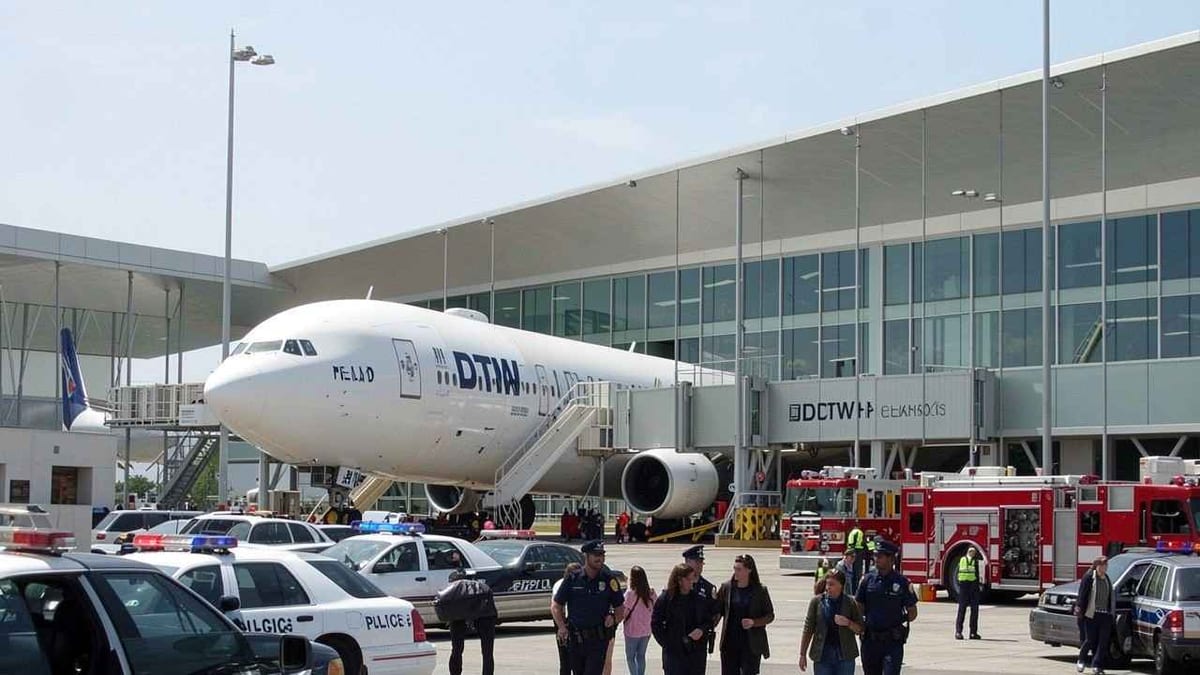
What Is Known About Flight AA2062
Publicly available flight-tracking information lists AA2062 as an American Airlines service linked to Charlotte Douglas International Airport, one of the carrier’s primary hubs on the East Coast. The flight typically operates on a short domestic route with an Airbus narrowbody aircraft, serving as a key connector for travelers transiting through Charlotte.
Recent operational data shows AA2062 scheduled between Charlotte and Ronald Reagan Washington National Airport, with Charlotte acting as the departure point and Washington, D.C., as the destination. On a recent rotation, the flight experienced a notable delay of close to one hour, underscoring how quickly conditions can shift for short-haul services connected to a busy hub.
While day-to-day delays are common in the domestic network, reports and tracking records indicate that at least one recent operation of AA2062 was affected by a diversion scenario tied to conditions in and around Charlotte’s airspace and broader regional weather and traffic patterns. Diversions of this kind can cause significant changes to crew scheduling, aircraft utilization, and onward connections for passengers.
In such cases, Charlotte’s role as a major transfer point is especially important. When a flight like AA2062 is diverted or significantly delayed, it has the potential to disrupt multiple onward connections, particularly for evening departures when options to rebook become more limited.
Charlotte’s Role in Handling Diversions
Charlotte Douglas International Airport serves as one of American Airlines’ largest hubs, handling tens of thousands of operations over recent months. Data compiled from performance tracking sites shows that a small but consistent portion of flights associated with American at Charlotte end up diverted from their original plans, reflecting the complexity of managing a high-density hub operation.
Statistics from recent months indicate that, while the majority of American Airlines flights touching Charlotte arrive and depart on time, a fraction experience moderate or significant delays, and a small number are diverted altogether. These diversions can be prompted by a mix of factors, including thunderstorms in the Carolinas, congestion in nearby airspace, ground stops at Washington-area airports, or knock-on effects from severe weather elsewhere in the network.
Charlotte’s location in a region prone to summer thunderstorms and rapidly changing weather patterns makes it a frequent focus of air-traffic management initiatives. When restrictions are imposed on nearby airports, including those in the Washington, D.C., area, flights such as AA2062 may face rerouting, holding patterns, or diversions to alternative airports where fuel, crew duty time, and airspace considerations can be better balanced.
The airport’s scale also allows it to receive diverted aircraft from other locations when storms or operational issues arise, which in turn can complicate gate availability and turnaround times for flights already scheduled to operate from Charlotte.
How American Airlines Manages Diversion Events
American Airlines outlines in its customer service materials that diversions are handled according to a defined contingency framework designed to prioritize safety while mitigating passenger disruption where possible. In the event of a diversion affecting a flight like AA2062, the airline’s operational teams coordinate with airports and air-traffic services to determine the safest and most practical destination for landing.
Publicly available policy information indicates that, when flights are diverted and passengers face extended delays in the diversion city, American may offer support such as meal vouchers once certain time thresholds are exceeded. The airline also encourages travelers to provide contact information and use its mobile app and website to track updated departure and arrival times when irregular operations occur.
If a diversion leads to missed connections at a hub such as Charlotte, customers are typically rebooked on the next available flights to their final destinations, subject to seat availability and broader network conditions. These recovery efforts are particularly challenging during evening operations, when same-day alternatives may be limited and overnight stays become more likely.
In scenarios where diversions are tied to broader airspace restrictions, such as temporary closures around the Washington, D.C., area, American has also issued travel advisories and offered additional schedule flexibility on affected routes. For passengers on a flight like AA2062, such measures can include options to adjust travel dates or reroute through alternative hubs if capacity and timing allow.
Passenger Impact and Connection Risks at a Major Hub
For travelers, a diversion involving a short-haul service such as AA2062 can quickly cascade into a more complex travel disruption, especially when the flight is used as a connection into or out of Charlotte. Even modest delays can erode layover times that were originally scheduled with only a small buffer.
Travel forums and social media posts frequently reference Charlotte as a hub where tight connections can become risky during peak travel periods or in unsettled weather. When a flight is diverted or held en route, passengers may find that previously viable connections are no longer possible, forcing rebookings and, in some cases, overnight stays near the airport.
The experience of diversions into and out of Charlotte over recent years highlights recurring themes: long lines at service desks, competition for remaining seats on later flights, and pressure on airport services when multiple flights are affected at once. For those on a flight like AA2062, being prepared with the airline’s app, awareness of alternative routings, and flexibility on timing can make a significant difference in how disruptive a diversion ultimately becomes.
Although most operations of AA2062 are completed without incident, the diversion-related challenges that occasionally surface illustrate the broader realities of flying through a busy East Coast hub where weather, airspace congestion, and tight schedules intersect on a daily basis.
What Travelers Can Take Away
The recent diversion involving American Airlines Flight AA2062 and the Charlotte hub underscores the importance of building resilience into travel plans, especially when relying on short-haul connector flights late in the day. For many passengers, these flights serve as critical links to longer domestic or international journeys.
Available operational and policy information suggests that American Airlines aims to manage diversions within a structured framework, including contingency plans at U.S. airports and customer service commitments tied to significant delays and extended ground time. Nevertheless, real-world accounts from past diversions show that recovery from a single irregular flight can be complicated by wider disruptions across the network.
For travelers booking itineraries that include AA2062 or similar Charlotte-based connectors, a few steps can help reduce risk: choosing longer layovers where possible, monitoring weather forecasts and travel alerts, and using digital tools to rebook quickly if an itinerary is disrupted. These strategies cannot prevent diversions, but they can improve the chances of reaching a final destination with minimal additional delay.
The experience of Flight AA2062 serves as a reminder that, in a tightly scheduled system, any diversion has ripples that extend beyond one aircraft and one route, touching passengers, crews, and operations across a major hub like Charlotte Douglas International Airport.