


More news on this day
South Korea’s national rail operator Korail is accelerating the shift to a new generation of high speed rolling stock, with publicly available documents and recent coverage indicating that the first generation KTX-I fleet derived from the French TGV will be progressively replaced by larger numbers of domestically developed EMU-320 trainsets over the next decade.
Get the latest news straight to your inbox!
From TGV-derived beginnings to a homegrown EMU era
The KTX-I trainsets, introduced in 2004 and based on the TGV Réseau design, marked the launch of Korea Train Express services and established South Korea as a high speed rail nation. The articulated power-car configuration and 20-car fixed consists were supplied under technology transfer arrangements and have remained the backbone of the Gyeongbu and Honam corridors for more than two decades.
These trains are now approaching or exceeding their planned service life. Technical papers, industry presentations and Korail planning material describe rising maintenance requirements and the need for more energy efficient stock as key drivers behind a fleet renewal strategy. Publicly accessible summaries of business cases refer to KTX-I as “aging” assets whose replacement is crucial to maintain reliability, safety and competitiveness against domestic air travel.
In parallel, South Korea’s rolling stock industry has matured. Hyundai Rotem has moved from licensed TGV technology to indigenous designs such as the HEMU-430X prototype and its commercial derivatives, the EMU-260 “KTX-Eum” and the 320 km/h EMU-320 platform. The EMU-320, branded KTX-Cheongryong in passenger service, began limited operations in 2024, signaling a shift toward distributed-traction high speed multiple units tailored to Korea’s mixed high speed and conventional network.
Available technical descriptions highlight key differences from the KTX-I. Instead of two dedicated power cars and Jacobs-bogied trailers, EMU-320 sets distribute traction equipment under the intermediate cars, with driving trailers at each end. This configuration increases seating capacity within a given train length, improves acceleration between relatively closely spaced stations, and is viewed as better suited to future service patterns.
EMU-320 procurement tied to KTX-I replacement
Korail’s push toward a larger EMU-320 fleet has been formalized in several planning documents and recent government reviews. A project file released through the operator’s business disclosure section describes a program titled “KTX-I replacement rolling stock (EMU-320) introduction,” outlining safety, capacity and passenger comfort benefits and framing the investment as a response to the life-cycle stage of the original high speed fleet.
Complementary information from the national rail industry information center and domestic media coverage indicates that the project encompasses dozens of 16-car EMU-320 formations. Summaries of feasibility studies and sector analyses describe a baseline scenario of 49 trainsets, each formed of 16 cars, for a total of 784 vehicles, with an estimated project cost in the region of 5 trillion won and deliveries running into the early 2030s.
According to these published materials, the EMU-320 sets are expected to match or exceed the passenger carrying capability of the KTX-I. While a typical KTX-I consist offers around 955 seats, a 16-car EMU-320 formation is designed for slightly higher capacity through optimized interior layouts and the absence of non-revenue power cars. Planning notes refer to this as essential to “maintain supplied seat levels” as the legacy fleet is retired.
Official press releases on Korail’s website add that an initial batch of 17 EMU-320 trainsets is due to be introduced progressively from 2027, aimed at easing seat shortages on the busiest high speed routes. These units are positioned as the first wave of a longer term KTX-I replacement strategy, enabling the operator to manage transition while responding to near-term demand pressures.
Timelines, capacity boost and passenger impact
The replacement of the TGV-derived fleet is framed in public documents as a gradual process, spreading procurement and introduction of EMU-320 sets over several years. Recent coverage of the project’s passing of national preliminary feasibility review in July 2026 outlines a delivery schedule that would see the main series of new trains accepted from around 2032, giving Korail time to phase out KTX-I units as they reach the end of their service lives.
In the interim, the existing pre-series EMU-320 sets and initial production batches will allow Korail to increase frequencies and up-gauge selected services on core corridors. Industry reports suggest the new trains will initially supplement, rather than immediately replace, KTX-I and KTX-Sancheon formations on the Gyeongbu, Honam and other high demand lines, supporting a period of mixed operation while crews, maintenance staff and passengers adapt to the new equipment.
Passengers can expect several tangible changes as EMU-320 numbers grow. Interior layouts are publicized as offering increased legroom, improved seat rotation mechanisms, larger overhead storage and enhanced onboard digital services compared with the original KTX interiors designed in the 1990s. The distributed-traction architecture also supports quieter acceleration and more even ride characteristics throughout the train, rather than the more pronounced differences between power cars and trailers on the KTX-I.
For Korail, the EMU-320 platform offers operational flexibility. With consistent 16-car configurations and improved acceleration to a maximum service speed of 320 km/h, diagrams can be planned to shorten journey times on segments where infrastructure allows, while also reducing dwell times and energy consumption. Planning documents and sustainability reporting highlight lower per-seat energy use and reduced carbon emissions as an important contribution to national climate targets.
Domestic industry and policy drivers behind the shift
The transition from TGV-derived KTX-I trains to EMU-320 sets aligns with broader South Korean industrial and policy priorities. Statements and data in Hyundai Rotem’s corporate materials emphasize the role of the EMU-320 program in sustaining a domestic high speed rail supply chain built around hundreds of local component suppliers, building on three decades of experience from KTX-Sancheon and other fleets.
Government transport strategies and Korail’s sustainability reporting also underscore the need to maintain and expand high speed rail’s share of intercity travel as an alternative to short haul flights. High frequency, reliable services at competitive journey times between Seoul, Busan, Gwangju and other major cities are presented as central to decarbonization efforts, with modern rolling stock viewed as a prerequisite.
The EMU-320 rollout is being coordinated with infrastructure upgrades, including incremental enhancements to existing high speed lines and selected conventional segments. Publicly available planning presentations describe the goal of exploiting the new trains’ 320 km/h capability wherever track, signaling and power systems permit, while ensuring backward compatibility with sections limited to lower speeds.
At the same time, the prospective retirement of KTX-I units has spurred debate within rail and enthusiast communities over heritage and fleet diversity. Commentators on specialist forums note that the TGV-derived sets symbolized South Korea’s entry into the high speed rail era and argue for at least one trainset to be preserved. While no formal preservation plans are detailed in official documents, the pace of EMU-320 procurement suggests that the window for such decisions will open during the next decade as withdrawal schedules are finalized.
What travelers can expect on Korea’s high speed network
For domestic and international travelers, the practical outcome of Korail’s EMU-320 expansion will be a gradual but noticeable refresh of the high speed experience. Over the next several years, more services are expected to be diagrammed for the KTX-Cheongryong branded trains, particularly on flagship routes linking Seoul with Busan and Mokpo, as well as selected services from new origin points such as Incheon and Suwon as connecting infrastructure is completed.
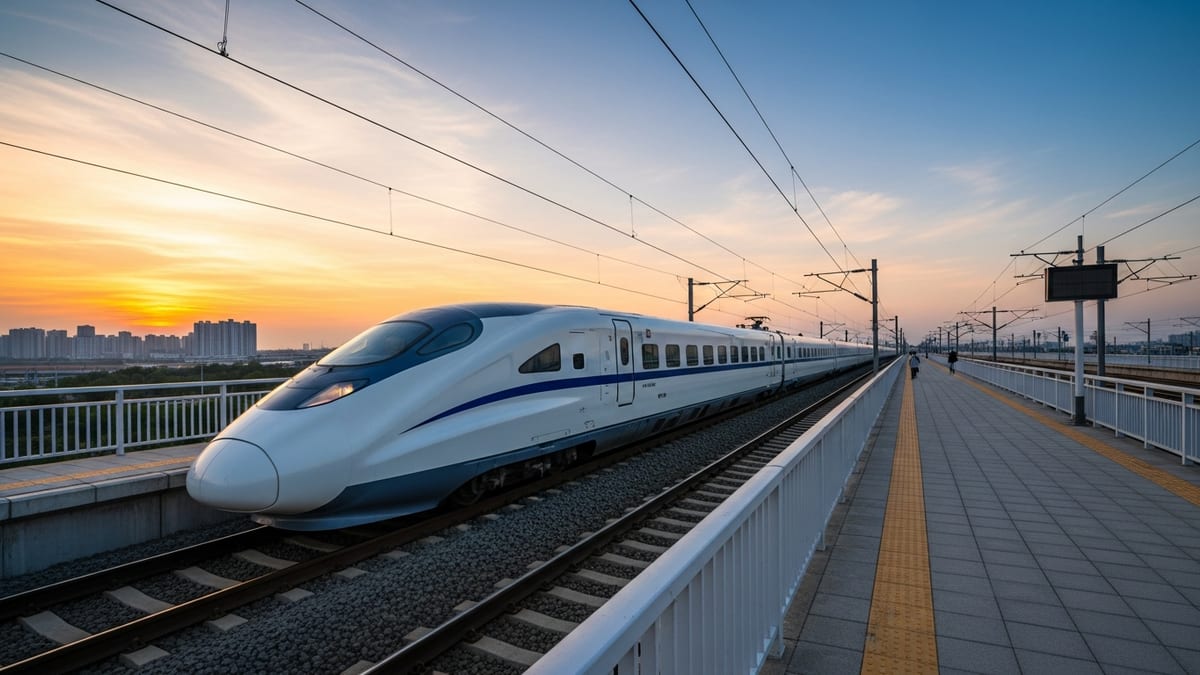
Public information suggests ticketing structures and basic service patterns will remain familiar, with the main differences found in onboard comfort and the external appearance of trains. The distinctive blue-and-white livery of the EMU-320 will increasingly replace the older KTX-I sets at station platforms, while train announcements and timetable systems continue to use the established KTX branding.
Travelers planning trips later in the decade are likely to encounter a mixed fleet, particularly during holiday peaks when all available rolling stock is deployed. Industry analysts anticipate that, as more EMU-320 formations enter service, Korail will be able to run additional peak services and longer peak timetables, alleviating the recurring problem of sold-out trains on Fridays, Sundays and national holidays.
By the early to mid-2030s, current plans point to the KTX-I fleet’s role being largely taken over by the EMU-320 and its possible successors, such as the higher speed EMU-370 concept referenced in academic and industry discussions. That shift would mark the end of the TGV chapter in South Korea’s high speed story and the full maturation of a domestically designed, multiple-unit-based high speed fleet at the core of the country’s rail network.