


More news on this day
American Airlines flight AAL1423, scheduled to arrive in Chicago, diverted to St. Louis Lambert International Airport, with early data indicating a combination of operational, weather, and congestion factors behind the unexpected change of course.
Get the latest news straight to your inbox!
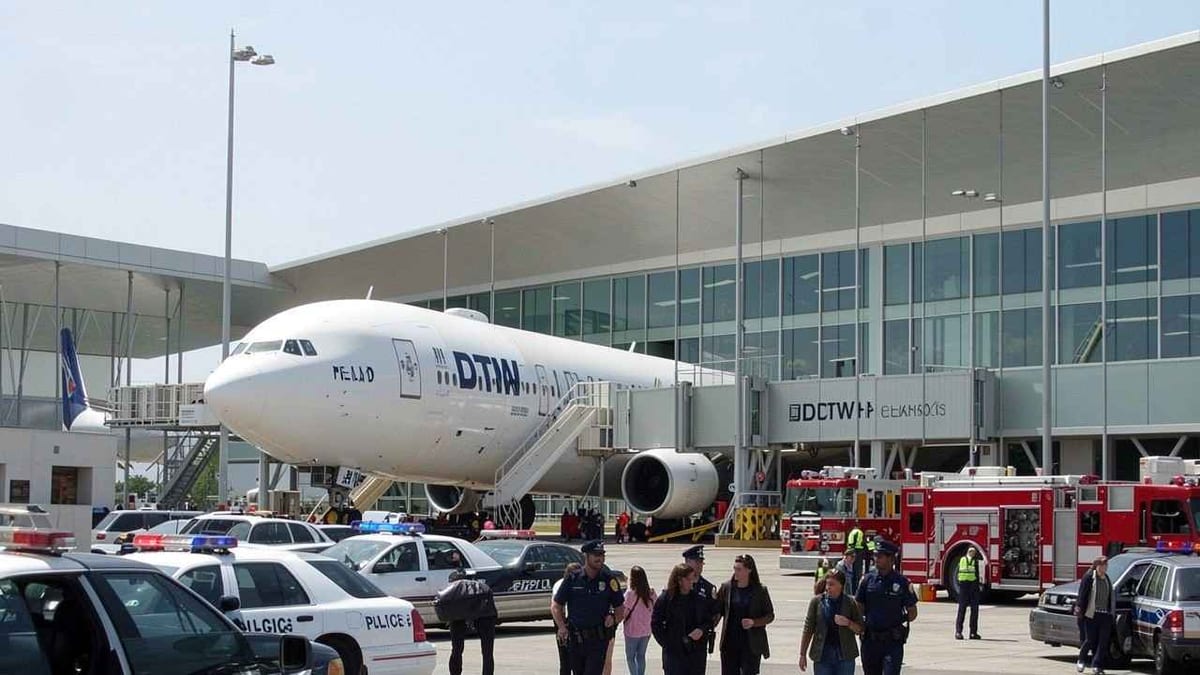
Unscheduled Stop for Chicago Bound Passengers
Tracking data for American Airlines flight AAL1423 shows the service altering its planned routing and landing at St. Louis Lambert International Airport instead of its intended destination in the Chicago area. Publicly available information indicates that the aircraft operated normally for much of the journey before diverting toward St. Louis, where it landed safely.
Initial reports describe the event as an operational diversion rather than an emergency landing. The aircraft did not return to its origin airport and completed its flight with a routine touchdown in St. Louis, where it proceeded to the gate for passenger disembarkation and onward handling.
While diversions are relatively uncommon on domestic routes, they occur often enough that major carriers and airports have standard procedures in place. In this case, St. Louis Lambert International Airport, a long standing American Airlines station and former hub, provided suitable infrastructure, runway capacity, and ground support for an unplanned arrival.
Passengers on board AAL1423 were expected to be re accommodated on later services to the Chicago area or alternative destinations, depending on their connecting itineraries and seat availability across the airline’s network.
Weather, Traffic Flow, and Airspace Constraints
Diverting a flight from its planned destination is typically the result of a complex mix of factors rather than a single cause. In the Midwest, weather and air traffic constraints play an outsized role. When storms, low visibility, or strong winds affect the Chicago region, air traffic managers frequently introduce flow restrictions that reduce the number of arrivals allowed per hour.
Industry data and past flight records show that when arrival capacity into Chicago O Hare or Chicago Midway is tightened, aircraft already en route may face holding patterns or be instructed to divert to nearby airports such as Milwaukee, Indianapolis, or St. Louis. In some cases, pilots and airline operations teams choose diversion rather than extended holding, both to conserve fuel and to avoid running into crew duty time limits.
Analyses of delay propagation across the National Airspace System have long highlighted the Chicago area as a pressure point, where congestion and schedule intensity can quickly ripple across an airline’s network. In that context, sending AAL1423 to St. Louis would fit a well established pattern of using alternate airports to relieve pressure on already saturated arrival queues.
For travelers, such a decision can be disruptive in the short term but is often framed as a safety and predictability measure, reducing uncertainty around fuel reserves and giving passengers concrete options to continue their journeys once on the ground.
Why St. Louis Lambert Is a Strategic Alternate
St. Louis Lambert International Airport has long served as a key node in Midwest aviation. Historically, it functioned as a major hub under Trans World Airlines, and later under American Airlines after the two carriers merged. Even though American scaled back its hub presence in St. Louis years ago, the airport retains multiple daily flights to major centers and is equipped to handle large narrowbody and widebody traffic.
Operationally, Lambert offers several advantages as an alternate for Chicago bound flights. It sits within a relatively short flying distance, has multiple runways, and typically experiences less congestion than O Hare. The field also supports a broad range of air traffic control and maintenance services, allowing airlines to service diverted aircraft, refuel them, and re position them into the network with minimal delay.
Recent public commentary about flying from St. Louis underscores that the airport functions as a regional connector, with links to Chicago among other cities. That existing route structure gives airlines some flexibility to move disrupted passengers onward, whether by placing them on later nonstop services or via alternative hub connections in Dallas, Charlotte, or other cities.
From an airline planning perspective, having a medium sized, well equipped airport like Lambert within range of the Chicago airspace is a practical asset when dealing with fast changing conditions over the Great Lakes and central United States.
Impact on Passengers and Onward Travel Plans
For the customers aboard AAL1423, the diversion to St. Louis meant unexpected time on the ground away from their intended destination. In such scenarios, standard industry practice is for carriers to rebook passengers on the next available services, prioritizing those with tight onward connections, unaccompanied minors, and travelers with special needs.
Depending on aircraft availability and gate space in St. Louis, passengers may be moved onto flights directly to Chicago or, if those services are full or disrupted, rerouted through other hubs in the airline’s network. In some cases, travelers elect to complete their trip by road if the diversion airport is within reasonable driving distance of their final destination.
Operational diversions can also have ripple effects on aircraft rotations. When a plane scheduled to continue on from Chicago instead ends up in St. Louis, downstream flights may be delayed, swapped to different aircraft, or canceled entirely. Network planners and dispatchers typically spend the remainder of the day reshuffling equipment and crews to restore schedules.
Publicly available performance data over recent years show that unplanned events, including weather related diversions, remain a significant contributor to delays across U.S. carriers. Episodes like the AAL1423 diversion illustrate how a single flight’s change of course can trigger a cascade of adjustments for both passengers and airline operations teams.
What Travelers Can Learn From the AAL1423 Diversion
Although diversions are disruptive, they also serve as a reminder of the safeguards built into modern air travel. Airlines file alternate airports as part of every flight plan, and crews routinely prepare for scenarios in which the original destination becomes untenable due to weather, runway closures, or congestion.
Travelers can take several practical lessons from cases such as AAL1423. Building additional connection time into itineraries that pass through congestion prone hubs like Chicago can reduce the risk of missing onward flights after a diversion or delay. Monitoring flight status data and regional weather before departure can also help set expectations and inform decisions about voluntary changes.
For frequent Midwest travelers, awareness of regional alternate airports including St. Louis, Milwaukee, and Indianapolis can provide context when flight maps suddenly shift mid journey. Seeing a Chicago bound flight bend south toward St. Louis is often a sign of airspace management and safety driven decision making rather than mechanical failure.
As commercial aviation continues to balance tightly packed schedules with unpredictable weather patterns, diversions like the one involving American Airlines flight AAL1423 are likely to remain a feature of the travel landscape, particularly in busy air corridors around major Midwest hubs.