


More news on this day
Germany’s aviation network is undergoing a noticeable reset in 2026, as regional airports add traffic, airlines rebalance short haul routes, and new policy measures aim to preserve connectivity while pushing the sector toward greener growth.
Get the latest news straight to your inbox!
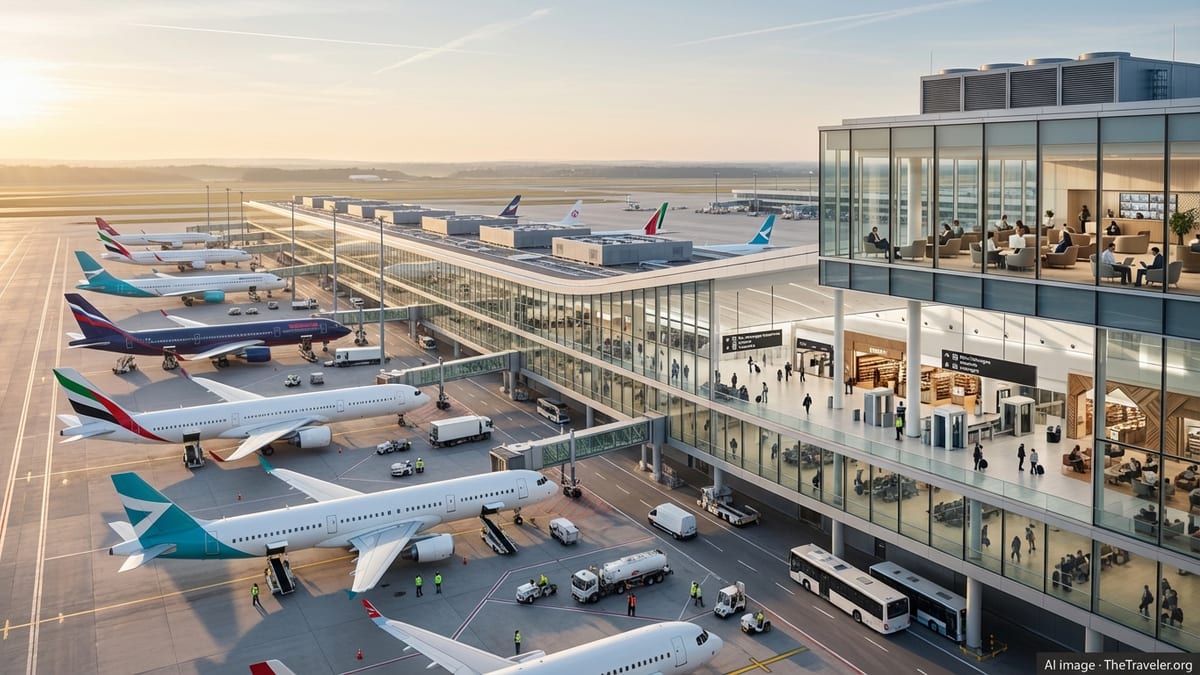
Traffic Rebounds While Domestic Patterns Shift
After several years of recovery, published traffic data and industry analyses indicate that German airspace is seeing steady growth, even as domestic patterns change. DFS Deutsche Flugsicherung reported almost three million flights handled in German airspace in 2024, an increase on the previous year but still below the 2019 peak, pointing to a network that is growing yet still adjusting to post pandemic realities.
According to European network overviews and airline schedule data for 2025 and early 2026, Germany is contributing to overall growth in continental flows, with more daily flights compared with the previous year. Holiday traffic in particular is helping to fill aircraft, with routes between German airports and Mediterranean destinations among the strongest performers in terms of additional frequencies.
At the same time, domestic connectivity remains structurally lower than before 2020, as long distance rail and regional public transport attract a larger share of passengers on short corridors. Publicly available information from transport market outlooks notes that a reduction in Germany’s air traffic tax from mid 2026 is expected to ease some cost pressure on domestic services, but airlines are continuing to scrutinize marginal routes and shift capacity to stronger performing segments.
Industry reports describe a mixed picture: key trunk routes between major hubs remain well served, while a number of thinner domestic links have seen reduced frequencies or seasonal operation. This has opened a space for regional airports and point to point carriers to attract demand that no longer fits neatly into traditional hub and spoke patterns.
Regional Airports Post Growth And New Records
Regional gateways are emerging as some of the most dynamic parts of Germany’s aviation landscape. Passenger figures published by several smaller airports show traffic surpassing previous records in 2024 and continuing on an upward path into 2025, setting the stage for expansion plans that reach into 2026.
Dortmund Airport, one of Germany’s leading secondary hubs for low cost and leisure traffic, has reported successive record years and a further increase in passengers compared with its prior peak. Local briefings highlight 2026 as a year of both celebration and expansion, with operators planning additional destinations and capacity. Similar growth stories are reported at other regional airports serving metropolitan areas that are not primary intercontinental gateways but have strong outbound demand for European city breaks and holiday travel.
These airports are attracting airlines looking for lower operating costs and access to catchment areas where road or rail journeys to the main hubs can be time consuming. They also benefit from strong demand for direct links to southern Europe, Eastern Europe, and popular island destinations, often on routes that bypass the traditional Frankfurt and Munich hubs entirely.
As a result, air connectivity in Germany is becoming more polycentric. Instead of capacity being concentrated overwhelmingly at the two largest hubs, growth is increasingly visible at airports such as Cologne/Bonn, Hanover, Stuttgart, Hamburg, and Berlin, alongside smaller regional fields, each carving out niches in leisure, visiting friends and relatives traffic, or low cost business travel.
Airlines Rebalance Feeders And Short Haul Networks
Airline strategy is a major driver of the changing connectivity map. The Lufthansa Group, which remains the dominant player in the German market, continues to adjust its short haul and feeder networks as it rebuilds capacity and introduces new fleet and product concepts. Published information on the group’s route network shows that by the 2025 summer season the number of destinations on offer was close to pre crisis levels, with further adjustments planned into the 2025 to 2026 winter and 2026 summer schedules.
Lufthansa City Airlines, the group’s newest short haul carrier, is central to this reshaping. The airline launched operations from Munich in 2024 and is scheduled to open a new base at Frankfurt on 9 February 2026, with initial routes to Manchester, Berlin, Valencia, Düsseldorf, and Málaga. Publicly available statements describe this move as another step in expanding the group’s European short haul traffic while offering new or denser links between German hubs and key regional markets.
At the same time, cost pressures and evolving demand are leading to cuts on certain feeder routes. Information circulated in late 2025 indicated that the group would reduce more than 50 frequencies on feeder services in the 2026 summer schedule, particularly on short haul routes where high taxes and ready rail alternatives make some flights less viable. Travelers and industry observers have noted the withdrawal or temporary suspension of some links from smaller German cities, as well as from regional airports abroad that previously fed into Frankfurt or Munich.
This mixture of selective expansion and pruning is creating a more differentiated network. Larger regional airports with strong outbound demand often gain new point to point services from leisure airlines or low cost carriers, even as some thinner hub feeders are cut back. For passengers, the result is a wider choice of direct regional routes but, in some cases, more complex itineraries when connecting to long haul flights.
Policy, Tax And Sustainability Shape 2026 Outlook
Public policy is increasingly influential in how Germany’s future air connectivity will look. In June 2026, the federal government adopted a new aviation strategy that highlights the sector’s importance for mobility, competitiveness, and employment, while stressing the need to align growth with climate goals. The strategy emphasizes the role of aviation in connecting German regions to global markets and calls for conditions that support innovation, including sustainable aviation fuels and new aircraft technologies.
According to official communications on the strategy, the government aims to improve the framework for renewable fuels and to develop a national legal framework for unmanned aviation by the end of 2026. This is intended to encourage investment in new forms of air mobility and to keep Germany attractive as a base for aerospace and airline activity. Industry policy briefs published by major German carriers also underline that long term partnerships and technological innovation are seen as critical for maintaining competitiveness while meeting environmental obligations.
On the fiscal side, transport market projections note that the planned mid 2026 reduction of Germany’s air traffic tax is expected to ease some of the location disadvantages faced by airlines operating domestic routes. While the impact will depend on how carriers adjust pricing and capacity, the move may support the viability of certain regional connections that had come under pressure from both costs and competition with high speed rail.
Sustainability considerations are also increasingly visible at the regional level. German aircraft manufacturers and technology companies are promoting new regional aircraft concepts and sustainable fuel projects, often showcased at events such as the ILA Berlin Air Show. These initiatives aim to ensure that regional connectivity growth, particularly at smaller airports, can be reconciled with targets for emissions reduction and noise management.
Germany’s Network Edges Toward A More Distributed Model
Taken together, these developments suggest that air connectivity in Germany in 2026 is becoming more distributed and more specialized. Large hubs like Frankfurt and Munich retain their role as primary intercontinental gateways, supported by an evolving web of feeder services, while regional airports increasingly focus on direct point to point links that respond to local demand patterns.
European network reports show that Germany continues to be one of the most important origin and destination markets on the continent, with growing flows to leisure destinations and an expanding long haul footprint from major carriers. At the same time, the interplay between air services and rail, taxation and environmental policy, and technological change is reshaping which routes are flown, by whom, and from which airports.
For travelers, the changing map may mean more choice of departure airports and a broader selection of regional destinations, balanced by the need to pay closer attention to schedules and connection options where traditional feeders have been reduced. For the industry, Germany’s 2026 experience illustrates how regional airports can drive growth and resilience, even as the sector confronts cost pressures and the imperative to decarbonize.