


More news on this day
American Airlines flights have resumed at Oklahoma City’s Will Rogers airport after a large technology outage disrupted operations nationwide, but travelers are still facing rolling delays and schedule changes as the carrier works through a significant backlog.
Get the latest news straight to your inbox!
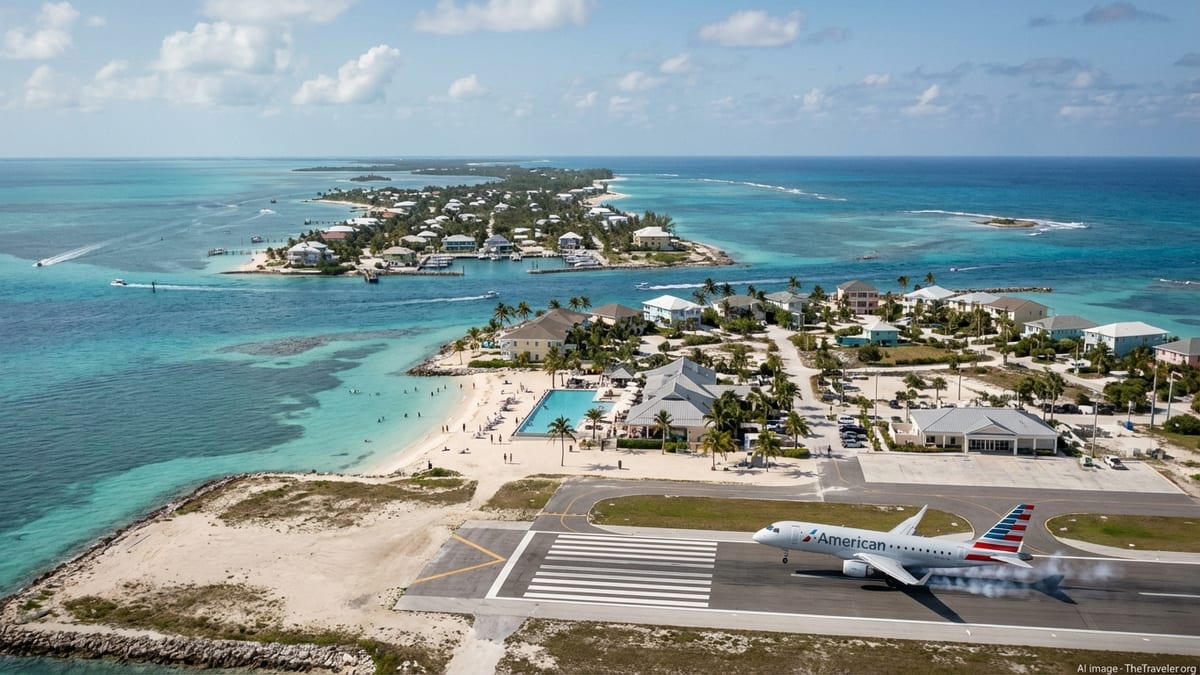
Operations restart after nationwide technology disruption
Published coverage indicates that a widespread technology outage affecting American Airlines on July 28 and July 29 led to ground stops and cancellations across the United States. Flight-tracking data and airport status boards show that departures from Will Rogers airport in Oklahoma City were among those affected, with American’s schedule experiencing extended gaps and irregular operations.
By the morning of July 29, publicly available flight-status tools showed American Airlines departures and arrivals at Will Rogers back on the board, signaling that the carrier had restarted flying to and from the airport. Routes linking Oklahoma City with major connection points such as Dallas Fort Worth and Phoenix were again listed as operating, although many were posted with delayed departure or arrival times.
The restoration of flying followed several hours in which American’s systems issues appeared to halt new departures or significantly slow boarding and check-in processes. Aviation tracking platforms documented clusters of American flights listed as “delayed” or “scheduled” with revised times, reflecting a gradual restart rather than an immediate return to normal activity.
Persistent delays and uneven schedule recovery
Even with aircraft moving again, the recovery at Will Rogers remains partial. Flight-status feeds for American services into and out of Oklahoma City continue to display staggered departure times, shorter-than-normal connection windows, and occasional rolling delays where departure estimates are pushed back in increments.
Regional routes that connect Oklahoma City to American’s hub network are seeing the brunt of the disruption. Some flights are departing significantly later than originally scheduled, and a number of inbound services are arriving behind schedule, creating a knock-on effect for subsequent legs operated by the same aircraft.
Patterns visible in national delay statistics suggest that congestion at major hubs is slowing the reset of American’s overall network, which in turn influences smaller markets like Oklahoma City. Aircraft and crew that started the day out of position are being rotated back into regular patterns, a process that typically takes several operational cycles to complete.
Impact on passengers at Will Rogers airport
For travelers at Will Rogers, the practical impact has been long lines, shifting departure boards, and the need to rebook missed connections. Social media posts and traveler accounts describe passengers being held on aircraft awaiting updated clearance, as well as others being asked to deplane while revised departure times were established during the outage.
Publicly accessible airline and airport information shows that some Oklahoma City passengers were re-accommodated onto later American services through Dallas Fort Worth or Phoenix, while others were offered itineraries on subsequent days once capacity allowed. Same-day connections to smaller regional destinations have been particularly vulnerable when inbound flights arrived late.
Passengers with afternoon and evening departures on July 29 are being advised through airline channels to monitor their flight status frequently and to expect gate changes or revised departure times, even where flights are currently listed as operating. Observers note that demand for remaining seats on later flights appears elevated, limiting options for last-minute changes.
Broader network strain behind Oklahoma City disruptions
According to aviation data analyses, disruptions of this type rarely remain confined to a single airport. When a large carrier’s systems falter, delays tend to propagate through the broader network as aircraft and crews fall out of their scheduled rotations. Research on delay propagation in the United States has documented how an outage at a hub or a systemwide technology issue can continue to affect flights for many hours, or even into the following day.
In this instance, Oklahoma City’s experience reflects its position in American’s route map. Will Rogers functions primarily as a spoke airport, relying on connections through larger hubs. When those hubs are congested or working through backlogs, spoke airports typically experience intermittent gaps in service followed by clusters of delayed arrivals and departures as the schedule resets.
Industry observers point out that high summer travel volumes add another layer of complexity. With many flights already operating near capacity, moving affected passengers to alternative services is more challenging, leading to longer waits for open seats and extending the visible impact of a single outage.
What travelers can expect in the next 24 hours
Based on current schedules and patterns seen after previous large-scale disruptions, operational data suggests that American’s flights at Will Rogers are likely to remain somewhat uneven through at least the next set of connection banks. While additional cancellations are not guaranteed, late arrivals into Oklahoma City could continue to push back evening departures and early morning rotations on July 30.
Travelers booked on American from Oklahoma City in the coming day are being encouraged through public information channels to check in early, verify their flight status repeatedly, and allow extra time for security and gate changes. Those with tight connections through Dallas Fort Worth or Phoenix may face the greatest uncertainty, as any additional delay could affect onward travel.
As the carrier restores regular aircraft and crew positioning, schedule data typically shows a gradual reduction in the number and length of delays. For now, operations at Will Rogers have shifted from the standstill triggered by the systems outage to a slower, recovery-focused phase in which flights are again departing and arriving, but often later than planned.