


More news on this day
Severe thunderstorms sweeping across the Chicago area have led to hundreds of flight cancellations and delays at O’Hare International Airport and Midway Airport, disrupting travel plans for thousands of passengers at the height of the summer season.
Get the latest news straight to your inbox!
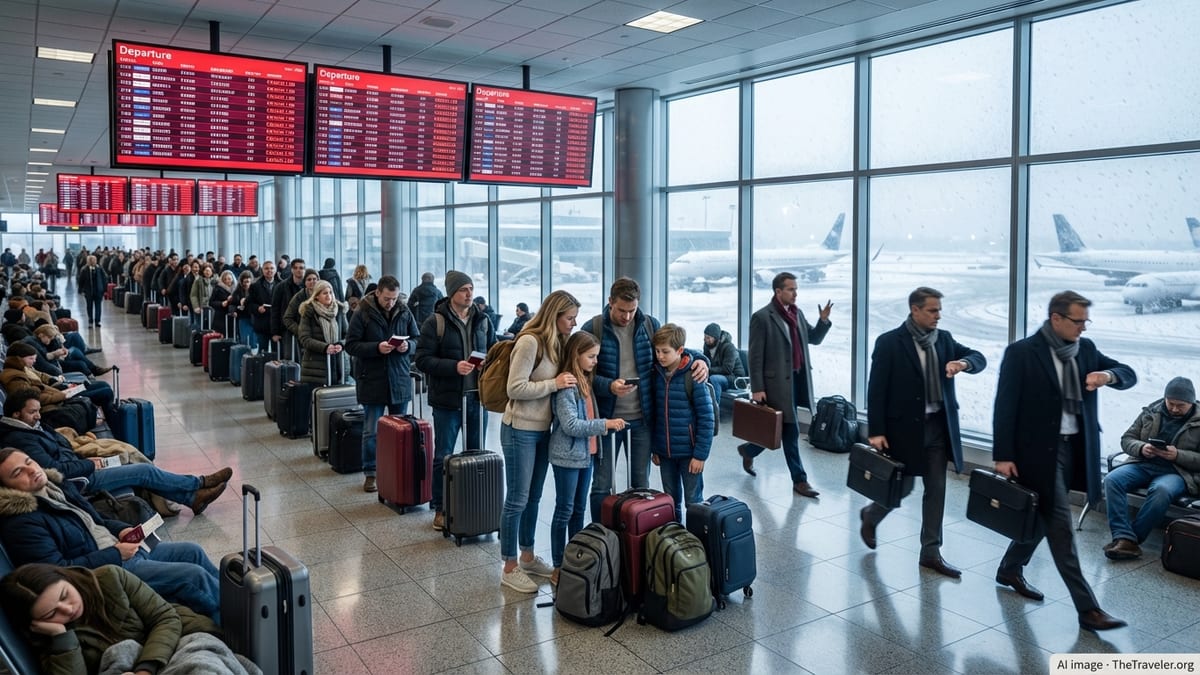
Storms trigger ground stops and cascading delays
Published coverage from local outlets indicates that powerful storms moved through northern Illinois on July 27, bringing intense rain, lightning and damaging winds that affected large parts of the Chicago metropolitan area. Weather-related disruptions extended to both of the city’s major airports, with operations at O’Hare and Midway significantly reduced for several hours.
Reports from the Chicago Department of Aviation, cited in regional news coverage, show that ground stops were implemented around midday at O’Hare as thunderstorms passed directly over the airfield. Ground stops temporarily halt inbound flights and sharply limit departures, which quickly led to a backlog of aircraft on the ground and in the wider air traffic system.
By later in the day, local broadcast reports indicated that nearly 1,000 flights had been canceled or delayed across the two airports, with O’Hare bearing the brunt of the disruption. At one point, average departure delays of more than 90 minutes were still being recorded at O’Hare even after the most intense storms had moved east of the city.
Federal aviation advisories show that a ground delay program was activated for O’Hare to manage the flow of traffic into the storm-affected airspace. These programs reduce the number of landings allowed per hour and assign controlled departure times to flights bound for the affected airport, a process that can extend the impact of a single storm cell across the broader national network for many hours.
O’Hare, Midway and the wider travel ripple effect
O’Hare International Airport is among the world’s busiest hubs by flight volume and serves as a central node in domestic route networks, particularly for airlines that use Chicago as a primary connection point. When operations slow significantly at O’Hare, disruptions frequently cascade across the country as crews, aircraft and connecting passengers are forced out of position.
Publicly available flight tracking data and airline status boards on Monday showed that cancellations and long delays were not limited to Chicago-originating flights. Routes into Chicago from other major cities, including East Coast and Midwest hubs, also experienced rolling delays as thunderstorms forced air traffic controllers to reroute traffic and hold departures at their origin airports.
Midway Airport, a key base for low cost and point to point carriers, also recorded substantial disruptions. Dozens of flights were canceled or delayed as storms passed over the South Side of the city, with some flights diverted or held at origin due to rapidly changing weather conditions near the airfield.
Travel industry analysts note that such weather events often have a multi day effect, as airlines work to reposition aircraft and crews and to rebook stranded passengers. Even after skies clear, residual delays and limited seat availability can persist into the following day, particularly during busy summer travel periods when planes are already operating near capacity.
Passengers face long waits, crowded terminals and rebooking challenges
Social media posts and firsthand accounts shared publicly described crowded concourses, long lines at customer service counters and extended waits on board aircraft as crews awaited revised takeoff slots. Some travelers reported sitting on planes at the gate or on the tarmac for more than an hour while ground stops and flow control measures remained in place.
Airlines generally classify thunderstorms and other adverse weather as conditions beyond their control, which limits the compensation and amenities they are required to provide. Travel rights guides and consumer advocacy groups emphasize that, in weather related disruptions, carriers will typically offer rebooking on the next available flight and may waive change fees, but are often not obligated to provide hotel vouchers or meal stipends.
Passengers caught in the disruption were urged by travel experts in recent media coverage to use airline apps and websites for rebooking, rather than relying solely on airport service desks. Online and mobile channels often update more quickly and can present alternative routes, including connections through less affected hubs, to reach final destinations.
Some travelers reported that luggage became a particular pain point as cancellations mounted, with bags offloaded from grounded flights and routed to central baggage services. This process can lead to delays in reuniting passengers with checked items, especially when travelers accept rebooking on different routings or airlines in order to complete their journeys.
Severe storms cap volatile summer for Midwest air travel
The latest round of storms comes in the middle of a busy and weather prone summer across the Midwest and Eastern United States. Earlier in July, severe thunderstorms passing through northern Illinois led to additional disruptions at O’Hare, while separate weather systems this season have also affected major hubs in Atlanta and along the East Coast.
Recent climatological summaries show that the Chicago region has experienced periods of both extended dryness and sudden heavy downpours this summer, a pattern that can increase the risk of flash flooding, downed trees and power outages when strong storm systems move through. Local news coverage this week described widespread power interruptions in the Chicago area after intense winds and lightning accompanied the latest thunderstorms.
Aviation analysts frequently point to a combination of factors behind the scale of modern disruption: tightly scheduled summer operations, high passenger demand and complex routing structures that depend on major hub airports like O’Hare functioning near peak capacity. When storms force temporary shutdowns or reduced arrival rates at those hubs, there is limited slack in the system to absorb the shock.
In guidance released earlier this year, industry groups again advised travelers to build flexibility into summer itineraries where possible, including booking earlier flights in the day, allowing extra time for connections and monitoring forecasts for severe weather along intended routes. The events in Chicago highlight how quickly conditions can shift at a single key hub and ripple across the wider U.S. air travel network.