


More news on this day
American Airlines travelers in Phoenix faced extensive delays after a reported technology outage led to a systemwide ground stop that left aircraft waiting at gates and on taxiways across the network.
Get the latest news straight to your inbox!
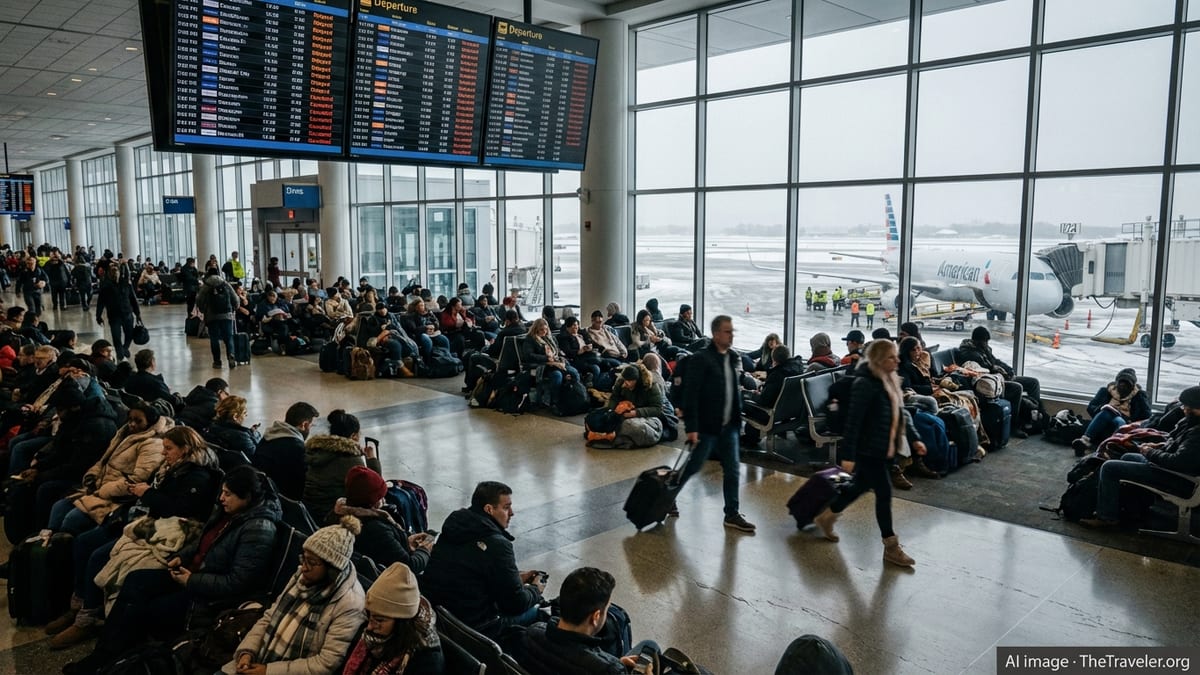
Ground stop ripple effects at Phoenix Sky Harbor
Flight tracking data and passenger accounts indicate that American Airlines operations slowed sharply at Phoenix Sky Harbor International Airport as the carrier implemented a ground stop across its network. Departures already at the gate were held while crews awaited clearance, and aircraft on the taxiways were instructed to remain in place until the airline’s systems could be stabilized.
Reports on social platforms from travelers at Phoenix described packed gate areas, long lines at customer service desks, and limited information on revised departure times. Some passengers described sitting on board aircraft for more than an hour past scheduled pushback while flight crews relayed updates about an ongoing systems problem affecting the airline.
While flights already airborne were generally allowed to continue to their destinations, the halt in new departures and in some inbound movements quickly translated into congestion at Phoenix. With American operating a significant schedule at Sky Harbor, even a relatively brief pause in departures created a backlog that rippled through evening connections.
By late evening, online flight-status boards still showed clusters of American Airlines departures from Phoenix running behind schedule, with some pushed back several hours. As the airline worked through the queue, travelers reported missed connections, overnight rebookings and challenges finding available hotel rooms near the airport.
Technology issues trigger latest disruption
Publicly available information from aviation monitoring services and passenger reports point to an information-technology failure as the trigger for the American Airlines ground stop. Travelers across multiple airports, including Phoenix, described error messages in booking systems, boarding systems that would not load, and mobile apps that showed outdated or inconsistent flight information.
In several cases, passengers recounted flight crews announcing that operations were being constrained by a companywide systems outage affecting flight planning, dispatch or gate management. Without reliable access to these digital tools, airlines often reduce or halt departures to avoid compounding operational risks, resulting in a ground stop until systems are restored.
Industry analysts note that major U.S. carriers have become increasingly vulnerable to technology failures, as everything from crew scheduling and maintenance signoffs to check in and baggage tracking is now tightly integrated with cloud-based platforms. When a core system fails or a critical vendor experiences an outage, airlines can quickly lose the ability to safely coordinate departures, routing and staffing.
In recent years, several high profile incidents have demonstrated how fast such disruptions can cascade across a carrier’s network, even when the underlying issue is resolved within hours. The latest American Airlines event fits that pattern, with a relatively short ground stop creating extended delays for passengers booked on tightly timed connections through busy hubs such as Phoenix.
Why Phoenix is especially vulnerable to knock-on delays
Phoenix Sky Harbor serves as an important connecting point in American’s western network, linking shorter-haul routes in the Southwest and Mountain West with transcontinental and international flights. When a ground stop affects the carrier’s departures, aircraft and crews arriving from other cities may be forced to wait for new assignments, leaving gaps in the tightly choreographed daily schedule.
Aviation researchers have documented how disruptions at large hubs can propagate through the National Airspace System, turning an isolated outage into widespread delays as aircraft and crews end up in the wrong places at the wrong times. Even after a ground stop is lifted, airlines must reposition planes, adjust crew pairings and accommodate passengers who missed onward flights, a process that can take many hours to normalize.
Phoenix is also subject to weather patterns that can exacerbate the impact of operational disruptions. Seasonal thunderstorms and dust storms have previously prompted temporary ground stops or arrival restrictions at Sky Harbor, and high summer temperatures can impose additional performance limits on certain aircraft types. When an IT-related stoppage overlaps with these local constraints, the recovery can be slower and more uneven.
As a result, travelers using Phoenix as a connecting point often experience the effects of distant problems, such as storms, staffing challenges or technology outages at other hubs. The American Airlines ground stop added another layer to this familiar pattern, stranding some passengers far from their final destinations even though conditions in Phoenix itself remained suitable for flying.
What travelers experienced on the ground
First hand accounts from passengers at Phoenix describe a scene of growing frustration as delay estimates shifted and rebooking options narrowed. Some travelers reported that departure times on airport monitors, airline apps and third party tracking services did not match, making it difficult to know whether to remain at the gate, seek meal options or attempt to change flights.
Others described long queues at American Airlines customer service counters as travelers sought alternative routes, overnight accommodations or confirmation of onward connections. With the ground stop affecting multiple airports simultaneously, available seats on later departures and on partner airlines were limited, leaving some customers with only next day options.
Parents traveling with children, older passengers and those with tight onward commitments, such as cruises or international flights, appeared to be among the most affected. Several travelers described having to make last minute arrangements for missed hotel bookings or ground transportation at their destinations, adding financial strain to an already stressful situation.
Despite the challenges, reports indicate that many frontline employees at Phoenix, including gate agents and flight crews, attempted to provide frequent updates as new information became available. However, when core systems are down or unstable, those staff members often have access to the same incomplete data as passengers, limiting their ability to offer firm assurances or precise forecasts.
Managing future trips through Phoenix during disruptions
Travel experts suggest that passengers connecting through Phoenix during periods of operational stress can reduce their risk of major disruption by building longer connection times into their itineraries, particularly in the late afternoon and evening when delays often accumulate. Selecting earlier departures where possible can also provide more rebooking options if a ground stop or other issue arises.
Keeping a close eye on both airline and airport communications is essential. During the American Airlines ground stop, some travelers first learned of the broader issue through aviation data services and media coverage rather than through direct notifications. Monitoring multiple sources can provide early warning that a localized delay may be part of a wider disruption.
Travelers are also encouraged to familiarize themselves with airline policies on rebooking and accommodations during irregular operations. While compensation is often limited during events attributed to weather or third party outages, passengers may still be eligible for meal vouchers, hotel discounts or no fee changes, depending on the circumstances and fare type.
For those with critical time sensitive commitments, such as business meetings or major family events, building contingency plans can help. This might include identifying alternative airlines serving the same route, being prepared to reroute through another hub instead of Phoenix, or considering an overnight stay to break up a complex journey. The latest American Airlines disruption at Sky Harbor underscores how quickly one ground stop can reshape travel plans across the country.