


More news on this day
A world championship bout on the undercard of Canelo Álvarez’s upcoming Riyadh event has been pulled amid heightened security concerns in Saudi Arabia, raising fresh questions for U.S. travelers as Washington tightens its guidance for Americans in the kingdom.
Get the latest news straight to your inbox!
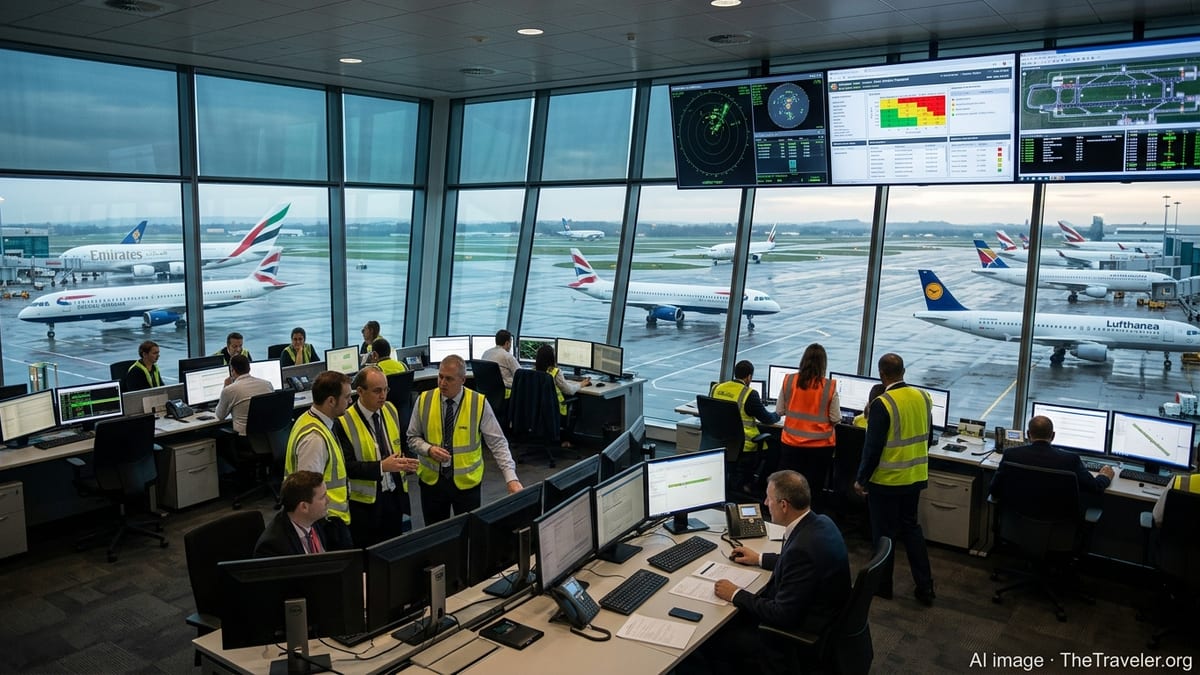
World Title Bout Scrapped As Security Jitters Grow
Reports from boxing outlets indicate that a scheduled world championship fight on the undercard of Canelo Álvarez’s October 31 card in Riyadh has been withdrawn, with teams citing unease about the security situation surrounding the event. Coverage points to worries about recent attacks on Saudi airports and the prospect of further missile and drone strikes as key factors in the decision.
The main event, featuring Álvarez against Canadian-based champion Christian Mbilli at super middleweight, is still being promoted for Kingdom Arena in the Saudi capital. However, the loss of a title fight from the bill underscores how fast-moving regional risks are now intersecting with the country’s ambitions to host major sports.
Boxing-focused reporting also notes that some athletes and managers have questioned the wisdom of staging large indoor events in Riyadh so soon after deadly strikes on civilian infrastructure. While promoters continue to market the show as part of Riyadh Season’s entertainment calendar, the reshuffled undercard reflects how individual teams are recalibrating their own risk tolerance.
For fans considering travel from the United States, the late change on such a high-profile card is likely to be viewed alongside evolving government advisories that urge extra caution across Saudi Arabia, particularly around airports and border regions.
U.S. Travel Advisory: ‘Reconsider Travel’ To Saudi Arabia
Publicly available information from the U.S. Department of State shows that Saudi Arabia is currently rated at Level 3, “Reconsider Travel.” The advisory, updated in October 2026, stresses the risks of missile and drone attacks, terrorism, and the ongoing threat to civilian airports and other critical infrastructure.
On October 23, 2026, the State Department ordered non-emergency U.S. government employees and eligible family members to depart Saudi Arabia, reflecting concern over recent strikes and the possibility of further attacks. The advisory highlights that Houthi forces based in Yemen have previously targeted Saudi territory, including airfields and transport hubs serving international passengers.
The same guidance designates areas near the Yemeni border as Level 4, “Do Not Travel,” due to active hostilities and the potential for cross-border fire. While Riyadh is not within this highest-risk zone, security alerts reference airports and major transport nodes nationwide as potential targets, a point that has resonance for large-scale events drawing international visitors.
The advisory also outlines long-standing concerns such as the potential for sudden changes in exit controls, restrictions on movement during security operations, and the need for travelers to have contingency plans that do not rely solely on U.S. government assistance. This broader context frames how the loss of a championship fight on Álvarez’s card may be interpreted by American fans weighing a trip.
Airport Attacks Put Spotlight On Event Logistics
The decision to scratch a title bout from the Riyadh show comes in the wake of a series of October 2026 attacks on Saudi airports that international media describe as among the most serious in years. Reporting on those incidents notes dozens of fatalities and hundreds of injuries at multiple facilities, including King Khalid International Airport serving the capital.
Foreign ministries in countries such as Australia, the United Kingdom, and New Zealand have responded with stronger advisories of their own, warning of a heightened risk of further strikes on airports and aircraft operating in Saudi airspace. Some guidance now urges citizens to avoid non-essential travel to the kingdom, and in certain cases to avoid travel altogether, citing a volatile security picture.
For the Canelo card, these developments have direct implications for logistics. Most international spectators, broadcast staff, and fighters would ordinarily rely on Riyadh’s main airport for arrival and departure. In recent days, updates from airlines and travel agencies have referenced temporary disruptions, re-routed services, and additional security screening, all of which can complicate plans for time-sensitive sporting events.
With the boxer’s main event still scheduled to go ahead, travelers are being encouraged by public advisories to monitor flight status closely, stay alert to official security alerts, and be prepared for last-minute schedule adjustments that could affect both inbound and outbound journeys.
How Fans’ Risk Calculus Is Changing
In online forums and fan discussions, the removal of a championship fight from Álvarez’s Saudi undercard is being weighed alongside the broader pattern of international withdrawals from events in the kingdom. Golf coverage recently detailed the postponement of a major Asian Tour tournament in Saudi Arabia due to security fears, and other high-profile competitions have adopted a wait-and-see approach.
Combat sports, by contrast, have continued to move forward with several large shows in Riyadh, even as some participants publicly express misgivings. The persistence of these fixtures highlights the financial and promotional incentives at play, but it also leaves individual athletes and fans to conduct their own risk assessments based on evolving conditions on the ground.
For American travelers, the current U.S. advisory framework effectively urges a personalized cost-benefit analysis. “Reconsider Travel” does not prohibit visits, but it signals that risks are elevated and that those who proceed should adopt enhanced precautions, from carefully selecting accommodation with robust security measures to planning alternative routes in case of airport disruptions.
The cancellation of a world title bout over safety concerns may serve as a visible indicator of how some professional teams are interpreting that risk. It also underscores the possibility that future changes, including further card reshuffles or crowd restrictions, could occur at short notice if the security environment worsens.
Practical Guidance For U.S. Travelers Eyeing Riyadh
Publicly available U.S. government materials recommend that Americans considering travel to Saudi Arabia enroll in the Smart Traveler Enrollment Program, monitor State Department alerts, and follow security messages issued by the U.S. Mission in Riyadh, Jeddah, and Dhahran. Recent security alerts have drawn attention to potential threats to airports and advised U.S. citizens to stay informed through local civil defense announcements.
Given the current advisory level, travelers are encouraged to maintain a high degree of situational awareness, avoid large crowds where possible, and have a clear plan for sheltering in place or relocating if conditions deteriorate. For those whose primary reason to visit Saudi Arabia is to attend the Canelo Álvarez card, this means thinking through contingencies such as delayed flights, temporary closures of transport hubs, or restrictions on movement in the vicinity of large venues.
Travel insurance that explicitly covers security-related disruption, including event cancellation, may also be a critical consideration. Insurers frequently exclude acts of war or terrorism from standard policies, so potential visitors are being urged in public guidance to read policy wording closely and seek written confirmation of what is and is not covered.
Ultimately, the removal of a championship fight from Álvarez’s Saudi undercard illustrates how swiftly the balance between prestige and safety can shift. As the main event presses ahead under a Level 3 U.S. advisory, American boxing fans face a more complex set of calculations than usual in deciding whether this particular destination bout is worth the journey.