


More news on this day
Canelo Álvarez has landed in Riyadh ahead of his October 31 title clash with Christian Mbilli, just days after the United States sharply tightened its travel alert for Saudi Arabia following recent attacks targeting airports and other infrastructure.
Get the latest news straight to your inbox!
A Mega-Fight Lands in a City on Edge
Published coverage across boxing and general news outlets indicates that Álvarez arrived in the Saudi capital early on Monday, October 26, for the WBC super middleweight bout scheduled on October 31. The fight is billed as one of the centerpiece events of Riyadh Season 2026, drawing high-spending visitors, broadcasters, and hospitality operators into the city despite rising regional tensions.
The bout is set for a temporary outdoor arena in Riyadh’s King Abdullah Financial District, where a purpose-built stadium has been erected for major entertainment and sports events. Promotional material describes a large-scale card built around the Canelo versus Mbilli main event, with supporting fights and pre- and post-show entertainment designed to keep visitors in the district for much of fight day.
Reports from specialist boxing media note that Álvarez chose to arrive several days ahead of the main fight-week program, joining other headline names already training in the city. His early appearance in Riyadh answers weeks of speculation among fans and industry figures over whether the card would proceed in Saudi Arabia at all.
The fight follows a sequence of high-profile boxing and mixed martial arts events staged in Riyadh in recent years, part of a broader push to position the Saudi capital as a global sports and entertainment hub. This contest, however, is unfolding under a different security backdrop from many of the city’s previous showcase nights.
State Department Tightens Advisory After Airport Attacks
While Álvarez’s jet touched down, publicly available information from the U.S. Department of State shows that the Saudi Arabia country advisory was updated in October with a Level 3 “Reconsider travel” rating. On October 23, 2026, the department ordered non-emergency U.S. government employees and family members to leave Saudi Arabia, citing security risks linked to recent attacks.
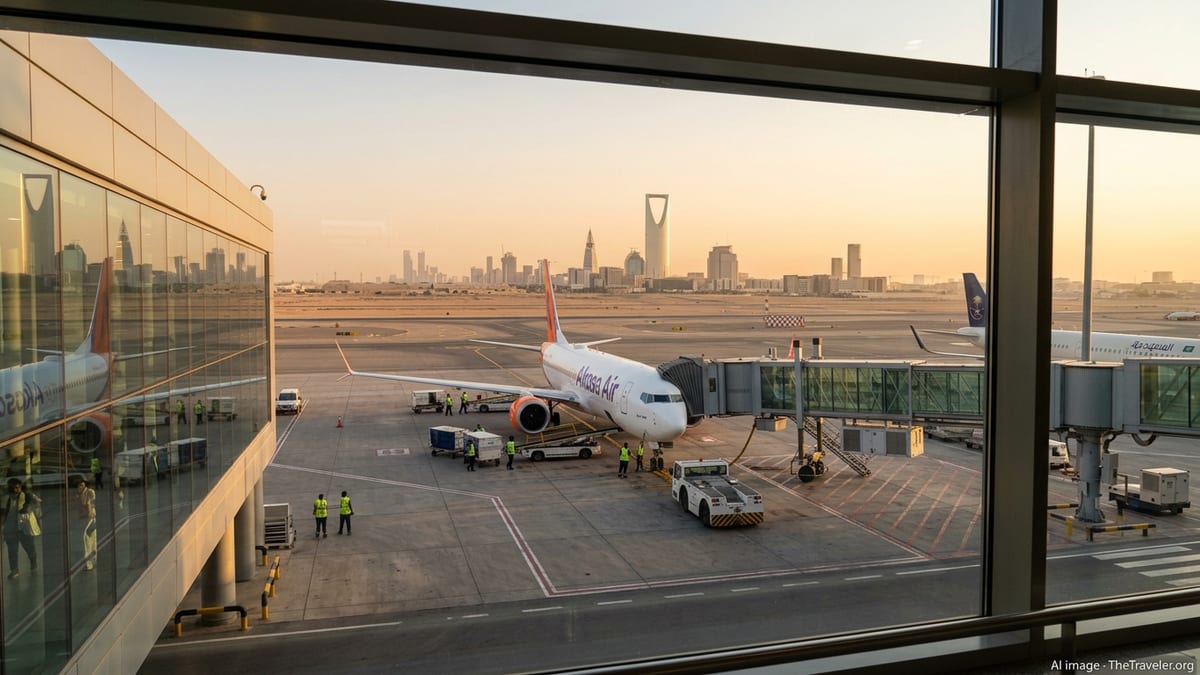
An accompanying alert highlights a pattern of missile and drone strikes attributed to Iran-aligned Houthi forces in Yemen, including incidents targeting civilian airports and critical infrastructure. Recent reporting by major international news agencies describes deadly attacks and significant travel disruption associated with these strikes, including at Riyadh’s King Khalid International Airport, the principal entry point for international fight-week visitors.
The revised advisory urges U.S. citizens to reconsider non-essential trips to Saudi Arabia, to avoid areas near military or critical infrastructure sites, and to be prepared for sudden changes to flight operations. Travelers are directed to enroll in the Smart Traveler Enrollment Program so they can receive security messages and guidance if conditions deteriorate further.
For airlines and travel intermediaries selling packages tied to the Canelo versus Mbilli event, the sharpened language raises practical questions around duty of care, waivers, and change policies. Some carriers and tour operators have already introduced more flexible rebooking options for itineraries touching Saudi airports in late October and early November, according to trade press coverage.
Event Still On, But Fan Travel Plans Grow More Complex
Despite the elevated risk assessment, current schedules show the October 31 card still listed to proceed in Riyadh, with promoters reiterating that the show remains on the calendar. Sports outlets report that some other mass events in the kingdom have been postponed or scaled back, which has heightened scrutiny of why this particular night is going ahead as planned.
Boxing reporters and fan forums describe a patchwork of travel strategies among international ticket-holders. Some U.S. and European spectators appear to be keeping their original routings into Riyadh, while others are reportedly opting to fly into neighboring Gulf states and continue overland, treating Saudi Arabia as a shorter-duration segment of a wider regional trip.
For travelers who decide to attend, the tightened advisory makes pre-trip preparation more important than for past Riyadh Season events. Guidance from security consultancies and risk firms circulated in recent months has emphasized monitoring airline notifications closely, allowing extra time at departure and arrival airports, and having contingency plans in place if commercial flights are delayed or temporarily suspended.
Travel insurance is emerging as a critical consideration for fans. Policies that include both security-related trip interruption and medical evacuation benefits are attracting renewed attention, although consumer advocates note that coverage for acts of war or terrorism can be strictly limited. Travelers are being urged to scrutinize policy wording and seek written clarification where necessary.
Riyadh Season Pushes On Amid Security Concerns
The Álvarez versus Mbilli showdown is part of a dense Riyadh Season 2026 calendar that also features professional wrestling, motorsport, and mixed martial arts cards in the coming weeks. Several of those events, particularly ones scheduled for early November, have already drawn questions from fans and commentators about the prudence of hosting large international gatherings so soon after attacks on aviation infrastructure.
Background information on Riyadh Season describes it as a flagship tourism and entertainment program designed to support Saudi Arabia’s Vision 2030 economic diversification plan. Temporary venues, themed zones, and pop-up attractions are spread across multiple districts of the capital, with organizers marketing bundled experiences that combine headline sports with concerts, dining, and family entertainment.
Security measures around these sites have been steadily expanding in recent editions, and coverage by regional entertainment media suggests that this year’s season is operating with heightened screening at entrances and a more visible security presence around major stages and arenas. For international visitors, that environment can translate into longer queues and more bag checks, but also a perception of increased control around key venues.
For local tourism businesses, from upscale hotels to ride-hailing drivers, the decision to maintain the Canelo card is significant. Even a modest reduction in international arrivals would likely be felt in room occupancy, restaurant bookings, and event-adjacent spending. Many operators are watching whether late cancellations will rise if the security situation worsens or if additional foreign governments follow the U.S. in tightening their guidance.
What U.S. Travelers Headed to the Fight Need to Know
For U.S.-based boxing fans who still plan to travel to Riyadh for the October 31 bout, the combination of a marquee sporting occasion and a newly sharpened travel advisory demands careful planning. Publicly available U.S. government guidance stresses that “Reconsider travel” is not a legal prohibition but a strong signal that non-essential trips carry elevated risk.
Travel analysts and risk briefings recommend that visitors keep digital and paper copies of their passports, flight confirmations, and hotel reservations, and ensure that trusted contacts at home are aware of their daily movements once in Saudi Arabia. They also encourage travelers to stay informed via recognized international and regional news outlets rather than relying solely on social media updates.
At the airport level, recent attacks on aviation infrastructure mean that travelers should expect possible last-minute gate changes, additional screening procedures, and a heightened security posture in and around terminals. Aviation specialists note that airlines could reroute or delay services if local conditions change, even close to departure time, so flexible onward planning is advisable.
If the situation were to deteriorate further, the State Department could adjust its advisory level again or issue additional security alerts specific to Riyadh. For now, the guidance leaves the final decision in the hands of individual travelers, even as Canelo Álvarez’s arrival in the Saudi capital symbolizes the determination of event organizers and the fighter himself to keep one of boxing’s biggest nights on the calendar.