


More news on this day
Frederick Douglass Greater Rochester International Airport in New York recorded 13 American Airlines flight cancellations and six significant delays after a widespread information technology outage disrupted the carrier’s operations, leaving travelers scrambling to rebook and airlines racing to restore schedules.
Get the latest news straight to your inbox!
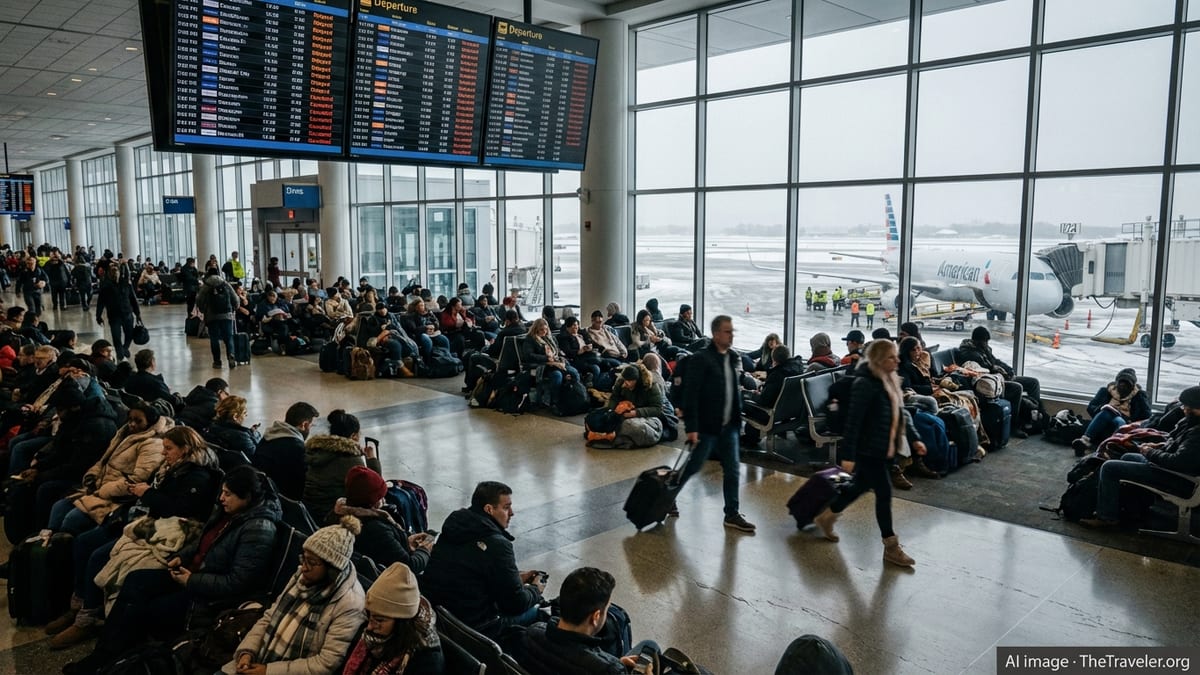
IT failure ripples into Rochester schedules
Publicly available flight-tracking and airport status data for Thursday show American Airlines operations at the Rochester airport were hit by a cluster of cancellations and lengthy delays concentrated over several hours, closely matching the timeline of the carrier’s latest technology disruption. The affected flights primarily involved regional services operated under the American Eagle brand, linking Rochester with larger hubs.
Reports indicate that the outage originated in American’s internal IT systems, temporarily affecting the tools needed to dispatch flights, manage crew assignments and process passenger check-in. While many flights already in the air were able to continue to their destinations, departures scheduled to leave during the disruption window were held or scrubbed entirely.
By the time American’s systems were stabilized and a broader ground stop affecting the airline was eased, the network-wide disruption had cascaded into Rochester, where the airport recorded a total of 13 cancellations and six delays tied to American-operated services. The figures place the city among a long list of regional airports that saw disproportionate impacts from a problem rooted far from their own runways.
According to published coverage of the incident, American Airlines characterized the outage as a technology issue and said normal operations were gradually restored later in the day. However, the carrier acknowledged that customers would continue to feel the effects as aircraft and crews were repositioned and backlogged flights were worked back into the schedule.
Ground stops and cascading disruptions
The Rochester disruption formed part of a much wider operational shock that briefly saw American Airlines flights paused across parts of its U.S. network. Federal flight operations advisories and airline-status dashboards point to a period in which departures were temporarily halted while the company and aviation authorities assessed the scale of the technology problem.
Even short-lived ground stops can trigger days of irregular operations, particularly for large carriers such as American that run tightly timed hub-and-spoke systems. When one node of the network stalls, inbound aircraft, crews and passengers may miss their next connections, creating a rolling series of delays and cancellations at secondary airports like Rochester.
Rochester’s position as a spoke city, reliant on mainline and regional flights to larger hubs, leaves it especially vulnerable to these kinds of systemic disruptions. Once a morning bank of flights is canceled because systems are offline, there are often limited backup aircraft and crews available locally to help restart operations. As a result, a relatively small number of long delays or cancellations can erase a large portion of an airline’s daily schedule at a smaller airport.
Industry analyses of previous technology failures and national airspace outages show similar patterns: hub airports absorb the initial shock but have more resources to recover, while smaller markets see thinner schedules thrown into disarray for longer. The American Airlines outage that affected Rochester appears to have followed this familiar trajectory.
Passengers face missed connections and limited options
For passengers at Frederick Douglass Greater Rochester International Airport, the outage translated into missed connections, overnight stays, and abrupt changes of plan. Social media posts and traveler accounts describe early-morning departures that never left the gate, last-minute cancellations of evening flights, and itineraries that suddenly required multiple extra stops.
American Airlines’ publicly available customer service policies state that when a flight is canceled or significantly delayed for reasons within the airline’s control, affected travelers can be rebooked on the next available American or partner service at no additional fare. In some cases involving controllable disruptions, the airline may also arrange meals or hotel accommodation, subject to availability and specific circumstances.
However, at an airport with a limited number of daily departures, “next available” can be hours or even a full day away, particularly on heavily used business routes. With thirteen flights canceled outright in Rochester, many customers reported that rebooking involved routing through alternative hubs, waiting for scarce open seats, or shifting to other carriers at their own expense when time-sensitive trips could not be postponed.
Travel advocates note that the United States does not have a comprehensive federal compensation regime for technology-related airline disruptions similar to those in some other regions. As a result, the level of support customers receive in situations like the Rochester outage can vary widely, depending on the cause of the cancellation, local hotel availability, and each traveler’s specific itinerary.
Spotlight on airline technology resilience
The Rochester incident arrives against a backdrop of heightened concern over the resilience of airline and aviation IT systems. In recent years, disruptions linked to software updates, network outages and vendor failures have led to widespread groundings across multiple carriers and even the national air traffic system, drawing scrutiny from regulators and policymakers.
Analysts point out that modern airline operations are deeply dependent on integrated technology platforms for everything from flight planning and crew scheduling to real-time passenger communications. While these systems can dramatically improve efficiency under normal conditions, a single failure point can halt operations on a scale that would have been difficult to imagine in a more analog era.
Publicly available transportation statistics also show that American Airlines, like other large U.S. carriers, already operates close to capacity on many routes, leaving limited slack in the system to absorb unexpected outages. When disruptions occur, aircraft and crews are often out of position for subsequent flights, compounding the recovery challenge at smaller airports. Rochester’s tally of 13 cancellations and six delays from a single IT problem underscores how quickly those knock-on effects can materialize.
Industry observers say the event is likely to feed into ongoing discussions about redundancy and modernization in aviation technology infrastructure. Questions being raised include how airlines diversify critical systems, the extent to which they rely on third-party vendors, and what contingency tools exist to keep limited operations running when primary systems fail.
What travelers from Rochester can do during outages
For travelers using Rochester’s airport, the episode serves as a reminder of how important it is to prepare for technology-related disruptions, even on seemingly routine domestic flights. Travel experts often recommend monitoring flight status directly through airline apps and airport information boards in the hours before departure, particularly when news emerges of broader operational issues at a carrier.
When cancellations or long delays occur because of airline IT problems, passengers are typically entitled to a refund for any unused portion of their ticket if they choose not to travel. They may also request rebooking on alternative departures, though options may be constrained when multiple flights from a smaller airport are canceled at once. Keeping documentation of delay notifications and any additional expenses can help when pursuing reimbursements or filing complaints later.
Frequent travelers also highlight the value of building extra time into itineraries when connecting through major hubs, especially during peak travel periods. In the wake of the latest American Airlines IT outage that affected Rochester, some passengers reported that longer layovers gave them more flexibility to be rebooked or rerouted when initial flights were canceled.
While Thursday’s disruptions at Frederick Douglass Greater Rochester International Airport were modest compared with the nationwide impact of the outage, the 13 cancellations and six delays tied to American Airlines operations stand as a clear example of how a distant technology failure can quickly become a very local travel problem.