


More news on this day
An American Airlines flight from New York’s LaGuardia Airport experienced a tire failure while landing at Chicago O’Hare International Airport, blowing multiple tires on touchdown and prompting a temporary runway closure, according to early federal and local media reports.
Get the latest news straight to your inbox!
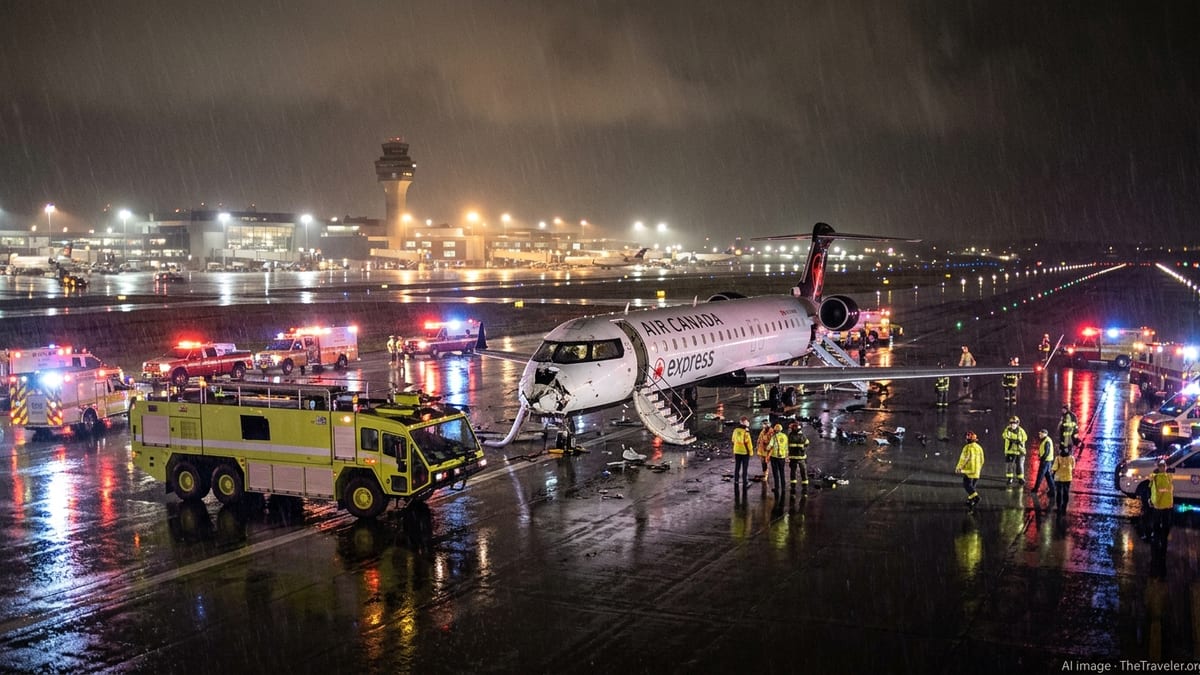
Incident on American Airlines Flight 386
Publicly available flight data and media coverage identify the aircraft as American Airlines Flight 386, operating from LaGuardia Airport in New York to Chicago O’Hare on Monday, August 17. As the jet touched down in Chicago, several tires on the landing gear reportedly failed, leaving the aircraft disabled on the runway and triggering an emergency response.
Reports indicate the aircraft came to a controlled stop on the runway after the tire failures. Initial information circulating through federal aviation updates and local Chicago news coverage states that there were no immediate reports of injuries among passengers or crew. The specific number of tires damaged has not been formally detailed, but multiple outlets describe a significant landing gear tire failure that prevented the jet from taxiing under its own power.
According to published coverage, the landing occurred during regular evening operations at O’Hare, one of the busiest hubs in the United States. The event quickly drew airport rescue and firefighting vehicles, as is standard procedure when an airliner becomes disabled on a runway following a landing abnormality.
While the Federal Aviation Administration has noted the tire failure in initial summaries, more detailed technical information about the cause is expected to follow as officials review inspection findings and maintenance records associated with the aircraft and its landing gear system.
Runway closure and operational disruptions at O’Hare
The blown tires left Flight 386 stopped on the runway, prompting a temporary closure of the affected surface at Chicago O’Hare. According to publicly available airport operations information, other arrivals and departures were briefly rerouted as airport crews worked to secure the aircraft and clear the runway.
Published reports from aviation monitoring services show that a ground hold developed for some traffic while the disabled aircraft remained in place. Flights already in the air were sequenced onto alternate runways, while some departures experienced delays as air traffic controllers adjusted the evening flow around the closure.
Video and photos shared on social media by travelers and aviation enthusiasts show emergency vehicles positioned around an American Airlines jet on the runway, with the aircraft surrounded by response crews. These images align with descriptions in news coverage that ground teams inspected the landing gear, confirmed the aircraft was secure, and began preparations to tow it from the scene.
Once the jet was removed and debris checks were completed, operations on the impacted runway gradually resumed. At a high traffic hub such as O’Hare, a single disabled aircraft can have ripple effects across the broader network, and some connecting passengers reported delays as schedules were adjusted in the wake of the incident.
Passenger experience and safety outcomes
Early accounts from the scene indicate that passengers remained on board for a period of time while the situation was assessed. According to local media descriptions, there was no fire or structural damage evident, and cabin crews kept travelers seated until it was clear the aircraft was stable and rescue vehicles were in position.
Following standard practice after a landing gear or tire abnormality, passengers were expected to disembark either at a remote stand via portable stairs or after the jet was towed to a gate, depending on the condition of the aircraft and airport logistics. As of initial reports, there were no indications of serious injuries, though a full medical assessment typically follows any event involving a sudden stop or abnormal landing.
Aviation safety data shows that tire failures on landing, while unsettling for those on board, are events that flight crews train to handle. Landing gear and braking systems are designed with redundancy, and pilots are prepared to manage directional control and stopping distance even when one or more tires lose integrity on touchdown.
Publicly available information shows that in this case, the crew of Flight 386 was able to maintain control of the aircraft and bring it to a halt on the runway, allowing emergency services to respond under controlled conditions rather than in a more dynamic in flight emergency.
FAA and airline response
According to initial summaries circulated through the Federal Aviation Administration’s incident reporting channels, the event involving Flight 386 is being logged as a landing incident involving multiple blown tires at O’Hare. The FAA typically compiles a preliminary notice that includes the flight number, aircraft type, route, and basic description of the damage or irregularity, followed by a more detailed record once inspections and interviews are complete.
Public statements from American Airlines referenced in news reports indicate that the carrier is coordinating with the FAA and airport authorities to evaluate the condition of the aircraft and determine the timeline for its return to service. The airline is also expected to review maintenance history and any data recorded by onboard systems during the landing rollout.
In events of this type, airlines generally rebook affected passengers on later flights and arrange onward connections from the hub. Travelers on Flight 386 who missed connections at O’Hare were likely moved to subsequent departures to their final destinations, consistent with standard disruption handling at major U.S. carriers.
The FAA’s role in cases such as the Flight 386 incident typically focuses on ensuring that any underlying issues related to aircraft components, procedures, or runway conditions are identified and, if necessary, addressed through maintenance actions, service bulletins, or operational guidance to prevent recurrence.
Context on tire failures and busy hub operations
Industry data and previous incident reports show that airliner tire failures most often occur during landing, when the combination of aircraft weight, speed, and runway conditions generates the highest loads on the wheels. Foreign object debris, heat buildup, and wear can all contribute to a loss of tire integrity, even when components are maintained to regulatory standards.
At large hubs like Chicago O’Hare, such events can quickly have network wide effects. A single runway closure, particularly during peak periods, can lead to holding patterns in the air and gate congestion on the ground as dispatchers and air traffic controllers work to rebalance the flow of aircraft.
For travelers, the Flight 386 incident is a reminder of how quickly routine flights can encounter operational issues that cascade into delays and diversions, even when the outcome is ultimately safe. For aviation regulators and airlines, it becomes another data point in ongoing efforts to monitor component reliability, runway conditions, and crew procedures at some of the world’s busiest airports.
Further details about the precise cause of the tire failures on American Airlines Flight 386 are expected to emerge as inspection findings, maintenance reviews, and formal summaries are compiled in the days ahead. For now, publicly available information underscores that the incident resulted in a controlled stop, a temporary runway closure, and significant but manageable disruptions across the O’Hare operation.