


More news on this day
Passengers on American Airlines flight AA 2772 from New York John F. Kennedy International Airport to Austin faced an unexpected diversion and emergency-style landing at Dallas Fort Worth International Airport on May 21, 2026, after the Boeing 737 MAX 8 experienced an in-flight issue that disrupted the evening schedule and led to significant delays.
Get the latest news straight to your inbox!
Unexpected Midair Disruption on AA 2772
American Airlines flight AA 2772 was scheduled to operate a domestic route from New York JFK to Austin on May 21, 2026, using a Boeing 737 MAX 8. Publicly available flight-tracking information indicates that the aircraft departed New York as planned but later changed course, abandoning its direct routing to central Texas in favor of a diversion to Dallas Fort Worth International Airport.
Data from online flight-status services show that the jet remained airborne for a period consistent with a typical transcontinental segment before altering its path toward North Texas. The route change occurred as the aircraft was already en route, suggesting a midair operational concern substantial enough to warrant a change of destination rather than continuing to Austin or returning to New York.
While specific technical details were not immediately available from public sources at the time of writing, the diversion pattern and subsequent handling at Dallas Fort Worth are consistent with industry protocols when crews respond to a potential safety or performance issue during flight.
Onboard, travelers reported via social channels and travel forums that cabin crew adopted procedures consistent with precautionary preparations for an expedited landing, which many passengers interpreted as an emergency situation. No serious injuries were immediately evident in publicly shared accounts, but the experience generated significant anxiety among those on board.
Emergency-Style Landing in Dallas Fort Worth
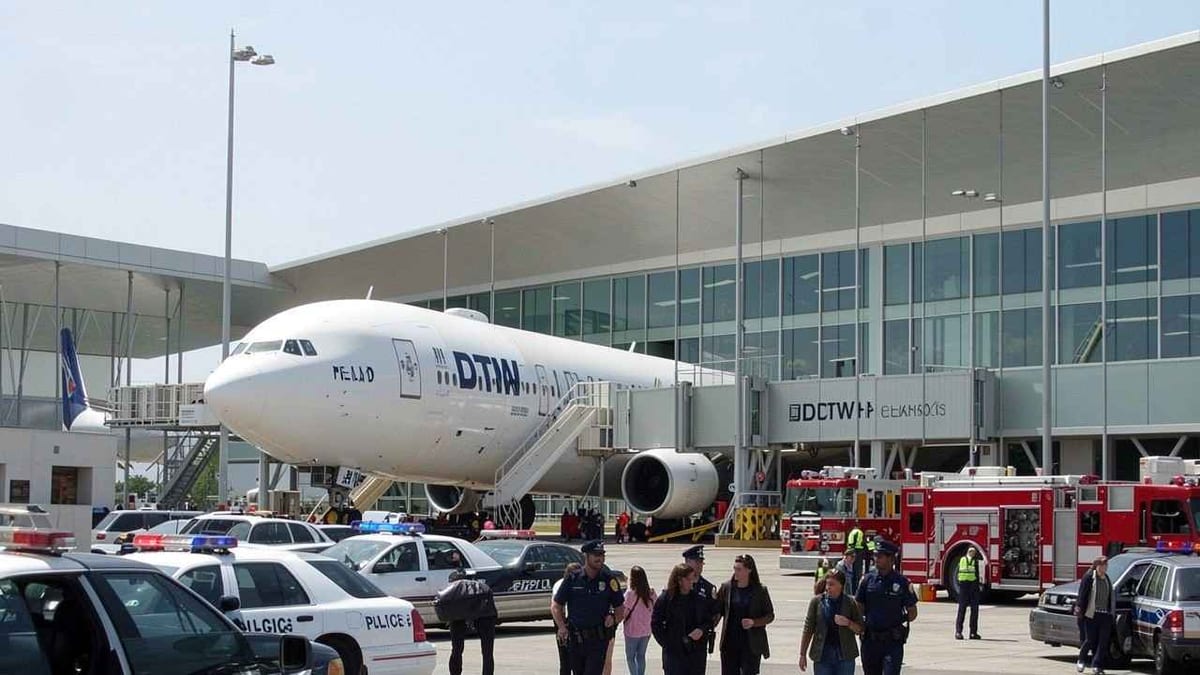
According to flight-tracking data commonly used by passengers to monitor journeys in real time, AA 2772 descended toward Dallas Fort Worth International Airport after the decision to divert, lining up for a priority approach. The aircraft landed at the airline’s primary hub, where emergency equipment was positioned as a precaution, in keeping with standard airport readiness when a flight reports a potential issue in flight.
Observers following the flight online noted that the aircraft taxied to a remote or nonstandard parking location rather than an immediately available gate, a pattern frequently associated with post-landing inspections or coordination with ground teams. Publicly available information suggests that the aircraft remained on the ground for an extended period as safety checks and logistical decisions were made.
Passengers described a tense but orderly arrival, with some accounts indicating that travelers were instructed to remain seated while ground personnel assessed the situation outside the aircraft. The combination of the sudden diversion, visible emergency preparations, and the unfamiliar arrival airport for a JFK–Austin itinerary underscored the seriousness with which the crew and airport treated the event, even as early indications suggested a controlled landing.
As is typical in such situations, Dallas Fort Worth’s role as a major hub likely aided the response, with extensive maintenance resources and operational staff available to evaluate the aircraft and determine whether it could continue service or needed to be removed from rotation.
Significant Delays and Disrupted Plans for Austin-Bound Travelers
The diversion to Dallas Fort Worth triggered a cascade of delays and missed connections for passengers originally booked to Austin. Publicly available booking and schedule tools showed downstream adjustments to American Airlines’ evening operations on May 21, as the airline sought to re-accommodate travelers using later flights and, in some cases, alternate routings.
Reports on social media and travel discussion forums describe lengthy waits in the terminal as passengers queued at service desks or used mobile apps to secure seats on replacement flights. Some travelers were reportedly offered same-day rebooking onto later departures to Austin, while others indicated they were re-routed through additional hubs or moved to flights the following day when immediate seats were not available.
These disruptions extended beyond the Austin-bound passengers alone. Because Dallas Fort Worth is one of American Airlines’ key connecting hubs, the sudden arrival of a full Boeing 737 MAX 8 from JFK placed additional strain on an already busy evening operation. This often results in competition for limited spare seats on onward flights, especially during peak travel periods or when earlier weather and congestion have already tightened capacity.
Travelers described a mix of outcomes, with some reaching Austin late at night after a protracted day of travel and others facing overnight stays near the airport. Hotel arrangements, meal needs, and ground-transport changes contributed to the financial and logistical impact of the diversion on individual passengers.
Spotlight on the Boeing 737 MAX 8 and Operational Safety
The incident once again focuses public attention on the Boeing 737 MAX 8, an aircraft type that has faced intense scrutiny in recent years following high-profile grounding periods and regulatory reviews. While the circumstances around AA 2772’s diversion were not fully detailed in open sources at the time of publication, even precautionary diversions involving the MAX tend to attract heightened interest from travelers and aviation observers.
Industry data and regulatory filings highlight that airlines operating the 737 MAX family have implemented extensive pilot training and maintenance protocols designed to address previous concerns and align with updated certification standards. Airlines, including American, have emphasized that the aircraft now operates under revised software, procedural changes, and enhanced oversight compared to its pre-grounding configuration.
From a passenger perspective, however, any unscheduled landing involving the aircraft type can revive anxieties. The visible presence of emergency vehicles, combined with references to an “emergency landing” in traveler accounts, can intensify the perception of risk even in cases where an incident is resolved without injuries or long-term damage to the aircraft.
Aviation safety specialists typically note that diversions of this kind reflect a conservative safety culture in commercial aviation, in which crews are encouraged to err on the side of caution. The capacity of major hubs such as Dallas Fort Worth to absorb unplanned arrivals supports this approach, providing rapid access to technical support, spare aircraft, and customer-service resources.
What Passengers Can Expect After Diversions Like AA 2772
Events such as the diversion of AA 2772 illustrate the complex chain of decisions that follows an in-flight issue and the practical realities passengers face once on the ground. Publicly available guidance from airlines and consumer resources indicates that travelers can typically expect rebooking efforts to prioritize safety, seat availability, and crew operating limits, which can constrain how quickly a disrupted flight can be replaced.
Travel advocacy groups and transportation regulators publish general recommendations encouraging passengers to make use of airline mobile apps and websites in addition to airport agents, particularly when large numbers of people are affected. In situations like the AA 2772 diversion, those who moved quickly to confirm alternative flights through digital tools often reported securing earlier options than those relying solely on in-person assistance.
In the wake of diversions, passengers are also encouraged by consumer resources to retain documentation of delays and expenses, such as hotel stays or alternative transportation, for potential reimbursement discussions. While U.S. regulations do not guarantee compensation in all disruption scenarios, airline customer-service policies sometimes provide vouchers or accommodations, particularly when overnight delays are unavoidable.
For travelers planning future itineraries, the AA 2772 incident serves as a reminder of the importance of flexible arrangements, including sufficient connection times and awareness of hub airports that may play a role in contingencies. Though such events remain rare relative to the vast number of daily flights, the experience underscores how an ordinary domestic journey can quickly become complicated when an aircraft diverts for safety-related reasons.