


More news on this day
A sinkhole discovered near a main runway at New York’s LaGuardia Airport on Wednesday, May 20, has forced the closure of one of the hub’s two airstrips, leading to widespread flight delays and cancellations across the busy Northeast corridor.
Get the latest news straight to your inbox!
Runway 4/22 Closed After Routine Inspection
Publicly available information indicates that airfield crews identified the sinkhole late Wednesday morning during a standard daily inspection of LaGuardia’s airfield. The affected area is near Runway 4/22, one of only two runways that handle all commercial traffic at the Queens airport.
Reports show that the runway was taken out of service immediately after the depression in the pavement was confirmed, with emergency construction and engineering teams dispatched to stabilize the site. Images from local broadcasters show crews and heavy equipment clustered around a cordoned-off section of pavement as temporary repairs get underway.
The closure sharply reduces LaGuardia’s operating capacity on a weekday afternoon, when business and leisure flights typically run near peak levels. With only one remaining runway available, the airport’s already tight schedule has little flexibility to absorb additional disruptions.
Initial assessments circulating in local and national coverage suggest the sinkhole is confined to a limited section of the airfield surface, but authorities have not provided a public timeline for when Runway 4/22 might safely reopen.
Ground Delays, Cancellations Ripple Through Airline Schedules
Data from flight tracking services cited in multiple news reports show that hundreds of travelers are already feeling the impact. FlightAware figures referenced in national coverage point to roughly 197 cancellations and 168 delays into and out of LaGuardia following the runway shutdown, with average departure delays approaching 100 minutes.
The Federal Aviation Administration has implemented a ground delay program for flights heading to LaGuardia, citing both the sinkhole and unsettled weather in the New York region. That program effectively meters arrivals into the constrained airspace, spacing out flights to match the reduced runway capacity.
Published updates from airlines and airport dashboards indicate that carriers are responding by consolidating flights, rebooking passengers onto later departures, and in some cases rerouting travelers through other Northeast hubs such as Newark, John F. Kennedy, Boston, and Philadelphia. Late-day and evening departures are expected to face rolling disruptions as aircraft and crews fall out of their planned rotations.
Travelers connecting through LaGuardia or relying on tight same-day itineraries appear especially vulnerable to last-minute schedule changes, with social media posts and local broadcast segments showing crowded gate areas and long lines at customer service desks.
Weather Compounds Operational Strain
Forecasts for the New York metropolitan area call for scattered thunderstorms and periods of low clouds, creating conditions that often constrain traffic at LaGuardia even on normal days. The airport’s short runways and dense traffic patterns make it particularly sensitive to changes in wind, visibility, and storm activity.
Publicly available statements from the Port Authority and flight operations centers emphasize that the combination of a runway out of service and passing storms limits the number of safe arrivals and departures per hour. As a result, even flights that are not canceled may experience extended taxi times, airborne holding, or diversions if storms drift over the airport at key periods.
Airlines are also contending with the knock-on effect of earlier delays. Aircraft that were scheduled to operate multiple legs throughout Wednesday and Thursday may arrive late or out of position, creating a cascading pattern of schedule adjustments that can linger beyond the initial incident.
Industry analysts note that the timing of the disruption, coming in the late spring travel period ahead of the busy Memorial Day holiday, highlights how vulnerable major urban airports can be when unplanned infrastructure issues intersect with complex weather and air traffic constraints.
Infrastructure Concerns at a Rebuilt Airport
The sinkhole episode arrives only a few years after LaGuardia completed a headline-grabbing multibillion-dollar redevelopment of its terminals, roadways, and airside facilities. The project transformed passenger spaces and improved taxiway layouts, earning recognition in North American airport service rankings.
However, the airfield itself sits on challenging ground, much of it built on historic landfill along the Flushing Bay shoreline. Aviation observers and local commentators have long pointed out that older subsurface utilities, soil settlement, and drainage patterns can complicate maintenance on and around the runways.
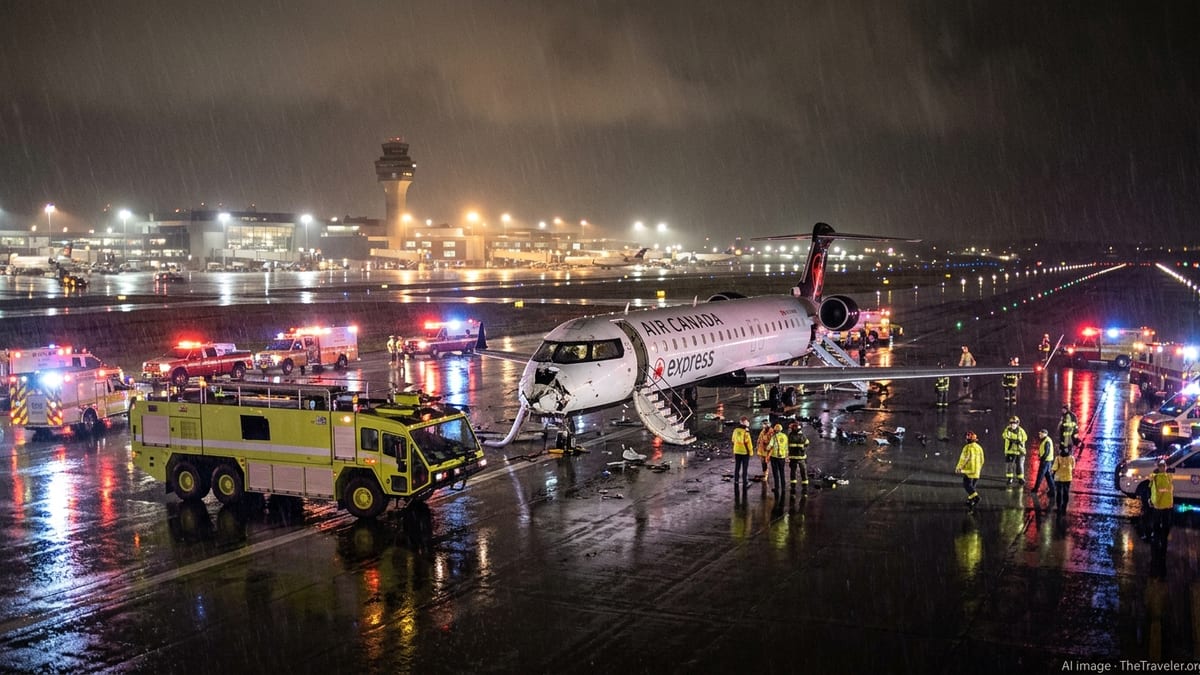
Recent aviation safety discussions have also focused on LaGuardia after a deadly collision between a regional jet and an emergency vehicle on Runway 4/22 in March 2026. That incident prompted calls for closer scrutiny of airfield operations and ground infrastructure at the compact airport.
While there is no public indication at this stage that the sinkhole is linked to the earlier crash or to the terminal redevelopment, the incident is likely to intensify questions around long-term resilience of critical pavement, underground utilities, and drainage systems at one of the country’s most space-constrained major airports.
What Passengers Can Expect in the Coming Hours
Based on current disruption levels and historical patterns from past runway closures, irregular operations at LaGuardia are likely to extend through the evening peak and potentially into the following morning, even if temporary repairs allow partial use of the affected area sooner than expected.
Airlines are urging passengers through publicly shared advisories to monitor their flight status frequently and to allow extra time at the airport, citing rapidly changing conditions. Same-day rebooking options may be limited on some routes, especially those served by smaller regional jets with fewer daily frequencies.
Travel experts note that passengers originating from other major hubs may have better luck requesting alternative routings that bypass LaGuardia entirely, while those already in New York might consider departures from JFK or Newark if flexible on timing and price. However, higher demand and tight capacity across the region could restrict available seats on short notice.
For now, the focus of airport and airline operations remains on stabilizing the airfield, keeping the remaining runway safely functional, and gradually working through the backlog of disrupted flights. Travelers heading into or out of New York over the next 24 hours should brace for extended wait times, potential cancellations, and itinerary changes as the airport works to recover from the sudden sinkhole shock.